Einar Rosenberg, CEO of White Label Agency
I studied entrepreneurship at Chalmers University of Technology in Gothenburg, Sweden. It was a good program, and I was around people who had energy and ideas. I earned my M.Sc. in 2012 and learned a lot about business theory, hoping I would be able to put it into practice soon.
After graduating, I moved to the United States with my future wife. We ended up in Williamstown, Massachusetts, a small town of about 4,500 people in the Berkshire Mountains. It was quiet, very different from Gothenburg, and I started thinking about what I wanted to do next.
Between Sweden, the US, and Ukraine
Around that time, a couple of friends from university were heading to Ukraine to look into outsourcing IT services. While they were exploring that, I had a conversation with someone I knew at a marketing agency. They mentioned they were having trouble finding developers for their website projects. It wasn’t a big revelation or anything, just a casual comment. But it stuck with me, so I started wondering if other agencies had the same problem.
I called a few agencies to ask, and within a few days, I had three of them interested in working with me. That’s when I realized there might be something real there. I reached out to my friends in Ukraine, and we hired a developer together. It felt like things were coming together, even though I was still figuring it out as I went.
Fast-forward to June 1, 2013, and I officially launched White Label Agency. My idea was simple: to help marketing agencies with their WordPress development work. They would keep their client relationships, and we would work in the background doing the development.
Why WordPress?

I chose to focus on WordPress because it was growing fast in 2013. Agencies were using it more and more, and it seemed flexible enough to handle different types of projects. It turned out to be a good decision. Today, WordPress powers over 40% of websites, and we’ve been working with it ever since.
But back then, I was just trying to find a niche that made sense. I needed something specific enough that we could become good at but broad enough that there would be enough work to build a business around.
Why Ukraine?
At the time, finding WordPress developers in the US was difficult. Many web marketing agencies tried to outsource development, but it usually created more problems than it solved. Communication broke down over the details of website design, timelines got confused, and quality was inconsistent. For outsourcing to actually work, you needed clear communication and a production process that made it easy for agencies to come back.
I chose Ukraine as the location for our development offices because the IT sector there was strong and growing. Many computer science and programming students were graduating from the country’s universities, including front-end developers with solid skills. My initial plan was to grow the company to 25 developers within two years, and these young graduates provided the skilled and flexible labor market we would need.
The business connections my friends had established in Ukraine helped me set up our office and hire our first employees in the city of Odesa. It wasn’t perfect from the start, but it gave us a foundation to build on.
Building the team and standardizing processes
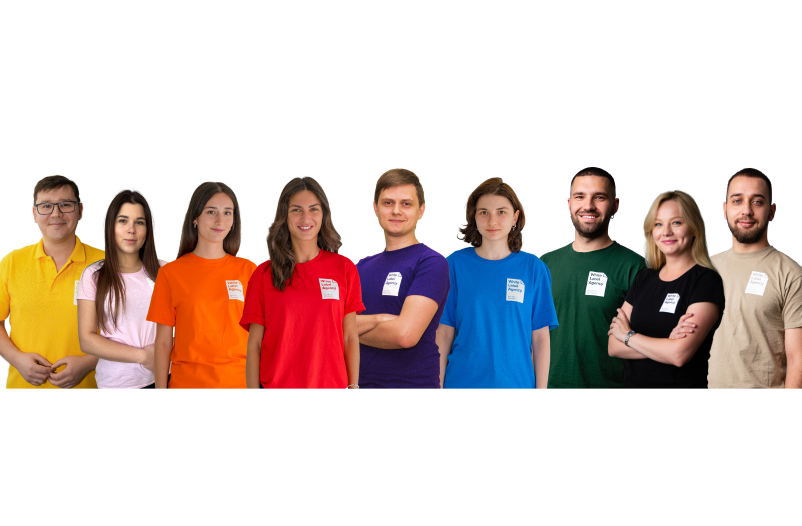
As the number of developers grew, we needed to standardize our processes to allow us to scale while maintaining quality for our clients. But in 2014, war broke out in eastern Ukraine and Crimea was occupied by Russia. It was a blow to the Ukrainian economy and society. While the conflict didn’t hinder our operations, it was nevertheless a reminder of the value of focusing on long-term growth, for the sake of our employees as much as for our customers.
Throughout 2014, we continued to expand. Our experience in the US market showed that the business model worked, so by the end of the year, we were prepared to open our second office in Ukraine, in the city of Poltava. Over the course of 2015, Poltava quickly grew to match the size of the Odesa office.
Sticking to our mission of sustainable, long-term growth, we hit our two-year target. By the spring of 2015, we employed 24 developers.
Growth and challenges
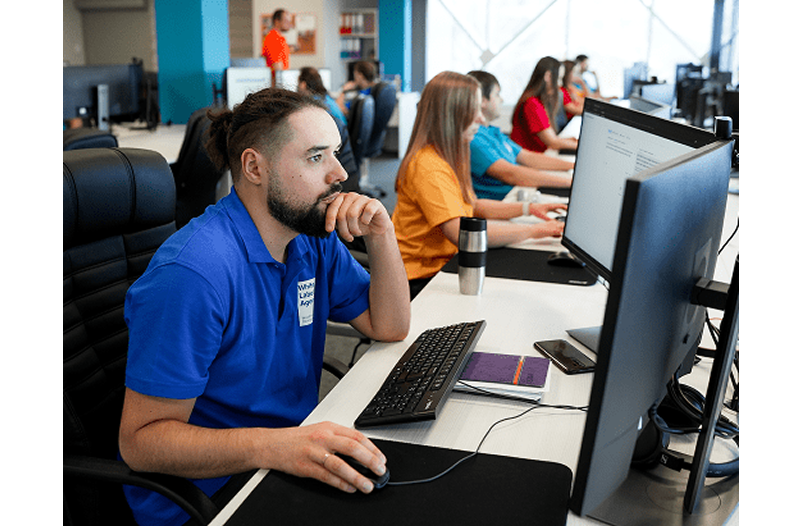
We continued developing our processes and expanding our client base. We invested in training programs to keep our developers updated on WordPress best practices. We built quality assurance workflows with multiple review stages. We established dedicated account managers for agency partners so they always had someone who understood their needs and their clients.
In 2017, we added maintenance services and grew to 100 team members. Around this time, we also complemented our project development service with dedicated developer and design services, giving agencies more flexibility in how they worked with us. By 2021, we had served over 300 customers and completed 10,000 projects.
In February 2022, everything changed when Russia launched a full-scale invasion of Ukraine. It made things uncertain. It wasn’t easy, and there were difficult days. But we stayed committed to our team in Ukraine, and they stayed committed to the work. That period showed me something about the people we had built this company with: their professionalism, their resilience, and their dedication to doing the job well, even when circumstances were incredibly hard.
By 2023, we reached our 10-year anniversary with 150+ team members, producing 3,000 WordPress projects per year.
Where we are today
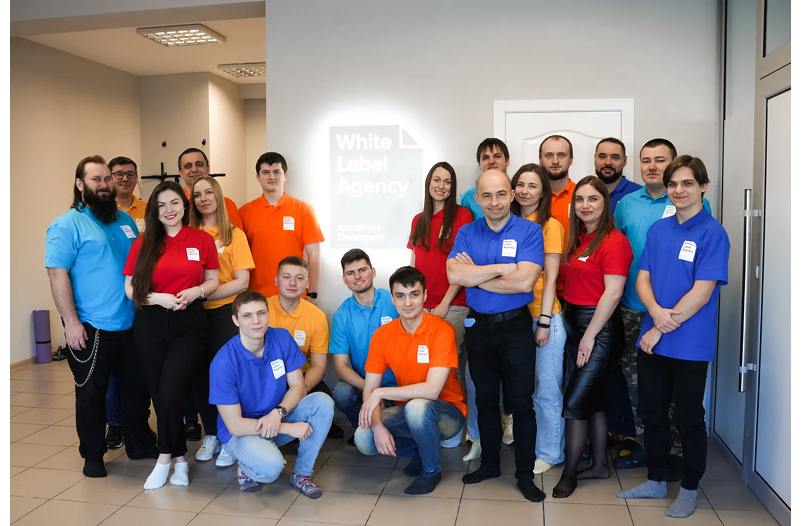
Throughout these years, we’ve worked with over 600 agencies and created thousands of websites. What I’m most proud of are the long-term relationships we’ve built. Many of the agencies we work with today started with us years ago, when they were smaller and had just one or two clients who needed WordPress sites. As they grew, we grew with them.
Today, we work with marketing agencies in two main ways.
- Some need project-based development, where we take on specific website builds from start to finish.
- Others need our dedicated developers who work as an extension of their team, handling ongoing WordPress work as it comes in.
Both models give agencies flexibility to scale their WordPress services without the overhead of hiring full-time developers.
Want to work with us?
Every agency has a unique story, and we are curious to hear yours. If you are looking for a reliable, specialized partner to help you scale your WordPress development without the hiring overhead, let’s start a conversation. Feel free to reach out to our team to discuss how we can support your agency’s growth.