


- 5 Key Benefits of Automated Content Creation
- How Does Automated Content Creation Impact Content Quality?
- Common Misconceptions About Content Automation
- 5 Types of Automated Content
- Tools and Software for Content Automation
- 5 Best Practices for Automated Content Creation
- Measuring Success in Automated Content Creation
- The Future of Automated Content Creation
- Conclusion
Businesses, marketers, and content creators constantly need fresh, engaging, and high-quality content to keep their audiences informed and engaged. However, producing content manually at scale can be time-consuming, resource-intensive, and prone to inconsistencies.
This is where automated content creation steps in. By leveraging cutting-edge technologies such as artificial intelligence (AI), natural language processing (NLP), and machine learning, businesses can streamline their content production process while maintaining quality and relevance.
But why is content automation crucial in modern marketing? How does it impact content quality, and what are its key benefits? In this guide, we’ll explore these questions and provide insights into how businesses can integrate automation into their content workflows effectively.
5 Key Benefits of Automated Content Creation
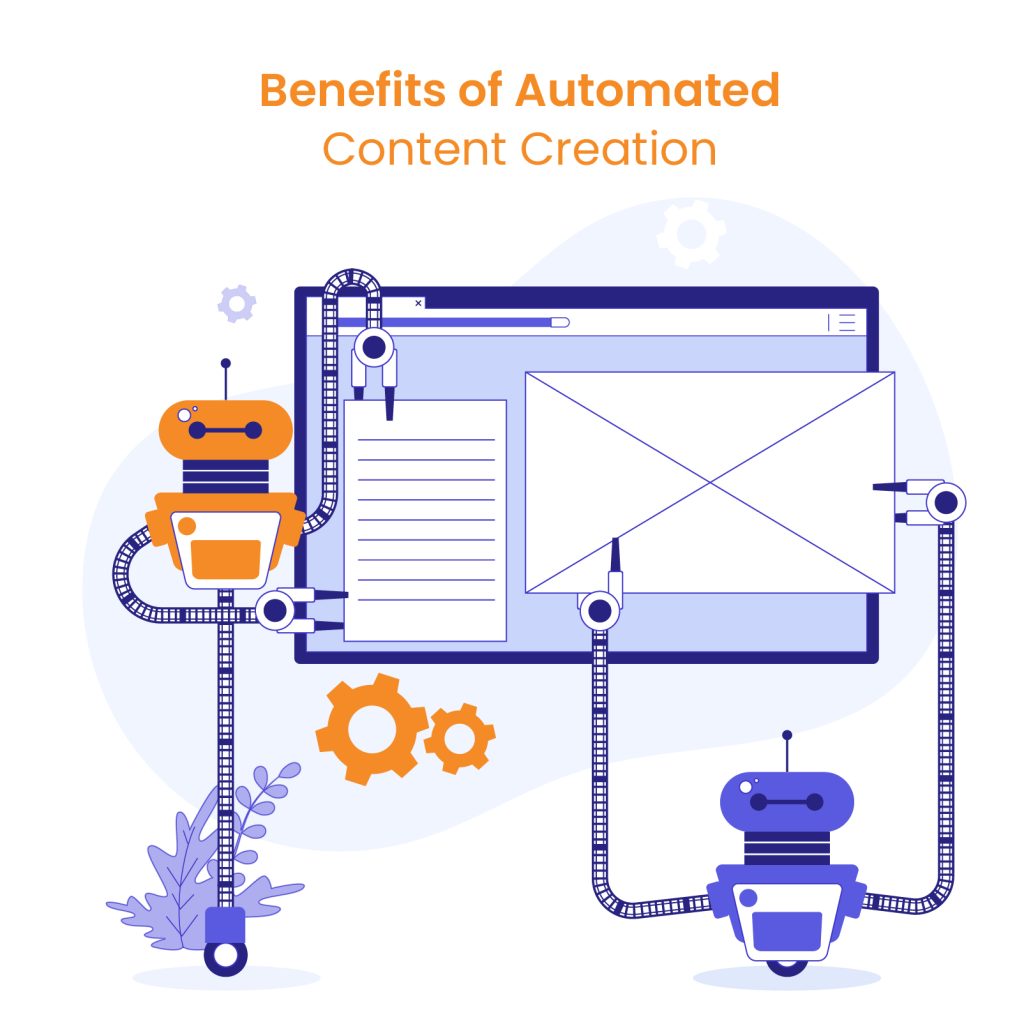
The shift toward automated content generation is driven by the need for faster, more efficient content production without compromising quality. Here’s why businesses are adopting it.
1. Saving Time and Resources
Manually creating blog posts, social media content, and marketing emails takes time. Automated content creation with AI speeds up this process by:
- Generating drafts in minutes with AI-powered tools.
- Automating repetitive tasks like scheduling and publishing.
- Reducing reliance on large content teams, cutting operational costs.
2. Enhancing Content Scalability
As businesses grow, their content needs expand. Instead of hiring more writers or designers, content automation platforms allow companies to scale effortlessly by:
- Producing content in bulk while maintaining consistency.
- Automatically adapting content for multiple formats (e.g., turning blogs into video scripts).
- Enabling marketers to execute large-scale campaigns with minimal manual effort.
3. Ensuring Consistency Across Platforms
Brand messaging should remain uniform across blogs, emails, and social media. Automated content marketing helps by:
- Using pre-set templates and style guides.
- Standardizing tone, voice, and messaging.
- Maintaining structured formatting across all platforms.
4. Reducing Human Error
Typos, formatting inconsistencies, and factual errors can hurt credibility. AI-powered tools minimize mistakes by:
- Running automated grammar and plagiarism checks.
- Ensuring factual accuracy with real-time data updates.
- Formatting content correctly before publishing.
5. Improving Focus on Creative and Strategic Tasks
By handling routine content tasks, automation frees marketers to concentrate on:
- Creative storytelling – Developing original ideas that resonate.
- Audience engagement – Building relationships rather than just pushing content.
- High-level strategy – Refining content approaches for better ROI.
As businesses integrate automation, an important question arises: how does this impact content quality? Let’s explore that next.
Link monitoring
Say goodbye to the 404s and broken links. Our WordPress maintenance plan include a link monitoring service for your clients’ sites.
How Does Automated Content Creation Impact Content Quality?
Despite its obvious benefits, the quality of automated content marketing is a major concern. While automation streamlines production, does it sacrifice creativity and originality? The answer lies in how businesses use these tools.
Potential for Increased Quality
AI-powered tools have advanced significantly, enabling them to generate well-structured, informative, and engaging content. With access to vast datasets, AI-driven solutions can produce data-rich reports, compelling blog articles, and optimized social media posts. Moreover, automation ensures that content is free from grammatical errors and follows SEO best practices, improving its overall quality and visibility.
Risk of Generic Content
Despite its advantages, automated content marketing can sometimes result in generic and repetitive content, especially when relying solely on AI-generated text. Many automation tools pull from existing datasets and follow predefined patterns, which can make content feel formulaic. To counteract this, businesses must combine automation with human oversight to ensure originality and uniqueness.
The Importance of Human Touch
While automation enhances efficiency, the human element remains irreplaceable in content creation. Emotional intelligence, storytelling, and brand voice are aspects that AI cannot fully replicate. The best approach to content automation is a hybrid model—leveraging AI to streamline production while incorporating human creativity to maintain authenticity and audience connection.
Recommendation
Want to leverage more content generation opportunities? Learn more about white label content creation.
Common Misconceptions About Content Automation
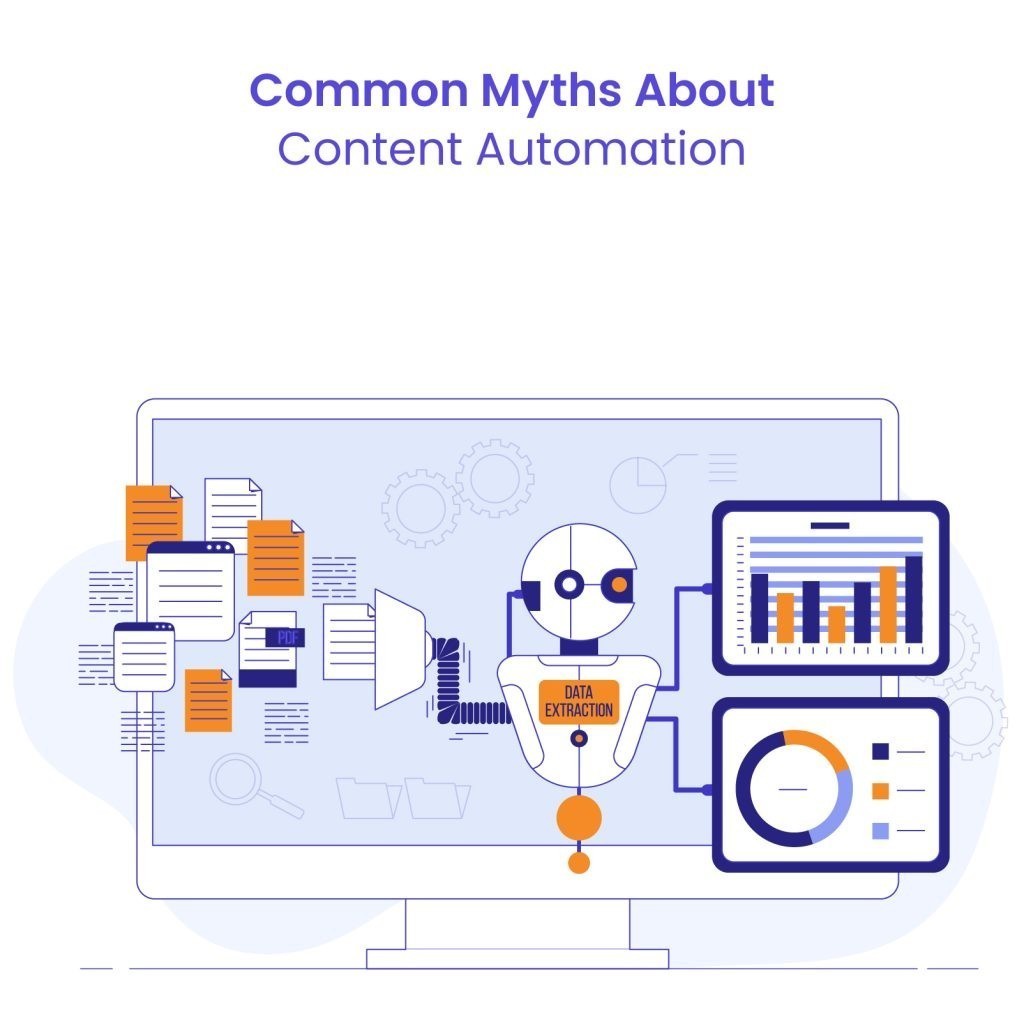
Let’s now address two of the most prevalent misconceptions about automated content generation. Some believe automation will replace human creativity, while others assume AI-generated content lacks originality. Here’s the truth.
Misconception #1: “Automation Replaces Human Creativity.”
This is one of the biggest myths. While content automation platforms handle repetitive tasks, they don’t replace human creativity. Instead, they:
- Provide data-driven insights to inform creative decisions.
- Automate routine writing tasks, giving creators more time for storytelling.
- Support, rather than replace, content strategists and marketers.
Misconception #2: “Automated Content Is Generic and Low-Quality.”
Another misconception is that AI-generated content is dull and uninspired. However, modern content automation tools:
- Use advanced NLP to create natural, engaging copy.
- Adapt content based on audience behavior and preferences.
- Learn from data to improve quality over time.
Addressing Fears and Misunderstandings
Many marketers worry about losing control over their brand voice or producing inauthentic content. The solution? Smart automation strategies.
How to use automation effectively:
1️⃣ Set clear brand guidelines for AI-generated content.
2️⃣ Always review and personalize AI drafts before publishing.
3️⃣ Use automation for efficiency, but keep human oversight for quality.
By debunking these myths, businesses can fully leverage automated content marketing. But what types of content can be automated? That’s what we’ll explore next.
5 Types of Automated Content

Different types of content require different automation approaches. Businesses can automate not only text-based materials but also visuals, social media, and data-driven reports.
1. Written Content
Text-based automation is one of the most advanced areas in automated content generation. AI writing tools can generate:
- Blog posts and articles – AI-powered platforms like Jasper or Writesonic draft high-quality content based on predefined inputs.
- Product descriptions – E-commerce businesses use AI to write SEO-optimized descriptions at scale.
- Press releases and reports – Automated tools structure reports using real-time data inputs.
Tip
AI-generated drafts should always be refined by a human editor to ensure originality and brand alignment.
2. Visual Content
Automation extends beyond text—video, infographics, and design can also be streamlined.
Infographics – AI tools like Canva generate designs based on input data.
Video creation – Platforms like Lumen5 and Plainly Videos turn blog posts into engaging videos.
Animations – Automated animation tools help brands create dynamic visual content without extensive editing.
3. Social Media Posts and Scheduling
Managing multiple social media accounts manually is inefficient. Content automation platforms like Buffer and Hootsuite allow businesses to:
- Automatically generate captions based on trends.
- Schedule posts in advance across multiple platforms.
- Optimize post timing using AI-driven insights.
4. Email Marketing Campaigns
AI-powered automated content marketing can streamline email campaigns in three ways:
- Writing and optimizing subject lines.
- Personalizing email content with user data.
- A/B testing content variations to improve engagement.
Tools like Mailchimp and ActiveCampaign ensure marketing emails are targeted, timely, and conversion-focused.
5. Data-Driven Content
AI can transform raw data into compelling, easy-to-understand content, including:
- Performance dashboards – Tools like Google Data Studio generate reports automatically.
- News and stock market reports – AI-generated content provides real-time updates.
- Personalized recommendations – E-commerce stores use AI to create custom product suggestions.
Woocommerce Developer
Streamline your Woocommerce projects by hiring a Woocommerce developer from our team. We’ve got you covered for your ecommerce projects.
Tools and Software for Content Automation

Selecting the right content automation platforms depends on a business’s goals, budget, and content type. Below is a breakdown of essential tools across different categories.
1. AI Writing Tools
These tools help generate text-based content such as blogs, product descriptions, and marketing copy.
| Tool | Description | Best For | Pricing |
| Jasper | A robust AI writing assistant specializing in long-form content such as blogs, reports, and marketing copy. It includes SEO optimization features to enhance visibility. | Content marketers, bloggers, businesses needing long-form content. | Starts at $39/month for basic plans, with scalable pricing for teams. |
| Writesonic | Best for generating short-form content like ad copy, social media captions, and landing page text. Provides multiple AI-generated variations for testing different marketing messages. | Businesses looking for quick, conversion-focused copy. | Free plan available; paid plans start at $16/month. |
| Copy.ai | Designed for branding and marketing content, offering a variety of AI-generated formats, including product descriptions, email campaigns, and website copy. | Marketers developing brand messaging and promotional content. | Free plan available; paid plans start at $36/month. |
If you want to discover more tools for textual content generation, we recommend checking out our comprehensive guide on the best AI copywriting tools.
2. Video Automation
These tools transform written content into engaging video formats, automating video production at scale.
| Tool | Description | Best For | Pricing |
| Lumen5 | AI-powered text-to-video software that converts blog posts and articles into video content using pre-built templates and AI-assisted animations. | Marketers repurposing blog content into videos. | Free plan available; paid plans start at $19/month. |
| Vidyard | A video automation platform for personalized video messaging. Helps sales and marketing teams create customized videos for customer engagement. | Businesses leveraging video for customer engagement. | Free plan available; paid plans start at $19/month. |
| Plainly Videos | Automates mass video production using dynamic data integration, making it easy to create thousands of personalized videos at scale. | E-commerce, real estate, businesses needing high-volume video production. | Custom pricing based on business needs. |
3. Content Planning and Workflow Tools
These platforms help teams plan, organize, and automate content workflows efficiently.
| Tool | Description | Best For | Pricing |
| ClickUp | A feature-rich project management tool with built-in content calendars, task automation, and workflow tracking for marketing teams. | Marketing teams managing large-scale content operations. | Free plan available; paid plans start at $5/user per month. |
| Trello | Uses a Kanban board system to visually organize content tasks. Its automation feature (Butler) streamlines task assignments and notifications. | Teams preferring a visual, easy-to-use content planning tool. | Free plan available; paid plans start at $5/user per month. |
| Monday.com | A highly flexible work management tool that automates content approval workflows and integrates seamlessly with marketing tools. | Businesses needing structured workflows for cross-team collaboration. | Paid plans start at $9/user per month. |
4. Social Media Management Tools
These tools automate content scheduling, engagement tracking, and performance analysis.
| Tool | Description | Best For | Pricing |
| Buffer | A simple, intuitive tool for scheduling and automating posts across multiple social platforms. AI-driven insights help optimize post timing. | Small businesses and marketers looking for an easy scheduling solution. | Free plan available; paid plans start at $6/month per channel. |
| Hootsuite | A social media management platform that enables businesses to schedule, monitor, and analyze social media performance from a centralized dashboard. | Agencies and businesses managing multiple social accounts. | Paid plans start at $99/month. |
| Sprout Social | A full-featured social media management tool with AI-powered social listening, analytics, and automation features to enhance audience engagement. | Brands looking for deep insights and AI-powered audience analysis. | Paid plans start at $249/month. |
5. Email Marketing Tools
These tools help businesses automate, personalize, and optimize email campaigns for better engagement.
| Tool | Description | Best For | Pricing |
| Mailchimp | An email marketing tool with AI-driven content optimization, audience segmentation, and automation workflows for small businesses. | Small businesses and startups looking for an intuitive email tool. | Free plan available; paid plans start at $13/month. |
| Klaviyo | Designed for e-commerce email automation, integrating with Shopify and WooCommerce to deliver highly personalized email sequences. | E-commerce businesses needing data-driven email automation. | Free plan available; paid plans start at $20/month. |
| ActiveCampaign | Offers advanced email segmentation, CRM integration, and AI-powered automation to optimize customer engagement. | Businesses requiring deep automation and CRM capabilities. | Paid plans start at $29/month. |
5 Best Practices for Automated Content Creation

Integrating automated content creation with AI into a marketing strategy requires more than just selecting the right tools. Businesses must strike a balance between automation and creativity while ensuring that AI-generated content remains engaging, relevant, and aligned with brand identity.
Here’s a detailed framework for effectively leveraging automation without sacrificing quality.
1. Balance Automation with Human Creativity: The Hybrid Approach
Automation is designed to enhance content creation, not replace human ingenuity. While AI can generate text, images, and even videos in seconds, creativity, brand voice, and emotional appeal still require human oversight.
How to Achieve the Right Balance:
Instead of choosing between AI and human creativity, consider a hybrid model where automation assists rather than replaces human effort.
- AI should handle: Research, topic suggestions, SEO optimization, grammar corrections, and repetitive tasks.
- Humans should focus on: Storytelling, brand voice, creative direction, and emotional resonance in content.
- Collaboration is key: Content teams should use AI-generated drafts as a starting point, refining and personalizing them to maintain brand authenticity.
Example
Bloomreach, a digital experience platform, leveraged Jasper’s AI capabilities to enhance their content strategy. By integrating Jasper, they increased their blog output by 113% and saw a 40% boost in website traffic to those posts. This collaboration allowed human editors to focus on ensuring originality and engagement, resulting in higher-quality content.
2. Perform Regular Audits to Ensure Quality and Relevance
AI-generated content is only as good as the data and inputs it receives. Without periodic reviews, automated content can become outdated, off-brand, or even misleading.
Checklist for Quality Control:
- Review AI-generated content for factual accuracy: AI can generate misinformation, so all data-driven content should be verified.
- Ensure content aligns with brand voice: AI tools for content creation may produce text that feels robotic or inconsistent with your style.
- Keep content updated: Automated articles and product descriptions must reflect current trends, promotions, and business changes.
- Test audience engagement: Use A/B testing to compare human-edited content with fully automated versions to identify what resonates best.
3. Use AI for Personalization, Not Just Automation
One of the biggest advantages of content automation platforms is their ability to personalize content at scale. AI can analyze user behavior, demographics, and interests to tailor content for different audience segments.
Where to Apply AI-Powered Personalization:
- Email Marketing: AI-powered tools like Klaviyo or AWeber can personalize subject lines, product recommendations, and follow-up messages based on previous user behavior.
- Dynamic Website Content: AI-driven automation adjusts headlines, offers, and product suggestions in real-time depending on a visitor’s preferences.
- Social Media: AI helps craft personalized captions and dynamic ad creatives based on customer interactions.
Example
EyeMail Inc. collaborated with Microsoft to integrate video in email marketing communications, leading to a 60% open rate and a 38% click-through rate, significantly above industry averages. This personalized approach enhanced customer engagement and demonstrated the power of AI-driven email marketing.
4. Align Automation with Your Broader Marketing Strategy
While automation improves efficiency, it should never operate in isolation. AI-generated content must fit into the larger content marketing strategy and align with business goals.
Key Questions to Ask Before Automating:
- Does this automation support my brand’s long-term goals? If automation is only saving time but not improving quality or engagement, it might not be the right solution.
- Is the content still relevant and valuable to my audience? Automated content should be monitored for relevance and engagement metrics.
- Are human teams still involved in decision-making? Ensure AI is supplementing—not replacing—marketing teams’ expertise.
5. Measure the Success of Your Automated Content Strategy
To optimize automated content marketing, businesses need to track key performance indicators (KPIs) and continuously refine their automation strategy.
Metrics to Monitor:
- Engagement Rates: Click-through rates (CTR), shares, comments, and dwell time measure audience interest.
- Time Saved: Calculate the reduction in content creation time compared to manual workflows.
- Conversion Rates: Track how AI-generated content impacts lead generation and sales.
- ROI of Automation: Compare content production costs before and after automation implementation.
Measuring Success in Automated Content Creation

As businesses continue integrating content automation into their marketing strategies, measuring its effectiveness becomes crucial. Automation isn’t just about saving time—it should also enhance engagement, boost conversions, and improve ROI. To ensure you’re maximizing the potential of automated content marketing, it’s important to track the right performance metrics.
5 Key Metrics to Track
- Engagement Rates
Engagement is a strong indicator of content quality and relevance. Monitor:
- Social media interactions (likes, shares, comments)
- Blog post dwell time and bounce rates
- Email open rates and click-through rates
- Time and Resource Savings
One of the primary advantages of automated content is efficiency. Evaluate:
- Reduction in content creation time compared to manual processes
- Cost savings from automating tasks such as scheduling and publishing
- Increased output with the same or fewer resources
- Lead Generation and Conversion Rates
Automated content should contribute to business growth. Track:
- The number of leads generated from AI-assisted campaigns
- Customer interactions with automated content (e.g., chatbot-driven conversations)
- Conversion rates from AI-personalized recommendations and automated email sequences
- SEO Performance
High-ranking content translates to better visibility and organic traffic. Assess:
- Keyword rankings for automated content creation topics
- Organic traffic growth from AI-generated blog posts
- Backlink acquisition for automated content
- Customer Retention and Satisfaction
Automated content should not only attract new customers but also retain existing ones. Monitor:
- Customer feedback on AI-generated content (e.g., comments, reviews)
- Net Promoter Score (NPS) changes after automation adoption
- Churn rate variations linked to AI-driven engagement
Tools for Tracking Content Automation Performance
Several tools help businesses analyze the effectiveness of automated content:
- Google Analytics – Tracks traffic, user behavior, and conversion paths for better content marketing analytics.
- HubSpot – Monitors content engagement, lead generation, and marketing ROI.
- ClickUp Reports – Offers performance insights for AI-assisted content workflows.
- SEMrush/Moz – Measures SEO rankings and keyword performance for AI-generated content.
The Future of Automated Content Creation
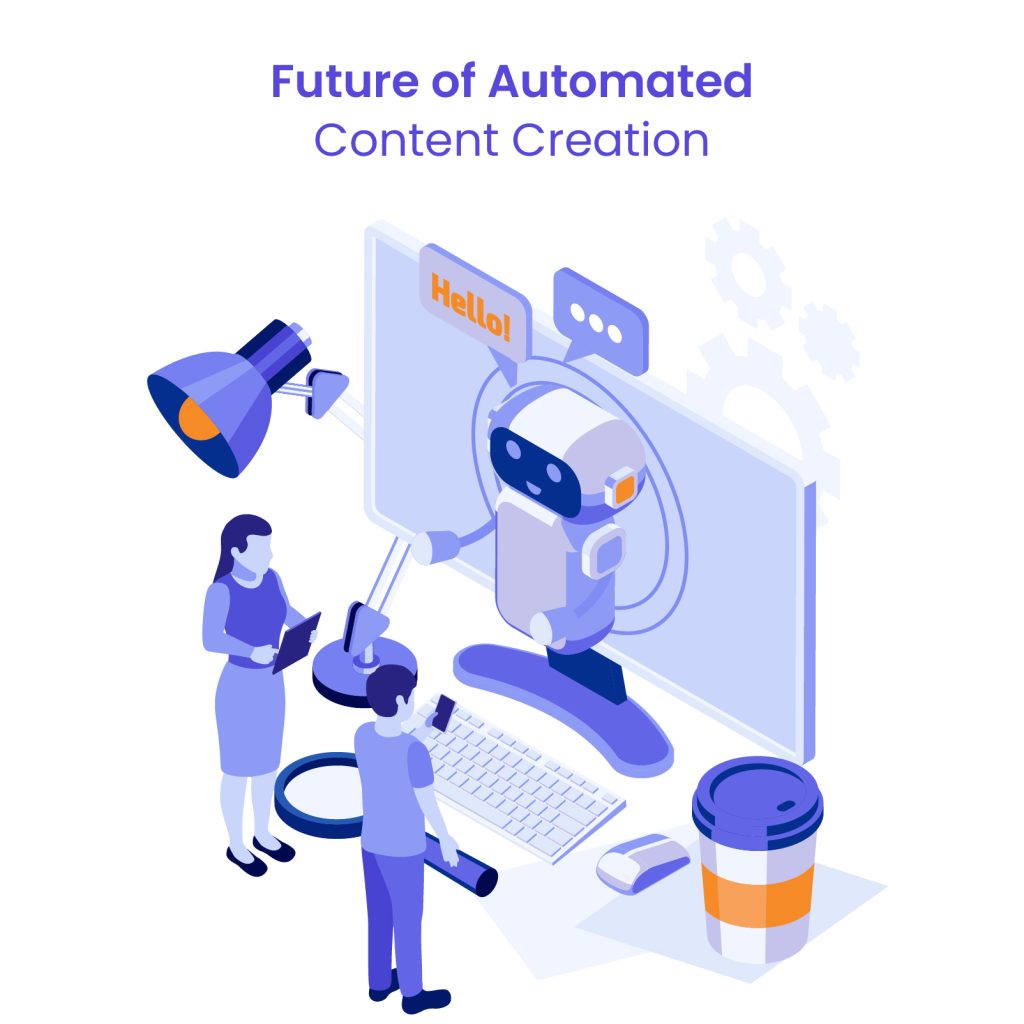
As technology advances, content automation is evolving beyond simple efficiency improvements. The future of automated content creation will be defined by deeper personalization, AI-driven storytelling, and more sophisticated content generation models. Businesses that adapt to these changes will gain a competitive advantage by producing highly engaging, relevant, and scalable content with minimal manual effort.
Hyper-Personalized AI Content
Future AI models will go beyond basic content generation to predict and personalize content for individual users. Advanced machine learning algorithms will analyze user preferences, past interactions, and real-time behavior to generate highly tailored messaging across websites, emails, and social platforms.
Advanced AI Writing Models
While current AI writing tools generate structured and coherent text, the next generation will improve contextual understanding, emotional intelligence, and stylistic adaptation. AI-generated content will sound more natural, incorporating brand voice and storytelling techniques more seamlessly.
Automated Video and Visual Content
AI-driven video production will become more accessible, allowing businesses to transform blog posts into dynamic videos, infographics, and animations with minimal manual editing. AI-powered tools will automate video scripting, voiceovers, and real-time scene selection based on engagement trends.
Real-Time AI-Driven Content Optimization
Future content automation platforms will not only generate content but will also provide real-time performance analysis and suggest optimizations. AI will track audience responses and automatically adjust headlines, structure, and CTA placements to maximize engagement.
Conversational AI and Voice Content
As voice search and virtual assistants continue to grow, AI-generated voice content will become a crucial part of marketing strategies. Automated podcasts, AI-generated customer service scripts, and interactive voice-based content will reshape how brands engage audiences.
Ethical Considerations and Challenges
While the benefits of automated content marketing are clear, there are potential risks and challenges that businesses must address:
- Ensuring Content Authenticity – AI-generated content must remain credible, accurate, and aligned with ethical standards. Oversight and fact-checking are essential to prevent misinformation.
- Bias in AI Models – AI tools learn from existing data, which may contain biases. Companies must actively monitor and refine AI-generated content to ensure inclusivity and fairness.
- Balancing Automation with Human Creativity – While automation enhances efficiency, human oversight is necessary to maintain brand authenticity, emotional depth, and strategic alignment.
Preparing for the Future of Content Automation
To stay ahead, businesses should:
- Experiment with AI tools for different content types, including text, video, and social media.
- Develop clear guidelines for AI-generated content to maintain consistency and quality.
- Combine automation with human oversight to ensure originality and engagement.
- Monitor AI-driven performance metrics to continuously refine content strategies.
Conclusion
The rise of automated content creation is reshaping the way businesses approach marketing, offering a more efficient, scalable, and data-driven approach to content production. By leveraging AI-powered tools and content automation platforms, businesses can streamline their workflows, maintain brand consistency, and optimize engagement across multiple channels.
However, automation is not a replacement for human creativity—it’s an enabler. The most successful content strategies will blend AI-driven efficiency with human oversight, ensuring originality, authenticity, and a strong connection with audiences. As technology continues to evolve, companies that embrace smart automation will gain a competitive edge by delivering content that is both high-quality and high-impact.
The future of marketing belongs to businesses that balance automation with creativity, measure performance effectively, and continuously refine their strategies. Whether through AI-generated blog posts, automated video content, or data-driven personalization, the opportunities for content automation are vast—and growing.
Looking Beyond Automated Content Generation
In addition to optimizing your content strategy with automation, ensuring a seamless digital experience is just as important. If your agency is looking to streamline WordPress development, White Label Agency (WLA) can help. Our expert team specializes in white-label WordPress development, allowing digital agencies to scale their services effortlessly while maintaining quality and efficiency.
Let automation handle your content, and let WLA take care of your WordPress development needs—so you can focus on growing your agency and delivering exceptional results to your clients. Get in touch with us today to see how we can support your business.


