If you’ve been in the web development business for some time, chances are you’ve encountered WordPress and Weebly. Whether you’ve built sites with these platforms or merely heard of them in passing, it’s clear they are players in website development.
WordPress is the most used open-source content management system (CMS), renowned for its flexibility and customization potential. It’s the backbone for a wide range of websites, from personal blogs to complex corporate and e-commerce websites. On the other hand, Weebly is a web-hosting service featuring a drag-and-drop website builder, celebrated for its simplicity and ease of use, making it a go-to for smaller, more straightforward web projects.
Both platforms have their distinct benefits, and choosing between them often depends on the specific needs of your clients. In this blog, we’ll compare WordPress vs Weebly, discussing which platform may be better suited for various scenarios. These insights are drawn from White Label Agency’s (WLA’s) extensive experience in building thousands of websites over a decade. This analysis aims to guide you in making informed decisions for your agency’s clients.
WordPress vs Weebly: Features
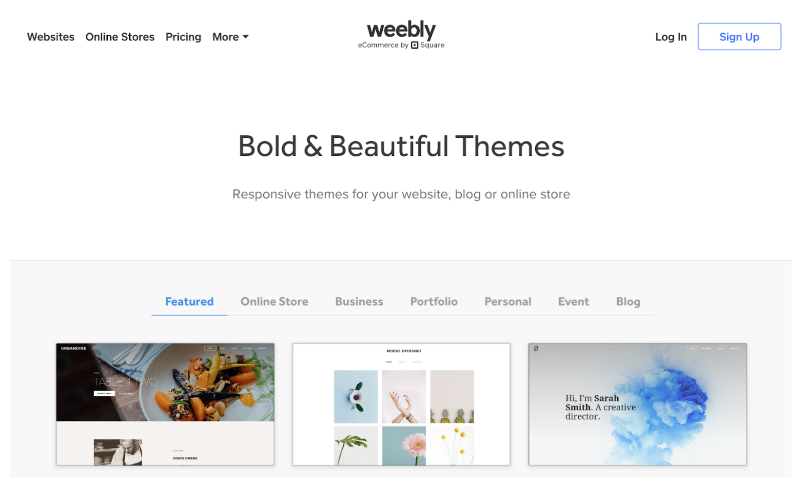
Weebly is it’s a drag-and-drop website builder ideal for projects where simplicity and speed are essential. For example, if a client needs a small bakery website with basic features like a menu, contact information, and a photo gallery, Weebly is well-suited for this. The platform allows you to choose a theme and immediately start adding content and images, no HTML knowledge required. However, its customization options are limited. If a client wants a unique feature like an advanced booking system or a dynamic product showcase, Weebly might not be the best fit.
On our blog we have discussed other drag-and-drop builders and if you’re interested you can check them out here:
WordPress, in contrast to most page builders, offers extensive customization through themes and plugins. It’s ideal for projects requiring unique features or scalability. For instance, for a client needing an e-commerce site with custom product filters, user profiles, and a blog, WordPress is a more appropriate choice. Although WordPress doesn’t offer a native drag-and-drop builder, many page builder plugins like Elementor or Divi allow for easy layout creation. The initial setup is more involved than Weebly, requiring some technical knowledge or a developer’s assistance, but the trade-off is a highly customizable and scalable website.
Weebly to WordPress Migration
We handle the migration from Weebly to WordPress for your agency. Work with us and get the very best of WordPress.
Comparing Costs
If we compare WordPress vs Weebly in terms of price, the latter is a more budget-friendly option for single websites.
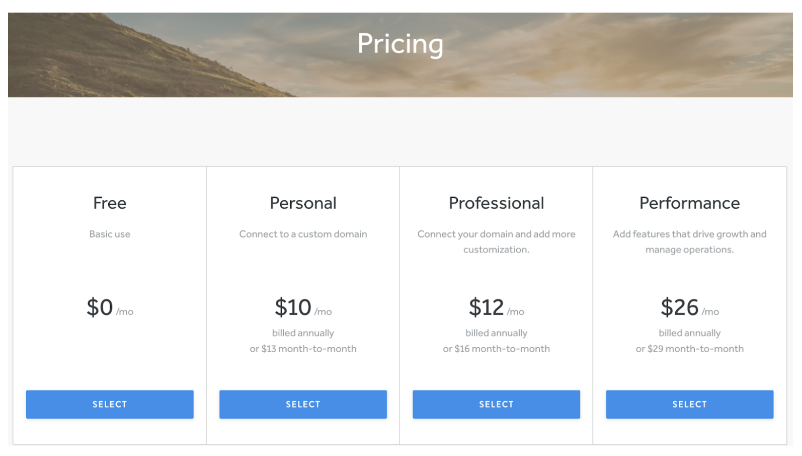
Weebly has three main plans:
- Personal Plan: At $10 per month (annually), this plan is suitable for basic websites. It includes a free domain, which is a bonus for cost-saving.
- Professional Plan: Costing $12 per month (annually), this plan offers a bit more in terms of features, suitable for more professional-looking sites.
- Performance Plan: Priced at $26 per month (annually), this is Weebly’s most comprehensive offering for high-performance websites.
For extending site functionality, Weebly’s App Center provides third-party integrations, typically requiring an additional monthly fee. While Weebly has a free plan, it’s limited for serious website use as it doesn’t allow custom domains and displays Weebly ads.
Pricing a WordPress website requires a more nuanced approach. Agencies need to assess the project’s scope, timeline, and the estimated hours required for development. The total cost for a WordPress site is largely dependent on the functionalities and the level of customization. Factors influencing the cost include hosting fees, domain name cost, theme selection (free vs. premium), and any additional plugins or custom development work. Typically, WordPress projects can be more expensive due to their customizable nature.
For more detailed information about the WordPress prices, read our article:
Customization Capabilities Compared: Weebly vs. WordPress
When it comes to customizing websites, the difference between WordPress vs Weebly is significant, especially in terms of the depth and breadth of customization each platform offers.
Weebly’s customization is user-friendly but limited. For instance, if a client needs a simple portfolio site, Weebly can easily handle this with its range of templates and basic customization options like changing colors, fonts, and layout. However, if a client wants to add a unique feature, like a custom interactive map showing their business locations, Weebly may fall short. The platform’s customization is confined to the tools and options it provides, which means you cannot go beyond what Weebly allows in its editor and available apps
WordPress offers a much higher level of customization. For example, if a client requires an e-commerce site with custom product filtering, user-specific content, or a unique checkout process, WordPress is capable of accommodating these needs. With its extensive library of over 60,000 free plugins, you can add complex functionalities like SEO tools, advanced analytics, or custom forms. And if a plugin doesn’t exist for a specific requirement, or if you want a completely custom design, a developer can create it, thanks to WordPress’s open-source nature. This level of flexibility is particularly advantageous for agencies that have the resources to develop custom solutions.
Making the Right Choice
The comparison between WordPress vs Weebly makes one thing clear: while there are tasks Weebly can do, WordPress offers a broader range of possibilities that Weebly cannot match. Essentially, anything you can do in Weebly, you can also do in WordPress, but not vice versa.
For projects with advanced features and functionalities, WordPress is the better choice. It’s suited for more complex and serious websites, where customization and scalability are the main considerations. Moreover, if your agency primarily builds websites in WordPress, managing these sites may prove to be more cost-effective in the long run, despite the potentially higher initial costs.
WordPress Development Agency
Experience WordPress development with our custom-coded websites. Perfect for agencies, our reliable service ensures timely delivery and client satisfaction.
Outsource WordPress Development with White Label Agency
If your agency doesn’t have the in-house capacity to develop and manage WordPress sites, or if you’re looking to expand your offerings without stretching your resources too thin, White Label Agency is here to help. We specialize in providing WordPress development services to agencies, enabling you to deliver high-quality, customized WordPress websites to your clients. Whether you’re looking to outsource a single project or seeking a long-term partner, don’t hesitate to contact us. Our expertise ensures your projects are in capable hands, allowing you to focus on growing your business.