
- Benefits of Outsourcing Content Writing
- Challenges of Outsourcing Content Writing
- How to Outsource Content Writing: Step-by-Step Guide
- Outsourcing vs. In-House Writing: A Comparison
- When to Outsource Content Writing (And When Not To)
- How to Ensure Success with Outsourced Content Writing
- 3. Utilizing Project Management Tools
- Top Tools and Resources for Outsourcing Content Writing
- Common Myths About Outsourcing Content Writing
- Key Takeaways
- FAQs
Outsourcing content writing has emerged as a popular solution for companies seeking to keep up with the demand for high-quality content without stretching internal resources too thin. In fact, 83% of small businesses increased their business process outsourcing (BPO) budgets in 2023, underscoring the growing reliance on external expertise.
Nearly 24% of these businesses cited improved efficiency as their top reason for outsourcing content writing, highlighting the appeal of delegating tasks like blog creation, social media posts, and website copy to specialized professionals. As content marketing becomes more integral to business success, more companies are turning to content writing services to maintain a consistent, high-quality content output without overburdening their teams.
So, what exactly is outsourced content writing, and why is it gaining traction across industries, particularly in digital marketing and content creation? Let’s explore the key reasons behind this shift and why businesses increasingly hire content writers or partner with a content creation agency.
Benefits of Outsourcing Content Writing
1. Cost-Effectiveness
One of the main benefits of outsourcing content writing is cost savings. Maintaining an in-house content team can be expensive, with costs including salaries, benefits, and overhead such as office space and equipment. On the other hand, content writing services allow companies to pay only for the content they need, whether it’s one-off projects or ongoing work.
Example: Hiring a full-time content writer in the U.S. might cost $50,000–$70,000 annually, while outsourcing to a freelance content writer or content creation agency could be a fraction of that cost, especially for small businesses or startups with limited budgets.
2. Access to Expertise and Specialized Skills
Outsourcing provides businesses with access to writers who specialize in different areas, such as SEO, technical writing, or copywriting services.
Example: Businesses needing technical documentation can hire a content writer with experience in that specific field rather than relying on a generalist in-house writer. This ensures that the content produced is both high-quality and tailored to the specific needs of the business.
3. Scalability and Flexibility
Businesses that outsource content writing can easily scale their content production based on demand. Whether it’s ramping up content for a product launch or reducing output during slower periods, outsourcing offers flexibility without the long-term commitment of hiring more full-time staff.
Example: E-commerce companies may need more product descriptions written during the holiday season but may not need that level of content creation year-round. Outsourcing content writing allows them to meet these demands efficiently.
4. Time-Saving
Managing an in-house content team requires time spent on hiring, training, and overseeing daily tasks. By outsourcing, businesses can free up their internal teams to focus on core activities like strategy and product development.
Example: Instead of tasking marketing managers with writing blog posts, they can delegate these tasks to external content writing services, enabling their teams to concentrate on high-level goals.
5. Diverse Perspectives and Ideas
Bringing in writers from outside the company often results in fresh ideas and diverse perspectives. Writers from different backgrounds can offer insights that might not emerge from an internal team.
Example: A freelance content writer from a different industry or region can provide unique viewpoints on topics, which can enhance the content’s appeal to a broader audience. This diversity in thought can be especially valuable for companies looking to connect with a global audience.
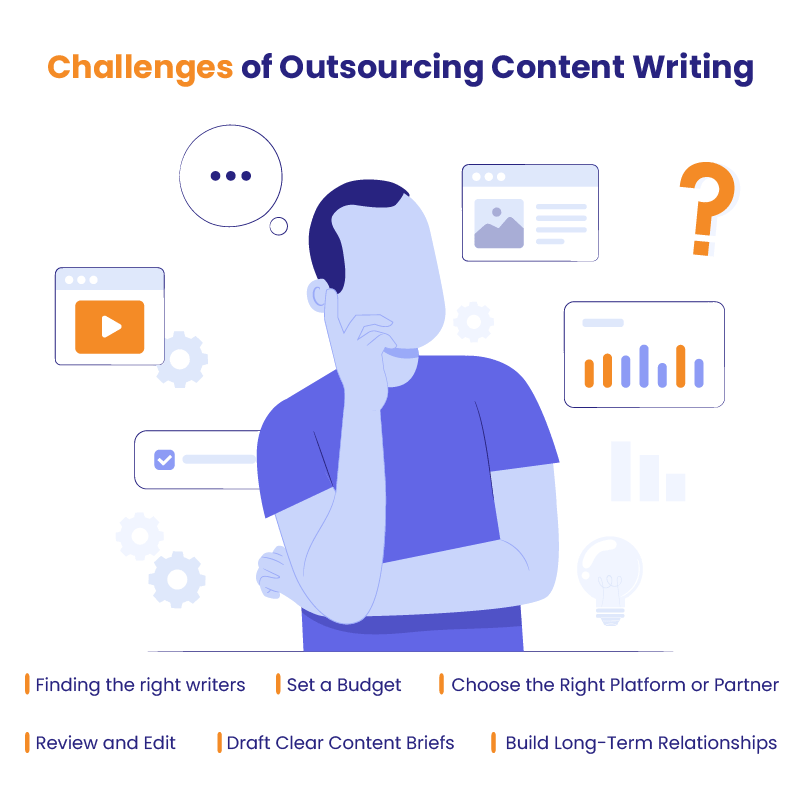
Challenges of Outsourcing Content Writing
Finding the Right Writers
One of the toughest parts of outsourcing content writing is finding writers who can match your brand’s tone and style. Not every writer can adapt to the specific styles. Different industries have different needs:
- Luxury travel brands might require a sophisticated, polished voice.
- Tech startups often prefer a casual, engaging tone.
Example: Platforms like Upwork and Fiverr, which offer access to a wide pool of freelance content writers, can help, but businesses still need to carefully vet candidates.
Some companies choose to work with a content creation agency that handles the matching process, offering pre-vetted writers who align with specific brand needs.
Quality Control
Approximately 49% of companies report that the quality of content produced is their primary challenge when outsourcing content writing.
With external writers, you might feel less control over the work process than with an in-house team. To ensure high quality, it’s crucial to establish clear editorial guidelines:
- Tone of voice
- Formatting
- Keyword usage
Example: HubSpot ensures that every outsourced article meets its SEO standards by providing writers with a detailed style guide and a content brief outlining expectations.
Regular reviews and revisions are also crucial in maintaining quality. Many content writing services offer multiple rounds of revisions, allowing clients to improve the final product.
Communication and Collaboration
When you outsource content writing, communication can sometimes be tricky, especially if the writers are in different time zones or have varying schedules. Miscommunication can lead to missed deadlines or content that doesn’t meet your expectations.
To prevent these issues, use collaboration tools like Slack or Asana to streamline communication.
Brand Consistency
Maintaining a consistent brand voice is essential when outsourcing content writing. Whether it’s for blogs, social media, or website copy, your brand message needs to stay consistent across all platforms.
Example: If Airbnb were to outsource content writing, they would need to ensure that their writers fully understand the company’s commitment to hospitality and inclusivity.
This can be achieved by:
- Sharing a comprehensive style guide.
- Offering feedback on drafts to ensure the final content reflects the brand’s identity.
Some copywriting services provide dedicated account managers who oversee the consistency of the brand’s voice across multiple writers.
HR Perspective on Hiring Writers
Anano, from our HR team at The White Label Agency, shared her insights on hiring content writers:
“While hiring a content writer, the most challenging part is to find a writer who has broad experience working with different types of content pieces (blogs, white papers, case studies, landing pages, social media posts, copywriting techniques, etc.). Another big challenge is to find a candidate capable of understanding an unfamiliar topic with the highest accuracy and showcase this ability while completing the test task.”

How to Outsource Content Writing: Step-by-Step Guide
1. Identify Your Content Needs
Before you begin to outsource content writing, it’s crucial to identify the type of content you need. This could include blog posts, social media updates, white papers, or product descriptions. Consider both the volume and frequency of content required.
Example: If your business needs three blog posts per week and daily social media updates, you’ll need to find a freelance content writer or content creation agency that can handle the workload consistently.
2. Set a Budget
Once your content needs are clear, set a budget for your content writing services. Freelancers typically charge per word, per project, or per hour, while agencies might offer packaged deals.
Example: A freelance content writer on Upwork might charge anywhere from $0.05 to $0.30 per word, depending on experience, while an agency might offer bulk content packages with added services like editing and SEO optimization. Comparing costs between freelancers and agencies can help you decide which option aligns with your budget.
3. Choose the Right Platform or Partner
Deciding where to find your writers is another key step. Freelance platforms like Upwork or Freelancer offer access to a wide variety of freelance content writers, making it easy to compare portfolios and rates.
The choice between platforms and agencies often depends on your specific needs—freelance platforms provide flexibility, while agencies offer more reliability in terms of quality and turnaround time.
4. Draft Clear Content Briefs
A detailed content brief is essential to ensure writers understand your expectations. Include specifics like target audience, brand voice, SEO guidelines, and keywords.
Example: If you’re outsourcing blog posts, make sure to include your SEO strategies, such as keyword placement and length, to align with your content goals. This helps avoid back-and-forth revisions and ensures the content meets your standards right from the start. A strong brief also gives writers the framework to produce content that resonates with a brand and audience.
5. Review and Edit
Setting up a clear review process is crucial for maintaining quality. After receiving drafts, review them carefully to ensure they meet your standards for tone, accuracy, and SEO. Working with editors or content managers can streamline this process.
Example: If you’re working with a copywriting service, the agency might offer a built-in review process with editors who ensure the content aligns with your brand’s messaging and guidelines. If you’re handling this yourself, using tools like Grammarly or Yoast can help with quality assurance.
6. Build Long-Term Relationships
Once you find writers or agencies that consistently deliver quality content, consider building long-term relationships. Retaining skilled writers saves time on future hiring and helps maintain consistency across all your content.
Many businesses that regularly outsource content writing form ongoing partnerships with freelance content writers or content creation agencies to ensure a steady flow of content. For example, a digital marketing agency might work with the same team of writers for years, resulting in a deep understanding of the brand and smoother collaboration over time.
Outsourcing vs. In-House Writing: A Comparison
Cost and ROI
- In-house team costs: Hiring full-time writers means paying salaries, benefits, and office overhead. For example, hiring a full-time writer in the U.S. might cost around $50,000 annually, not including benefits.
- Outsourcing content writing costs: When you outsource content writing, you only pay for the content you need. A company might spend $2,000 per month on content writing services, reducing overhead while still maintaining quality.
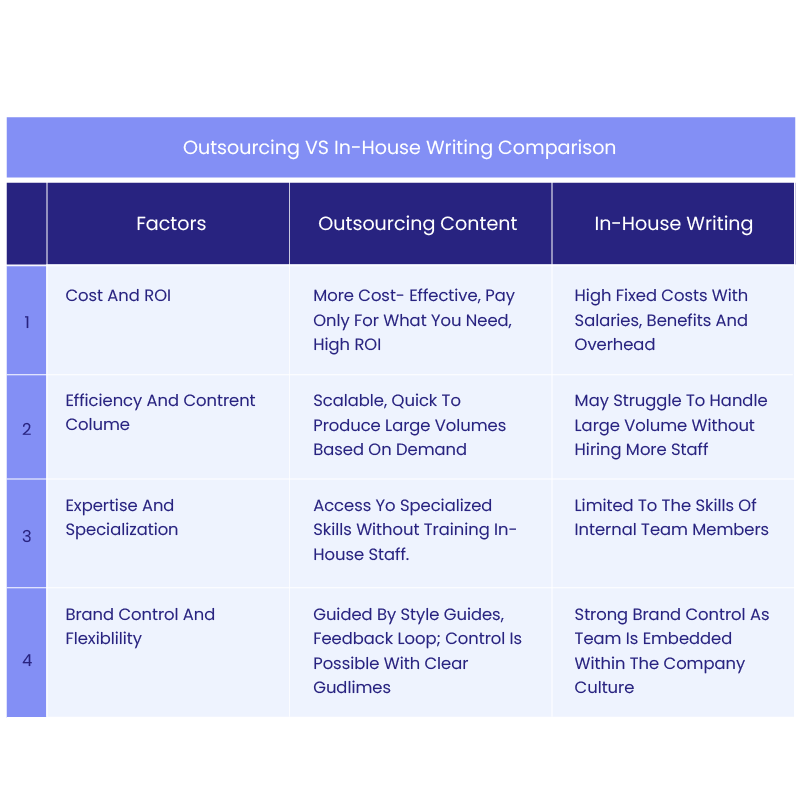
The ROI for outsourcing is often higher since you’re not locked into long-term commitments and can scale content production as needed.
Use The White Label Agency’s ROI calculator to see how outsourcing content creation can benefit your business.
Efficiency and Content Volume
Outsourcing content writing can be more efficient than managing an in-house team, particularly for high-volume content production:
- If a company needs 50 product descriptions in a week, outsourcing to a content creation agency allows them to tap into a pool of freelance content writers to meet the deadline.
- In contrast, an in-house team might struggle to meet such tight deadlines without hiring additional staff.
Outsourcing offers the flexibility to adjust content production based on immediate needs without being tied to a fixed workforce.
Expertise and Specialization
When you hire a content writer externally, you gain access to specialized skills that may not be available in-house:
- Example: A company looking for copywriting services for a technical product launch may struggle to find that expertise internally.
By outsourcing content writing, businesses can work with writers who have deep knowledge of technical SEO, industry-specific jargon, or niche subjects. This allows companies to maintain high-quality, targeted content without having to train in-house staff in these specialized areas.
Brand Control and Flexibility
One of the main advantages of an in-house content team is greater control over brand voice and messaging:
- Internal writers are deeply embedded in the company culture, making it easier to maintain a consistent tone across all content.
However, outsourcing content writing can still offer flexibility in brand control if you work closely with your external writers:
- Clear style guides and regular feedback loops can help external writers align with your brand. Many companies create detailed guidelines for brand consistency, and some content creation agencies assign dedicated account managers to oversee brand voice and style.
Which Option is Better for Your Business?
The decision between in-house content writing vs. outsourcing depends on your business’s needs and resources.
- For large companies that require constant content production and have the budget to support a full-time team, in-house might be the better option.
- However, for smaller businesses or those with fluctuating content demands, outsourcing content writing provides more flexibility, cost savings, and access to a broader range of skills.
Ultimately, the best choice is the one that aligns with your long-term content goals, budget, and need for specialized expertise.
When to Outsource Content Writing (And When Not To)
Situations Where Outsourcing Is More Beneficial
Outsourcing content writing is especially advantageous in specific scenarios:
- High-volume content production: When you need to produce a large amount of content quickly, outsourcing is often the best solution. For example, E-commerce companies with thousands of products might turn to a content creation agency to handle product descriptions efficiently.
- Specialized expertise: Businesses that require highly technical content, such as software documentation or SEO-driven blog posts, often hire a content writer with specific knowledge. This allows them to tap into niche skills without the time or expense of training an internal team.
- Flexibility during peak times: During a product launch or marketing campaign, the flexibility of outsourcing content writing helps meet short-term content needs without the overhead of hiring full-time staff. A digital marketing firm, for instance, may need a high volume of articles during a promotional campaign and can easily scale back once the campaign ends by using freelance content writers.
When In-House Content Might Be Better
In certain cases, in-house content writing vs. outsourcing can be a better choice:
- Sensitive topics: Content that requires deep brand involvement, such as internal communications, crisis management, or company culture pieces, is often better handled internally. In-house content writing teams typically have a stronger grasp of the company’s core values and can maintain the necessary confidentiality and sensitivity.
- Brand messaging during crises: For example, during a public relations crisis, an internal team may be preferred for handling the messaging, as they are more connected to the brand’s voice and understand the nuances of the situation.
- Collaboration-heavy projects: When launching a new product or service that involves multiple departments, an in-house team may ensure consistent messaging and alignment with other business functions.
Deciding Between In-House Content Writing vs. Outsourcing
Ultimately, the choice between in-house content writing vs. outsourcing depends on:
- The type of content being produced
- Available resources
- The level of brand involvement required
Outsourcing content writing works best for large-scale or specialized projects, while sensitive, deeply integrated content is usually better handled internally.
How to Ensure Success with Outsourced Content Writing
1. Create a Style Guide
A style guide is essential for maintaining consistency when you outsource content writing. It provides external writers with clear guidelines on tone, voice, formatting, and terminology, ensuring that every piece aligns with your brand.
Example: Companies like Mailchimp use a detailed style guide to maintain brand consistency across all their content writing services.
2. Frequent Communication
Regular communication is key to successful outsourcing of content writing. Setting up weekly check-ins or feedback sessions helps address issues early and keeps the project on track.
Example: A content creation agency may assign an account manager who regularly updates you on progress, ensuring alignment with your goals.
3. Utilizing Project Management Tools
Tools like Trello, Asana, or Monday.com can help manage deadlines and keep track of content progress.
Many businesses that hire a content writer use these tools to assign tasks, monitor workflows, and ensure timely delivery, making collaboration more efficient, even across time zones.
4. Measuring Results
To gauge the success of your outsourced content writing, track performance through SEO metrics, engagement, and conversions.
Example: Using Google Analytics to monitor organic traffic or keyword ranking can help determine whether your copywriting services are delivering value.
5. Adjusting Strategy Based on Results
Analyzing performance data allows you to refine your content strategy. If a certain type of content—like long-form blog posts—is generating more traffic, you can adjust your approach to focus more on that format. This flexibility ensures that outsourcing content writing continues to meet your evolving business goals.
Top Tools and Resources for Outsourcing Content Writing
Content Marketplaces
Platforms like Upwork and Fiverr are popular for outsourcing content writing. These marketplaces connect businesses with freelance content writers, allowing you to choose from a range of professionals based on skills, reviews, and pricing. Whether you need blog posts, SEO content, or copywriting services, these platforms offer a flexible way to hire a content writer for various projects.
Project Management Tools
Tools like Asana and Trello are invaluable for managing workflows when you outsource content writing. These platforms help keep track of tasks, set deadlines, and monitor progress, ensuring that both internal teams and external writers stay aligned. This is especially useful for agencies or businesses handling multiple content pieces simultaneously.
Content Optimization Tools
Grammarly, Editpad and Yoast are essential for maintaining high-quality content. Grammarly helps ensure your outsourced content is free of grammar and spelling errors. Whereas Editpad helps elevate content quality and check its originality with minimal effort, Yoast optimizes your content for SEO. These tools are widely used by both in-house teams and content creation agencies to enhance the quality and visibility of written content.
Common Myths About Outsourcing Content Writing
- “Outsourced writers can’t understand my brand.”
A common concern is that outsourced content writers won’t grasp your brand’s voice or values. However, with the right approach, external writers can align perfectly with your brand. The key is to provide detailed style guides, brand guidelines, and clear instructions. Many businesses that outsource content writing successfully use onboarding processes and regular communication to ensure external writers fully understand their messaging. For instance, companies like HubSpot provide comprehensive brand guidelines to their freelance content writers, ensuring consistency across all content.

- “It’s always more expensive.”
Some believe that outsourcing content writing is more costly than hiring in-house teams. In reality, outsourcing can be far more cost-effective, especially for businesses with fluctuating content needs. When you hire a content writer externally, you pay only for the content you need, avoiding long-term salaries, benefits, and overhead. For example, many startups rely on content writing services to scale their content production without the financial commitment of full-time staff.
- “I’ll lose control over content quality.”
There’s a misconception that outsourcing content writing leads to lower quality. However, you can maintain control over content by setting up clear editorial guidelines, establishing a strong review process, and providing feedback. Many content creation agencies offer multiple rounds of revisions to ensure the content meets your standards. For example, companies often implement detailed content briefs and regular check-ins to maintain quality when working with freelance content writers. This structured process ensures that outsourced content aligns with your expectations.
Key Takeaways
Outsourcing content writing offers businesses a cost-effective, flexible solution for meeting their content needs. It allows access to specialized skills, the ability to scale content production, and the opportunity to bring fresh perspectives into your brand’s messaging.
FAQs
What is outsource content writing?
Outsource content writing is the process of delegating the creation of written content, such as blog posts, website copy, social media updates, email campaigns, and more, to external writers, freelancers, or specialized content agencies. Instead of managing an in-house team, businesses collaborate with skilled writers or agencies to produce high-quality content tailored to their specific goals and audience.
This approach is popular among businesses and agencies that want to save time, access professional writing expertise, and scale their content production without hiring full-time employees. Outsourcing also allows companies to focus on core operations while ensuring their content needs are consistently met.
What are the 3 C’s of content creation?
The 3 C’s of content creation are Clarity, Consistency, and Creativity. These principles guide effective content that resonates with audiences and achieves desired goals:
Clarity:
Content should be clear and easy to understand. Use simple language, concise messaging, and structure your content in a way that ensures the audience quickly grasps your point. Clarity ensures that your content communicates its purpose effectively, whether it’s informing, educating, or persuading.
Consistency:
Maintaining a consistent tone, voice, and posting schedule is crucial for building trust and recognition. Consistency helps your audience know what to expect and creates a cohesive brand identity across all content formats and platforms.
Creativity:
To stand out in a crowded digital space, content must be creative and engaging. This involves presenting ideas in unique ways, using storytelling, visual elements, or thought-provoking angles that capture and retain your audience’s attention.
By focusing on these three C’s, content creators can produce high-quality, impactful materials that drive engagement and achieve strategic objectives.
Is content creation still profitable?
Yes, content creation is still highly profitable, especially in the digital age where businesses rely on engaging content to attract and retain customers. Here’s why content creation remains a lucrative field:
High Demand:
With the rise of digital marketing, businesses of all sizes need high-quality content for websites, blogs, social media, email marketing, and SEO. The demand for skilled content creators continues to grow.
Multiple Monetization Opportunities:
Content creators can earn through various streams such as ad revenue, sponsored posts, affiliate marketing, selling digital products (e.g., eBooks, courses), or offering content services like writing, editing, or consulting.
Scalability:
Content creation allows for scalability. Once created, content like online courses, YouTube videos, or digital downloads can generate passive income over time without continuous effort.
Business Value:
For businesses, content creation drives traffic, generates leads, and enhances brand visibility. Investing in content often delivers a strong return on investment (ROI) through increased sales and customer retention.
Emerging Platforms:
New platforms and tools constantly open up opportunities for creators to reach niche audiences, further boosting profitability.
Whether you’re an individual content creator or a business investing in content, focusing on delivering value, leveraging trends, and building a loyal audience makes content creation a sustainable and profitable venture.
How much does it cost to outsource content creation?
The cost of outsourcing content creation varies widely based on factors such as the type of content, the writer’s expertise, project scope, and turnaround time. Here’s a general breakdown to give you an idea:
1. Type of Content
Blog Posts: $50–$500+ per post, depending on length, complexity, and required expertise.
Website Copy: $100–$3,000+ for a complete website, based on the number of pages and SEO needs.
Social Media Content: $10–$100+ per post or $500–$2,000+ for monthly management.
Ebooks/Whitepapers: $500–$5,000+ depending on the length and research involved.
Video Scripts: $100–$1,000+ per script, depending on length and creative requirements.
2. Level of Expertise
Entry-Level Freelancers: $0.05–$0.15 per word or $50–$150 per article. Suitable for basic content with minimal research.
Mid-Level Freelancers: $0.15–$0.50 per word or $150–$500 per article. Ideal for more specialized topics or industries.
Expert Writers or Agencies: $0.50–$2.00+ per word or $500–$2,000+ per article. Perfect for technical, highly-researched, or niche content.
3. Geographical Differences
Writers or agencies in North America, Europe, or Australia typically charge higher rates than those in other regions, like South Asia or Eastern Europe, while maintaining quality.
4. Service Providers
Freelancers: Typically more affordable and flexible, but may require more hands-on management.
Content Agencies: Higher cost, typically ranging from $1,000–$10,000+ per month, but they provide comprehensive services, including strategy, editing, and SEO optimization.
5. Add-Ons
SEO Optimization: $50–$300+ per piece of content.
Editing and Proofreading: $30–$200+ per project.
Research-Intensive Projects: Costs may increase significantly for data-driven or highly specialized content.
Key Takeaway:
Outsourcing content creation can fit a wide range of budgets. It’s essential to define your goals, understand your audience, and evaluate the quality of work to ensure you get the best value for your investment.