- Understanding White Label SEO Reporting
- WordPress Development Agency
- 4 Essential Components of a White Label SEO Report
- Selecting the Right Tools and Platforms
- Step-by-Step Guide to Creating a White Label SEO Report
- 4 Common Pitfalls and How to Avoid Them
- WordPress maintenance plans
- Conclusion: The Value of White Label SEO Reporting
White label SEO reports allow agencies to deliver comprehensive SEO insights under their own branding. These reports include key SEO data like keyword rankings, organic traffic trends, and backlink analysis, all customized with agency logos and colors. By using white label SEO reporting, agencies can maintain brand consistency while saving time through automation.
A well-structured white label SEO audit enhances client trust, streamlines communication, and provides clear, actionable insights. This guide will cover everything from selecting the right tools to creating data-driven reports that effectively communicate value to clients.
Understanding White Label SEO Reporting
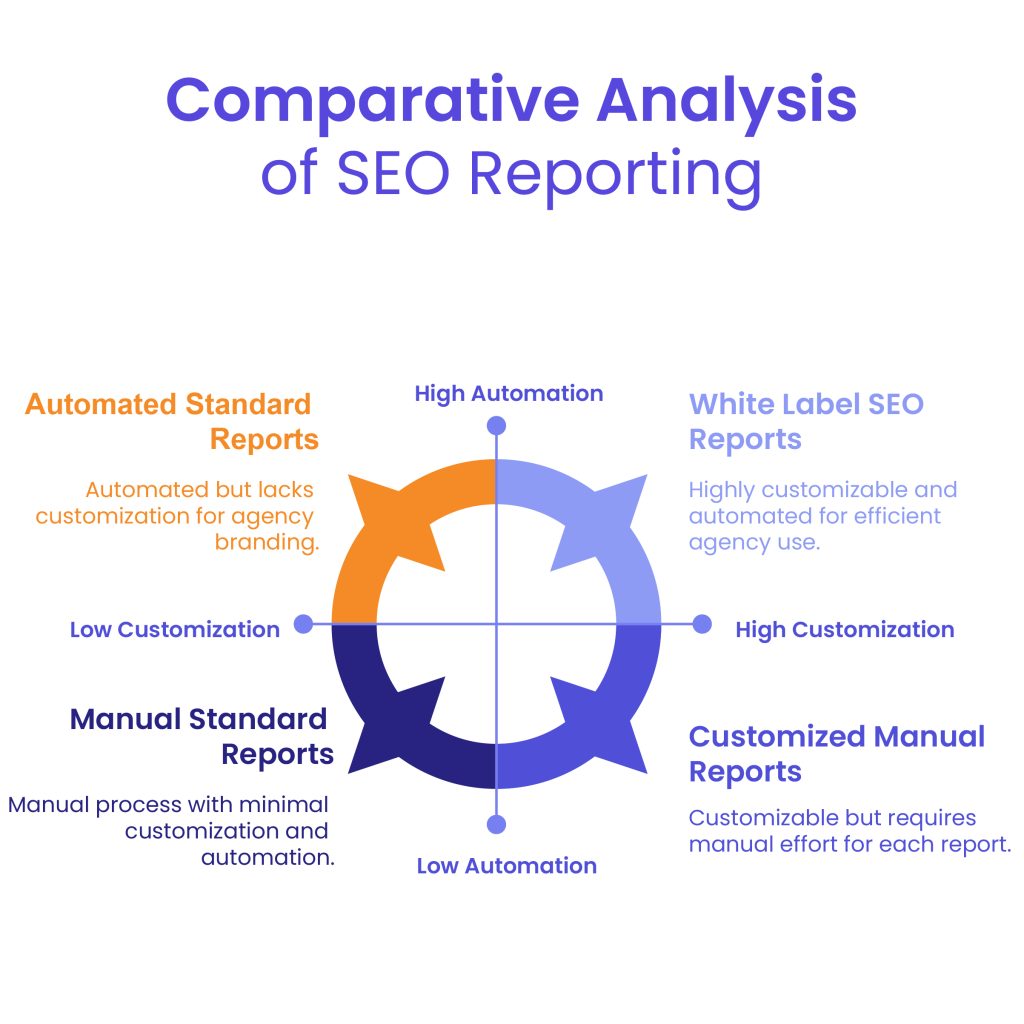
Let’s start with a question: What makes a report “white label”? White label SEO reporting allows agencies to provide branded SEO reports to clients without revealing third-party tools. Unlike standard SEO reports, which often feature the software provider’s branding, white label SEO reports are fully customizable, allowing agencies to reinforce their brand identity while delivering key SEO insights.
3 Differences from Standard SEO Reports
A white label SEO audit differs from a standard SEO report in several ways:
- Branding Control: Agencies can customize everything, from logos and colors to fonts and layouts.
- Customization & Flexibility: White label reports allow agencies to tailor data presentation, ensuring that clients receive insights that align with their business objectives.
- Automation Options: Automated white label SEO reporting helps agencies save time by integrating real-time data sources like Google Analytics and Search Console.
Recommendation
Want to learn more about white label search engine optimization services? Check out this comprehensive guide on white label SEO.
Benefits for Agencies and Clients
Providing branded SEO reports improves professionalism and strengthens client trust. A white label SEO report presents data in a way that positions the agency as an expert while reinforcing brand visibility.
Streamlining Communication and Saving Time
Manually compiling SEO data can be time-consuming. Automated white-label SEO reporting reduces workload by pulling in real-time analytics and formatting them into a white label SEO audit that’s easy to interpret.
Scaling and Customization Advantages
Agencies handling multiple clients benefit from the ability to scale reporting. Whether using automated SEO tools or spreadsheet-based solutions, white label SEO reports provide customization options that fit different business needs.
WordPress Development Agency
Experience WordPress development with our custom-coded websites. Perfect for agencies, our reliable service ensures timely delivery and client satisfaction.
4 Essential Components of a White Label SEO Report
A high-quality white label SEO report should be well-structured, informative, and visually appealing. Every report should provide a clear overview of SEO performance, helping clients understand where they stand and what steps they need to take next. In this section, we’ll explore the fundamental elements that make an SEO report truly valuable.
1. Executive Summary & Key Insights
A well-crafted executive summary is crucial in white label SEO reporting. It highlights the most critical data points, ensuring clients can quickly grasp SEO performance trends without sifting through complex metrics.
A white label SEO report should focus on key performance indicators such as organic traffic growth, keyword rankings, and backlink trends. Agencies can make reports more digestible by providing a high-level overview and actionable takeaways.
2. Detailed Performance Metrics
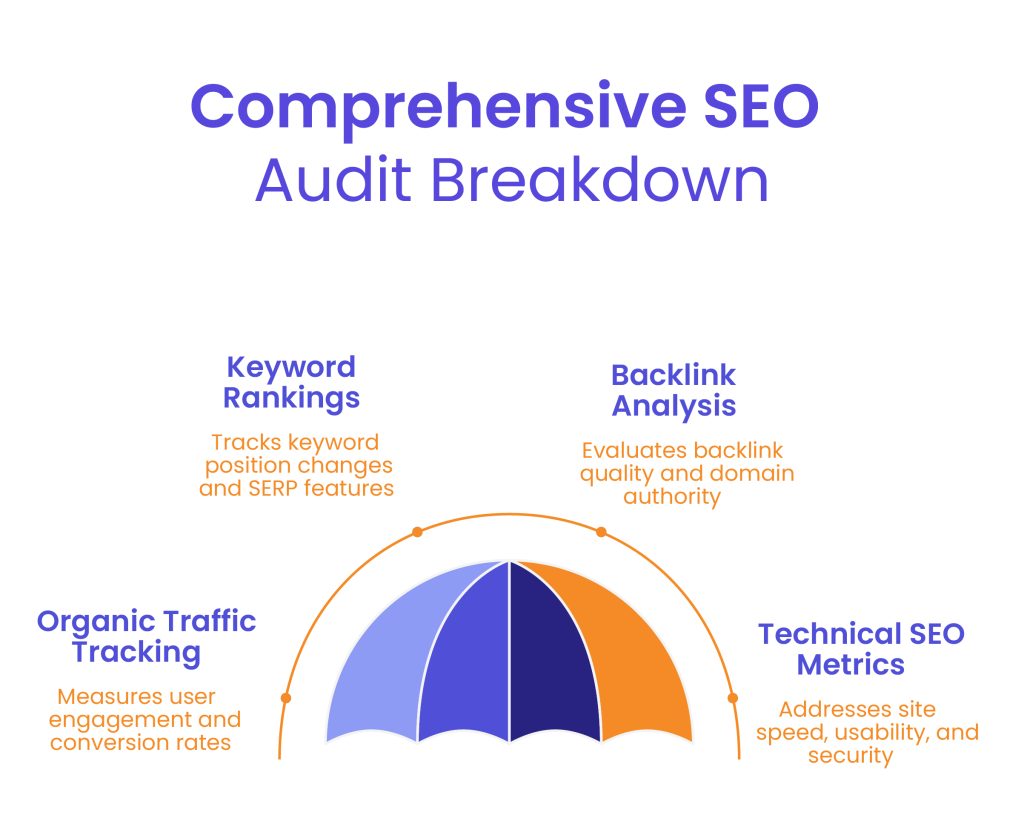
A comprehensive white label SEO audit should include essential performance metrics that provide insights into a website’s SEO health. These metrics help clients identify strengths, weaknesses, and opportunities for improvement.
Organic Traffic & Conversions
Tracking organic traffic and conversions is a fundamental part of white label audits. Metrics such as bounce rates, user engagement, and goal completions help measure the effectiveness of an SEO strategy. Understanding these numbers enables agencies to recommend targeted optimizations that improve user retention and increase conversions.
Keyword Rankings & Visibility
Clients want to know how their website is performing on search engines. White label SEO reports should include:
- Keyword position changes over time
- SERP feature tracking (e.g., featured snippets, local packs)
- Opportunities for long-tail keyword growth
Monitoring keyword rankings and visibility ensures that agencies can adjust SEO strategies to target high-value search terms and capitalize on emerging trends.
Backlink Analysis
A high-quality white label SEO report must evaluate backlink quality, quantity, and domain authority. Agencies can use tools like Ahrefs or SEMrush to track new and lost backlinks and identify link-building opportunities. A strong backlink profile helps improve domain authority, which in turn boosts search rankings.
Technical SEO Metrics
The technical health of a website is crucial for rankings. A white-label SEO audit should cover:
- Site speed and load times
- Mobile usability and responsiveness
- Crawl errors and indexing issues
- Security vulnerabilities
Addressing these technical factors ensures that a website is optimized for both users and search engines, helping maintain long-term ranking stability.
3. Data Visualization & Reporting Design

Effective use of charts, graphs, and dashboards is essential in SEO reporting. Presenting data visually in a white label SEO report makes it easier for clients to understand trends. Branded SEO reports should use:
- Charts and graphs to illustrate traffic trends
- Comparative data showing before-and-after improvements
- Dashboards summarizing key metrics
Visualizing complex SEO data simplifies client communication and enhances overall report engagement.
Before-and-After Comparisons and Trend Analysis
Tracking SEO progress over time is essential. White label SEO reporting should include side-by-side comparisons of past and present data, helping clients see measurable improvements. Highlighting month-over-month and year-over-year growth makes it easier to showcase long-term SEO gains.
4. Custom Branding & Personalization
A core advantage of white label SEO reports is the ability to personalize them with agency branding. Customization options include:
- Adding agency logos and brand colors
- Tailoring messaging to align with client goals
- Using consistent fonts and styles for a polished look
Personalization strengthens brand recognition and ensures that clients associate SEO success with the agency providing the report.
Actionable Insights and Recommendations
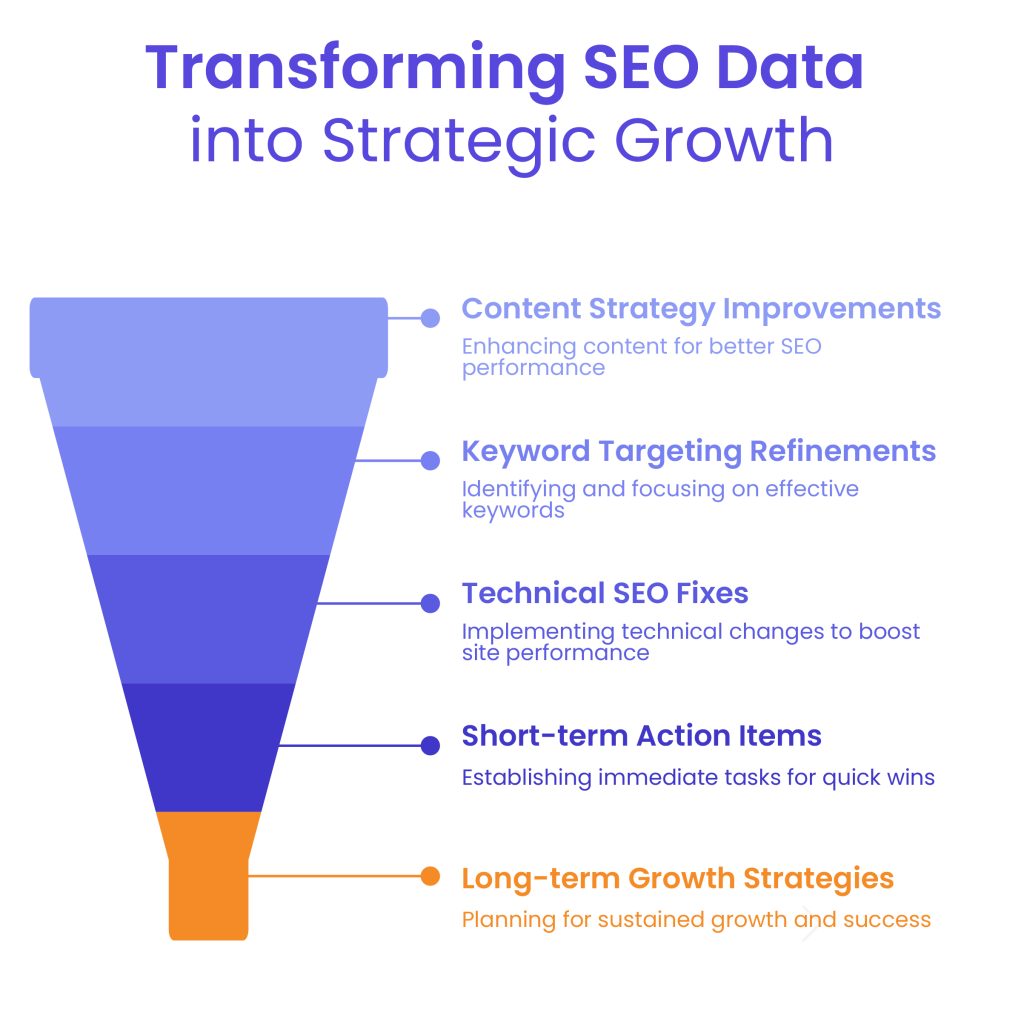
Let’s start by looking at how to turn data into a strategy. White-label SEO reports should go beyond presenting numbers—they should include strategic recommendations. Agencies should provide:
- Content strategy improvements (e.g., blog optimizations)
- Keyword targeting refinements
- Technical SEO fixes (e.g., site speed optimizations)
Providing detailed recommendations ensures that clients can take immediate action to improve their SEO performance.
Recommendation
Learn how to write SEO content that ranks.
Setting Future Goals and Next Steps
To ensure ongoing success, a white label SEO audit should outline:
- Short-term SEO action items
- Long-term growth strategies
- Measurable KPIs to track over time
By setting clear goals and defining next steps, agencies can help clients stay on track with their SEO objectives and continuously improve their online presence.
Selecting the Right Tools and Platforms
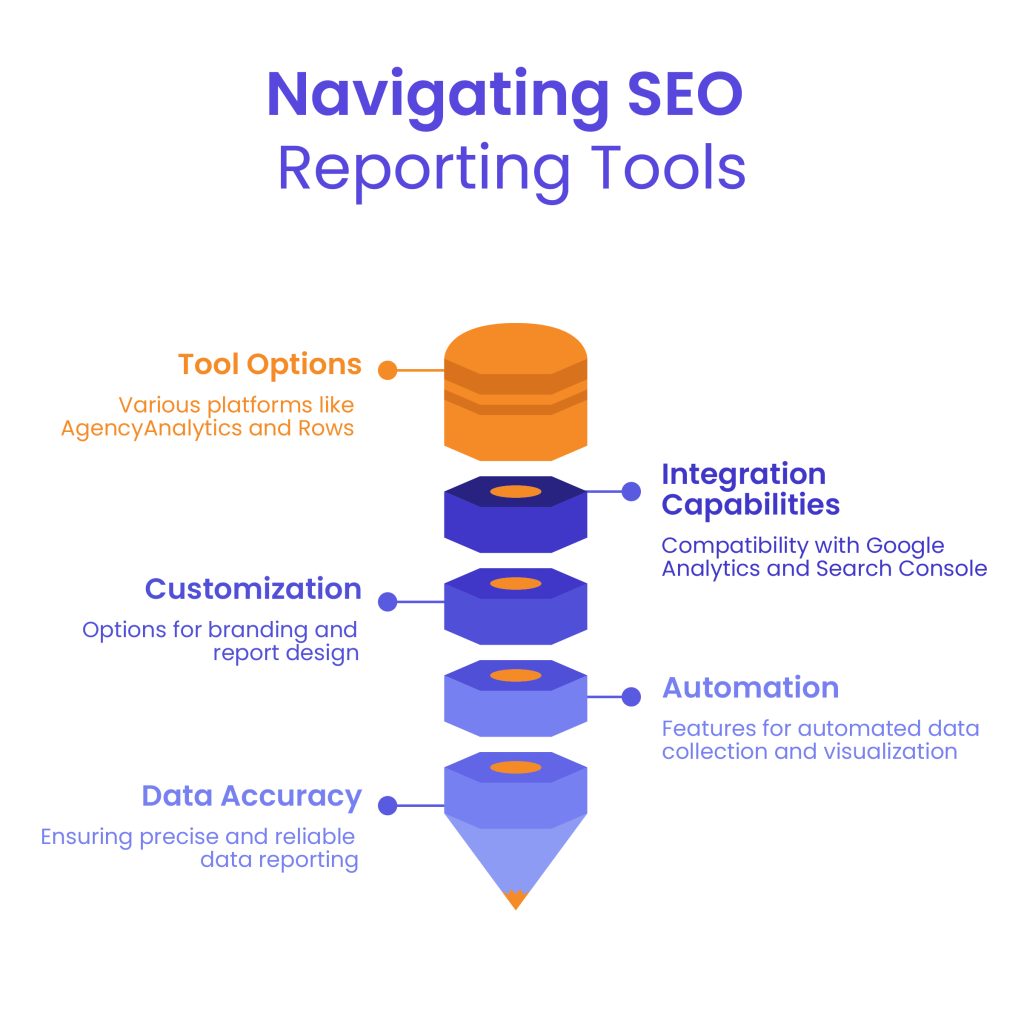
The right tools can significantly enhance the effectiveness and efficiency of white label SEO reporting. Agencies must choose a platform that integrates seamlessly with their workflow while providing the necessary customization options.
Overview of Popular Reporting Tools
Selecting the right tool for white label SEO reporting is crucial for efficiency and customization. Popular platforms such as AgencyAnalytics, Rows, and other integrated solutions provide agencies with automation, branding options, and robust data tracking. Each of these tools offers unique features that cater to different agency sizes and reporting needs.
Criteria for Choosing a Tool
Not all SEO reporting tools are created equal. Agencies must consider several factors before committing to a platform. The most important aspects include integration capabilities with platforms like Google Analytics, Google Search Console, and third-party keyword tracking tools. Additionally, features like customization options, automation capabilities, ease of use, and data accuracy should play a key role in the decision-making process.
Automated Platforms vs. Custom Spreadsheet Solutions
When it comes to reporting, agencies typically choose between automated white label reporting platforms and custom spreadsheet-based solutions. Each option has its advantages and drawbacks:
- Automated SEO Reporting Platforms: These tools streamline report generation by automating data collection and visualization. They are ideal for agencies that need quick, professional reports without spending hours on manual input.
- Custom Spreadsheet Solutions: While requiring more hands-on work, spreadsheet-based reporting allows for greater flexibility and control over data presentation. This is a better fit for agencies that require extensive customization beyond what automated platforms offer.
The choice ultimately depends on an agency’s size, client needs, and reporting complexity. Larger agencies with multiple clients may benefit more from automation, while boutique agencies might prefer a more tailored approach with spreadsheet solutions.
Step-by-Step Guide to Creating a White Label SEO Report

Crafting a white label SEO report involves multiple steps, from defining objectives to finalizing a polished, branded SEO report. Following a structured approach ensures that reports remain insightful, actionable, and client-friendly.
Step 1: Define Objectives and Identify Your Audience
Before collecting data, agencies must establish the key goals of the report. Understanding the client’s business needs, industry, and primary KPIs will help shape the report’s structure. Some clients may prioritize keyword rankings, while others focus on conversion rates and technical SEO insights. Tailoring reports to client expectations ensures relevance and usability.
Step 2: Data Collection & Integration
Once objectives are set, the next step is gathering accurate SEO data. Agencies should pull metrics from tools like Google Analytics, Google Search Console, Ahrefs, SEMrush, and backlink trackers. Setting up APIs and automation where possible ensures real-time updates and reduces manual workload.
Step 3: Designing Your Report Template
A professional, well-structured report improves readability and client engagement. Agencies should ensure that:
- The report layout is clear and visually appealing.
- Key sections, such as performance summaries and actionable insights, are easy to find.
- Branding elements like agency logos and color schemes are incorporated.
- Reports are mobile-friendly, ensuring accessibility across devices.
Step 4: Populating the Report with Data
Once the template is set, the next step is to input data effectively. Reports should include:
- Traffic analysis, showcasing trends over time.
- Keyword performance, highlighting ranking shifts and search intent opportunities.
- Backlink insights, presenting link quality and acquisition growth.
- Technical SEO metrics, such as page speed and mobile usability improvements.
Clear visualization of data through graphs, tables, and trend lines enhances client comprehension.
Step 5: Crafting Actionable Recommendations
Raw data alone doesn’t provide value—insights and strategic recommendations are what make an SEO report effective. Agencies should translate metrics into clear actions, such as:
- Optimizing high-performing content for featured snippets.
- Enhancing internal linking structures to reduce bounce rates.
- Targeting new keyword opportunities based on competitor analysis.
Step 6: Quality Assurance & Client Testing
Before sending reports, agencies must ensure data accuracy and readability. Conducting a final review, checking for errors or inconsistencies, and gathering internal feedback guarantees a professional output. Some agencies conduct client walkthroughs to refine reports based on client feedback.
4 Common Pitfalls and How to Avoid Them

Even with the best strategies, there are common mistakes agencies make when creating a white label SEO report. Being aware of these pitfalls can help maintain the quality and effectiveness of reports.
Overcomplicating the Report
Including excessive data without clear organization can overwhelm clients. Instead, focus on concise, easy-to-understand insights that highlight key takeaways.
Inaccurate or Outdated Data
Ensuring data accuracy is critical. Using real-time data integrations and verifying metrics before finalizing reports prevents misleading insights.
Poor Visual Design & Readability
A cluttered layout or overuse of jargon can make reports difficult to digest. Using clear headings, consistent formatting, and well-structured graphs enhances readability.
Lack of Actionable Insights
A report should not just present numbers—it should offer strategic recommendations that guide the client toward SEO improvements. Every section should include a takeaway or next step.
By addressing these pitfalls, agencies can ensure that their white label SEO reports remain impactful, insightful, and user-friendly.
WordPress maintenance plans
WordPress Maintenance Plans ensure site security, performance, and uptime. Choose custom plans with backups, monitoring, and unlimited content edits.
Conclusion: The Value of White Label SEO Reporting
White label SEO reports are an essential tool for agencies aiming to provide branded SEO reports that streamline reporting, enhance credibility, and offer clients actionable insights. Throughout this guide, we’ve explored why white label SEO reporting is important, the best tools to use, and how to create white-label SEO reports and automate them effectively. A well-structured white label SEO audit not only communicates performance but also fosters stronger client relationships through transparency and strategic direction.
If you’re looking to leverage other white label services beyond SEO, the White Label Agency (WLA) is your trusted partner. We’ve worked with over 600 agencies, delivering more than 10,000 websites and providing ongoing maintenance for 800+ sites. Our expertise lies in white label website development and WordPress maintenance, allowing agencies to scale their offerings without the overhead of an in-house team.
Whether you need custom WordPress builds or website maintenance, WLA helps you deliver high-quality digital solutions under your brand. Get in touch today to see how we can support your agency’s growth.