- Understanding ClickFunnels and WordPress: Core Differences
- ClickFunnels: The All-in-One Sales Funnel Builder
- WordPress: The Versatile Content Management System
- ClickFunnels vs WordPress: A Comprehensive Comparison
- WordPress Development Agency
- Pros and Cons: ClickFunnels vs WordPress
- Best Use Cases: When to Choose ClickFunnels or WordPress
- ClickFunnels vs WordPress for Digital Agencies
- Hire WordPress developer
- Making the Right Choice: Decision-Making Framework
- WordPress vs ClickFunnels: What is Better for 2025?
- FAQs
Choosing the right platform can make or break your online success. ClickFunnels and WordPress stand as titans, but which one fits your business best? The decision between ClickFunnels vs WordPress can be difficult to make and this comprehensive guide aims to dissect both platforms, offering you the insights needed to make an informed decision that helps you choose the one that will drive your business forward.
Whether you’re an experienced online entrepreneur or just starting out, understanding the nuances of ClickFunnels vs WordPress is essential. Each platform has its own strengths and is designed to meet different needs, hence this decision is a vital step for your business.
Understanding ClickFunnels and WordPress: Core Differences
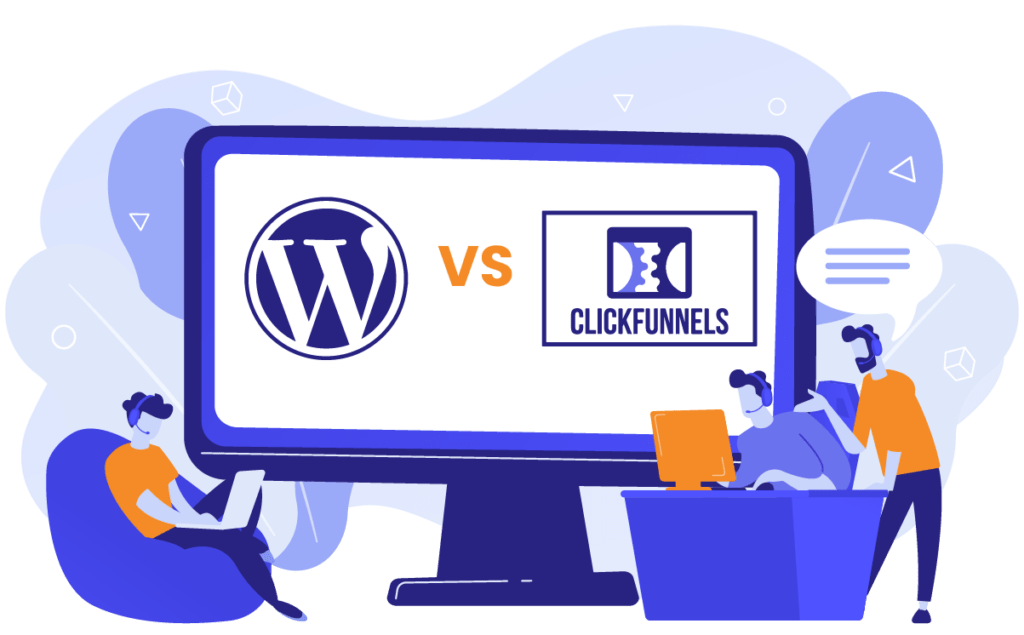
At the heart of the ClickFunnels vs WordPress debate lies the fundamental difference in their primary focus. ClickFunnels is primarily a sales funnel builder, designed to streamline the buying process and increase conversion rates. On the other hand, WordPress is renowned for being a versatile content management system (CMS) with a strong community supporting it.
Target Audience and Ownership
ClickFunnels caters to entrepreneurs, marketers, and businesses seeking to create high-converting sales funnels without extensive technical know-how. Its user-friendly interface and pre-built templates make it a go-to platform for optimized sales processes.
WordPress, conversely, targets users who desire extensive customization and more control over their website. This includes bloggers, web developers, and businesses of all sizes. Its vast array of themes and plugins makes it a popular choice for users who wish to build a unique and versatile website.
A key difference in the ClickFunnels vs WordPress comparison is the aspect of ownership. ClickFunnels operates as a Software-as-a-Service (SaaS) platform, meaning you don’t have full website ownership. In contrast, WordPress is a self-hosted CMS, granting you complete ownership over your WordPress website.
ClickFunnels: The All-in-One Sales Funnel Builder
ClickFunnels has evolved into a comprehensive solution for businesses looking to create and launch effective sales funnels. With the release of ClickFunnels 2.0, the platform has further enhanced its capabilities, offering an even more robust set of features.
Key Features of ClickFunnels
- Course and Membership Site Capabilities: Users can create and sell online courses, subscriptions, and digital products directly through the platform.
- Sales Funnel Builder: At its core, ClickFunnels offers a user-friendly drag-and-drop editor with pre-designed templates, that allow for easy assembly and customization of funnels.
- Integrations: ClickFunnels integrates with various payment gateways, email marketing tools, and other essential services.
- Analytics and Reporting: The platform offers comprehensive analytics tools to track and optimize funnel performance.
- Built-in Email Marketing and CRM: ClickFunnels has built-in email marketing tools and a CRM system to manage customer relationships.

WordPress: The Versatile Content Management System
WordPress powers approximately 40% of all websites on the internet, a testament to its versatility and robustness. It offers a flexible foundation for creating virtually any type of website.
Key Features of WordPress
- Blogging and Content Creation Tools: WordPress provides inherent blogging capabilities and robust content management features.
- CMS Capabilities: WordPress excels in managing a wide array of web content, from simple blogs to complex websites.
- Plugins and Themes: With access to nearly 60,000 plugins and countless themes, WordPress offers unparalleled customization options.
- E-commerce Potential: Through plugins like WooCommerce, WordPress can support everything from digital downloads to large-scale retail operations.

ClickFunnels vs WordPress: A Comprehensive Comparison
ClickFunnels vs WordPress: User-Friendliness and Ease of Use
ClickFunnels: is designed with non-technical users in mind, offering a straightforward interface and pre-built templates. This simplicity allows entrepreneurs to quickly set up sales funnels without diving into technical details.
WordPress: while powerful, has a steeper learning curve. However, the WordPress community has created numerous resources to help beginners. The platform allows for complete control over your website, but this comes with added complexity in managing hosting, updates, and backups.
ClickFunnels vs WordPress: Customization
ClickFunnels: offers customization options within its funnel templates, allowing users to adjust colors, fonts, and elements to match their branding. However, the customization is primarily confined to the sales funnel functionality.
WordPress: being an open-source platform, offers vast customization capabilities. With thousands of themes and plugins, users can tailor their sites to exact specifications, making WordPress incredibly flexible for those willing to invest the time.
ClickFunnels vs WordPress: E-Commerce
ClickFunnels provides built-in shopping cart features and integrates with various payment gateways, excelling in creating streamlined sales processes.
WordPress through plugins like WooCommerce, offers extensive e-commerce functionality. While it requires an additional step to set up, it provides comprehensive features and customization options for online stores of all sizes.
WordPress Development Agency
Experience WordPress development with our custom-coded websites. Perfect for agencies, our reliable service ensures timely delivery and client satisfaction.
Best Practices for E-Commerce on Both Platforms
- Optimize for Mobile: Ensure your store is fully responsive, as a significant portion of e-commerce traffic comes from mobile devices.
- Focus on User Experience: Create a smooth, intuitive buying process to reduce cart abandonment.
- Implement Strong Security Measures: Protect customer data and build trust with SSL certificates and secure payment gateways.
- Utilize Email Marketing: Both platforms can integrate with email marketing tools to re-engage customers and boost sales.
ClickFunnels vs WordPress: Marketing Tools and SEO
ClickFunnels: excels in providing tools for funnel building and conversion rate optimization. It includes A/B testing, email integrations, and analytics focused on driving sales through funnels.
WordPress: with plugins like Yoast SEO, offers comprehensive tools for search engine optimization, helping your site rank higher in search engine results. Its flexibility allows for a wide array of marketing strategies beyond just sales funnels.

ClickFunnels vs WordPress: Pricing and Total Cost of Ownership
ClickFunnels: operates on a subscription model with different tiers based on features and the number of funnels/pages needed. Prices start at $97/month, which can become costly as your business grows and requires more complex funnels or increased traffic capacity.
WordPress: is free to use, but costs accrue from hosting, domain registration, premium themes/plugins, and potential development work. Despite these costs, WordPress generally scales more economically due to the wide range of pricing options available for hosting and additional services. To read more about WordPress costs, check out our blog:
ClickFunnels vs WordPress: Security and Maintenance
ClickFunnels: offers managed security, taking care of updates and protection against threats. This can be a significant advantage for users who prefer not to handle technical security measures.
WordPress: being a self-hosted solution, requires users to take charge of security. This involves regular updates, using security plugins, and implementing best practices. While it offers more control, it also demands more responsibility from the user. Check our ultimate guide for WordPress maintenance to learn more.
Pros and Cons: ClickFunnels vs WordPress
Understanding the strengths and weaknesses of each platform is crucial in making an informed decision.
ClickFunnels Pros:
- All-in-one solution for sales funnels
- User-friendly with drag-and-drop functionality
- Conversion-focused templates and tools
- Integrated A/B testing and analytics
ClickFunnels Cons:
- Limited customization compared to WordPress
- Higher monthly costs
- Less control over hosting and infrastructure
WordPress Pros:
- Highly customizable with vast theme and plugin options
- Full ownership and control over your website
- Strong community support and resources
- Excellent for SEO with the right plugins
WordPress Cons:
- Can be overwhelming with too many options
- Steeper learning curve for beginners
- Requires more hands-on maintenance and security measures

Best Use Cases: When to Choose ClickFunnels or WordPress
Ideal Scenarios for ClickFunnels
ClickFunnels shines in scenarios where the primary focus is on creating high-converting sales funnels. It’s particularly well-suited for:
- Entrepreneurs launching new products
- Businesses focusing on direct sales and lead generation
- Marketers needing quick deployment of landing pages and sales funnels
Perfect Use Cases for WordPress
WordPress is ideal for:
- Content-heavy websites and blogs
- E-commerce stores requiring extensive customization
- Businesses needing a scalable, multi-purpose website
- Organizations requiring complex site structures and functionalities
Combining ClickFunnels and WordPress
For some businesses, the best solution might be a combination of both platforms. You could use WordPress for your main website and content management while leveraging ClickFunnels for specific sales campaigns or product launches.
ClickFunnels vs WordPress for Digital Agencies
Digital agencies face unique challenges when choosing between ClickFunnels and WordPress. Here’s how they compare:
Meeting Client Needs: Customization vs. Quick Deployment
WordPress offers unparalleled customization, allowing agencies to create truly unique websites for clients. ClickFunnels, while more limited in customization, enables quick deployment of sales funnels, which can be advantageous for clients needing rapid results.
Scalability and Client Management
WordPress, with its extensive ecosystem, provides better scalability for managing multiple client websites. ClickFunnels, while efficient for funnel creation, may become challenging to manage for numerous clients with diverse needs.
Pricing Strategies and Profitability
The choice between ClickFunnels and WordPress can significantly impact an agency’s pricing strategy and profitability. WordPress often allows for more competitive pricing due to its lower ongoing costs, while ClickFunnels’ subscription model may require agencies to factor in higher recurring expenses.
Marketing and SEO Tools Comparison
Both platforms offer many marketing tools, but WordPress edges out in terms of SEO capabilities and content marketing features. ClickFunnels, however, can provide more streamlined tools for conversion optimization and funnel analytics.
Hire WordPress developer
Hire WordPress developer from our 150+ team. Scale your WordPress projects, without the hassle of recruiting a technical team.
Making the Right Choice: Decision-Making Framework
When deciding between ClickFunnels and WordPress, consider the following factors:
- Primary Business Goal: Are you focusing on sales funnels or building a comprehensive online presence?
- Technical Expertise: Do you have the skills to manage a WordPress site, or do you prefer a more guided experience?
- Budget: Consider both short-term and long-term costs associated with each platform.
- Scalability Needs: Think about your future growth and how each platform can accommodate it.
- Content Strategy: If content marketing is crucial for your business, WordPress might be the better choice.
Ask yourself:
- Do I need a quick solution for creating sales funnels, or am I looking for a more versatile platform?
- How important is having full control over my website’s infrastructure and design?
- What level of ongoing maintenance am I prepared to handle?
WordPress vs ClickFunnels: What is Better for 2025?
The choice between ClickFunnels vs WordPress ultimately depends on your specific business needs, goals, and resources. ClickFunnels offers a streamlined solution for businesses focused on sales funnels and quick deployment, while WordPress provides a versatile foundation for building comprehensive websites with unlimited potential for customization.
Remember, the right choice is the one that aligns with your business strategy and empowers your online presence. Whether you opt for the focused approach of ClickFunnels or the versatility of WordPress, both platforms offer powerful tools to drive your online success.
As you move forward in your decision-making process, consider consulting with experts who can provide personalized advice based on your unique situation. Staying informed about the latest developments in both ClickFunnels and WordPress will ensure you make the best choice for your business in 2025 and beyond. If you think that WordPress is the right choice for you, contact the White Label Agency today, and we’ll make sure that it’s the only choice.
FAQs
Is WordPress better than ClickFunnels?
Determining whether WordPress is better than ClickFunnels depends on your specific needs and objectives.
WordPress is a versatile content management system (CMS) that allows users to create a wide range of websites, from blogs to complex e-commerce platforms. It offers extensive customization through thousands of themes and plugins, providing flexibility to tailor your site to your exact specifications. However, this flexibility may require a steeper learning curve and additional time to set up and maintain.
ClickFunnels, on the other hand, is designed specifically for building sales funnels and optimizing conversions. It provides an all-in-one solution with pre-built templates and a user-friendly interface, enabling quick setup of sales processes without extensive technical knowledge. While it excels in creating streamlined sales funnels, it may not offer the same level of customization and versatility as WordPress for broader website development needs.
In summary, if your primary goal is to build a highly customizable website with diverse functionalities, WordPress may be the better choice. If you’re focused on creating efficient sales funnels with minimal setup time, ClickFunnels could be more suitable.
What are the disadvantages of ClickFunnels?
While ClickFunnels offers a comprehensive platform for building sales funnels, it’s important to consider some potential drawbacks:
Cost: ClickFunnels’ pricing starts at $97 per month, which can be a significant expense for startups or small businesses operating on tight budgets.
Learning Curve: Despite its user-friendly interface, the platform’s extensive features may require time to fully master, especially for those new to sales funnel software.
Customization Limitations: Compared to platforms like WordPress, ClickFunnels offers fewer customization options, which might restrict users seeking highly tailored website designs.
Performance Issues: Some users have reported that ClickFunnels can be slow, with pages and features taking longer than expected to load.
Customer Support Concerns: There have been instances where users found the customer support to be less responsive or helpful than desired.
Considering these factors can help you determine if ClickFunnels aligns with your business needs and resources.
Can you use ClickFunnels with WordPress?
Yes, you can integrate ClickFunnels with WordPress to leverage the strengths of both platforms. This integration allows you to manage your website’s content through WordPress while utilizing ClickFunnels’ robust sales funnel capabilities.
What exactly do ClickFunnels do?
ClickFunnels is an all-in-one online platform designed to help businesses market, sell, and deliver their products and services through effective sales funnels. Its key functionalities include:
Sales Funnel Creation: ClickFunnels enables users to build customized sales funnels that guide potential customers through the buying process, enhancing conversion rates.
Landing Page Builder: The platform offers a drag-and-drop editor for creating professional landing pages without the need for coding skills.
Email Marketing Automation: ClickFunnels provides tools for setting up automated email sequences, allowing businesses to engage with their audience and nurture leads effectively.
Membership Sites: Users can create and manage membership areas to deliver exclusive content, courses, or subscription services.
E-commerce Integration: The platform supports the creation of online stores, facilitating product listings, payment processing, and order fulfillment.
Analytics and A/B Testing: ClickFunnels includes analytics tools to monitor funnel performance and A/B testing capabilities to optimize pages for better results.
By consolidating these features, ClickFunnels streamlines the process of building and managing online sales and marketing efforts, making it a valuable tool for entrepreneurs and businesses aiming to enhance their digital presence.