- What Is White Label Software?
- 5 Benefits of White Label Software
- Common Applications of White Label Software
- How to Choose a Pre-Built Software Solution? 5 Key Considerations
- Potential Challenges and Mitigation Strategies
- Business Models & Partnership Structures
- Steps to Implement a Pre-Built Software Solution
- 3 Future Trends in Pre-Built Software Solutions
- Conclusion: Why Pre-Built White Label Software Solutions Are a Smart Choice
- FAQs
Businesses are constantly seeking ways to expand their service offerings without the high costs of in-house development. This is where white label software comes in – a strategic solution that allows companies to rebrand and resell pre-built software as their own. But what is white label software, and how has it evolved into a cornerstone of modern business solutions?
This guide will explore the applications, benefits, and challenges of white label software, providing actionable insights for businesses considering this powerful solution.
What Is White Label Software?
White label software refers to a product developed by one company and sold to another, which then rebrands it and offers it as its own. This approach enables businesses to provide high-quality software solutions without investing in development, maintenance, or technical support. From SaaS platforms to eCommerce tools, white label solutions empower companies to focus on marketing and customer acquisition rather than software engineering.
The concept of white label software has its roots in the broader practice of white labeling, which originated in the manufacturing industry. In the early 20th century, generic goods were mass-produced and rebranded by retailers, allowing them to sell products under their own brand names. This model was later adopted in sectors like finance, where banks rebranded third-party payment solutions, and in telecommunications, where providers offered white-labeled VoIP services.
With the rise of cloud computing and SaaS, white label software has become a dominant force across industries, powering digital agencies, marketing firms, and IT service providers. Today, businesses leverage these solutions to scale quickly, improve efficiency, and deliver cutting-edge technology without the burden of development costs.
5 Benefits of White Label Software

For companies aiming to expand their services efficiently, utilizing pre-built software that can be customized and resold offers a practical approach. This method allows businesses to enhance their offerings without dealing with the complexities of development and ongoing technical maintenance. Here are the key advantages of adopting this strategy.
1. Reduced Costs
One of the biggest benefits of using ready-made software is the significant cost savings. Developing a platform from scratch requires investment in research, design, programming, and testing, which can take months or even years. By adopting an existing solution, companies eliminate these expenses and can launch their services much faster.
2. Strengthening Brand Offerings
Expanding a company’s portfolio often requires extensive research and innovation. With pre-built solutions, businesses can introduce new products under their own branding without having to develop them from the ground up. This enables companies to offer high-quality services while reinforcing their brand’s reputation and market reach.
3. Increased Focus on Growth
Outsourcing software creation allows companies to direct their efforts toward sales, marketing, customer service, and other core activities. Rather than dealing with the technical challenges of software maintenance, businesses can concentrate on growing their client base and improving customer experience.
4. Seamless Expansion
As demand grows, companies need the flexibility to scale without being held back by development constraints. Using adaptable software solutions makes it easier to expand offerings, integrate new features, and serve a larger audience without the burden of building additional infrastructure from scratch.
5. Faster Time-to-Market
Launching new software products traditionally involves extensive development cycles that can delay market entry by months or even years. White label solutions eliminate this waiting period, allowing businesses to introduce fully-functional products in a fraction of the time.
This accelerated deployment gives companies a competitive advantage, enabling them to respond quickly to market trends and customer needs without lengthy development processes. By leveraging pre-built software, businesses can test new market segments with minimal risk and establish their presence before competitors can catch up.
By adopting this approach, businesses can accelerate growth, reduce financial risk, and maintain a strong market presence – all while avoiding the challenges of software development.
White Label Web Design
Maximize your agency’s potential with our white label web design services. Deliver high-quality, branded websites without the need for an in-house team.
Common Applications of White Label Software
Companies across various industries rely on white label solutions to expand their service offerings without the complexities of in-house development. But what is white label software used for? From digital marketing to financial services and e-commerce, businesses leverage these solutions to enhance their operations, streamline workflows, and provide value to their customers. Below are some of the most common applications.
Digital Marketing Tools
Marketing agencies and businesses use white label software to deliver powerful marketing solutions under their brand. These include SEO platforms, email marketing tools, and social media management systems. Instead of building proprietary tools, companies can customize existing solutions, helping clients optimize campaigns, track performance, and automate their marketing efforts.
Financial Services
In the financial sector, institutions and fintech companies utilize white label software to offer banking apps, financial planning tools, and investment platforms. These solutions enable businesses to provide secure and feature-rich financial services without the need for extensive software development, ensuring compliance with industry regulations while maintaining a branded user experience.
E-commerce Solutions
Retailers and entrepreneurs looking to enter the online marketplace benefit from white label e-commerce solutions. Businesses can launch their own branded online stores, integrate payment gateways, and manage customer transactions seamlessly. Instead of creating an e-commerce platform from scratch, companies can implement a ready-made system that supports scalability and customization.
SaaS Products
Software-as-a-Service (SaaS) solutions, such as CRM platforms, project management tools, and customer support systems, are widely offered as white label software. Businesses can rebrand these products to provide customers with professional-grade tools for organization, collaboration, and communication, all without the need to develop and maintain proprietary software.
By integrating white label software into their operations, businesses can enhance their service offerings, improve efficiency, and establish themselves as leaders in their respective industries.
How to Choose a Pre-Built Software Solution? 5 Key Considerations

Selecting the right pre-built software to integrate into a business requires careful evaluation. Companies must ensure that the solution aligns with their brand, operations, and long-term goals. Below are the key factors to consider before making a decision.
Customization Capabilities
A crucial aspect of any pre-built platform is the level of customization it allows. Some solutions offer basic branding options like logos and color schemes, while others provide deeper modifications, such as custom features and tailored user experiences. Businesses should assess whether the software can be adapted to meet their specific needs and maintain consistency with their brand identity.
Technical Capabilities
Beyond aesthetics, successful white label software must deliver robust technical performance that meets both your needs and your clients’ expectations. Key technical capabilities to evaluate include:
| Technical Factor | Why It Matters | Questions to Ask |
| API Accessibility | Enables integration with your existing tools and workflows | Are APIs well-documented? What limits exist on API calls? |
| Data Security | Protects sensitive information and ensures compliance | What security certifications does the platform maintain? How is data encrypted? |
| Performance | Ensures positive user experience under all conditions | What are the uptime guarantees? How does the system handle peak loads? |
| Scalability | Accommodates growth without service degradation | Is there automatic scaling during usage spikes? Any limits on user numbers? |
| Mobile Responsiveness | Delivers consistent experience across all devices | Is the interface fully responsive? Are mobile apps available for white labeling? |
Vendor Reputation
The reliability and track record of the provider play a significant role in the success of a white label partnership. Companies should research the vendor’s background, read client reviews, and evaluate the quality of customer support. A reputable provider will offer regular updates, strong security measures, and responsive assistance to ensure smooth operation.
Integration Ease
Seamless compatibility with existing tools and systems is essential for efficiency. Whether it’s a CRM, payment gateway, or analytics platform, businesses need to verify that the new solution integrates smoothly with their current workflows. Poor integration can lead to operational disruptions, data inconsistencies, and additional costs.
Pricing Models
Understanding the financial structure of the software is vital to maintaining profitability. Businesses should analyze licensing fees, subscription costs, and revenue-sharing models to determine how the solution fits within their budget. Some providers offer flexible plans, while others have fixed pricing structures that may affect long-term growth potential.
By considering these factors, businesses can make informed decisions when selecting a software solution that aligns with their brand, operational needs, and financial goals.
Potential Challenges and Mitigation Strategies
While leveraging pre-built software offers numerous advantages, businesses may encounter certain challenges that can impact their operations and brand consistency. Understanding these obstacles and implementing proactive solutions can help maximize the effectiveness of the chosen platform.
Limited Customization
Some solutions come with restrictions on how much branding and functionality can be altered. This can make it difficult for businesses to create a fully unique experience for their customers. To address this, companies should work closely with providers to explore all available customization options. Negotiating feature modifications or opting for a more flexible solution can help align the software with the brand’s identity and operational needs.
Dependency on Vendor Updates
Relying on a third-party provider for system updates and security patches can sometimes lead to delays or unexpected changes. Without timely updates, businesses risk performance issues, security vulnerabilities, or outdated features. To mitigate this, companies should establish clear communication channels with the provider and ensure they have access to regular updates, maintenance schedules, and technical support. Choosing a vendor with a strong commitment to continuous improvement can reduce the risks associated with delayed updates.
Quality Assurance
Ensuring that the software functions reliably and meets customer expectations is essential. Pre-built solutions may sometimes contain bugs or compatibility issues that can affect performance. To prevent disruptions, businesses should implement thorough testing procedures before launching the software. This includes running quality assurance tests, conducting user feedback sessions, and performing regular monitoring to identify and resolve potential issues early.
By recognizing these challenges and implementing strategic solutions, businesses can effectively integrate pre-built software into their operations while maintaining a high standard of quality and reliability.
Business Models & Partnership Structures
The financial and operational structure of white label partnerships can vary dramatically depending on business objectives, market positioning, and growth strategies. Understanding the various models available helps businesses select arrangements that align with their revenue goals and operational capabilities.
While each white label relationship has unique characteristics, most fall into several common structural frameworks that determine everything from pricing to responsibilities and revenue distribution.
Reseller and Affiliate Models
The most straightforward white label arrangement is the reseller model, where you purchase licenses or access to the software at wholesale prices and then mark them up for sale to your end customers. This model offers clear profit margins and minimal financial complexity, making it ideal for businesses new to white label partnerships.
In a typical reseller arrangement, the white label provider might charge $50 per user license, while you sell to clients at $75-100, creating immediate profit margins of 33-50%. This model works particularly well for standardized software with predictable usage patterns and minimal customization requirements.
Affiliate models, by contrast, involve commission-based compensation where you receive a percentage of the subscription value for each customer you bring to the platform. While this reduces upfront costs, it often results in smaller long-term profits compared to reseller arrangements. However, affiliate structures can provide valuable passive income with minimal ongoing management requirements.
Licensing Agreements
More complex white label relationships typically operate through comprehensive licensing agreements that govern not just financial arrangements but also intellectual property rights, term lengths, support obligations, and customization limits.
Licensing terms generally fall into several categories:
- Perpetual licensing: One-time payment for indefinite use rights, typically with optional support and maintenance agreements
- Subscription licensing: Recurring payments (monthly or annual) for continued access and support
- Per-user licensing: Scaling costs based on the number of end users you service
- Volume-based licensing: Pricing tiers that decrease per-unit costs as volume increases
- Performance-based licensing: Variable costs tied to usage metrics or business outcomes
These agreements must carefully address intellectual property considerations. While you gain the right to market the software under your brand, the core intellectual property typically remains with the original developer. This distinction becomes particularly important when considering customizations, as ownership of custom features may vary based on contract specifics.
A well-structured licensing agreement should also address renewal terms, termination conditions, and data ownership—particularly what happens to client data if the partnership ends. These provisions provide critical protection for both your business continuity and client relationships.
White Label as a Service (WLaaS)
The evolution of Software as a Service (SaaS) has given rise to a specialized subset of white label arrangements known as White Label as a Service. This model combines the technical infrastructure of cloud computing with the branding flexibility of traditional white labeling.
In the WLaaS model, the provider manages all technical aspects of the software—hosting, maintenance, updates, and scaling—while you focus exclusively on branding, marketing, and client relationships. This approach minimizes technical overhead for resellers but may limit customization possibilities compared to self-hosted solutions.
Steps to Implement a Pre-Built Software Solution
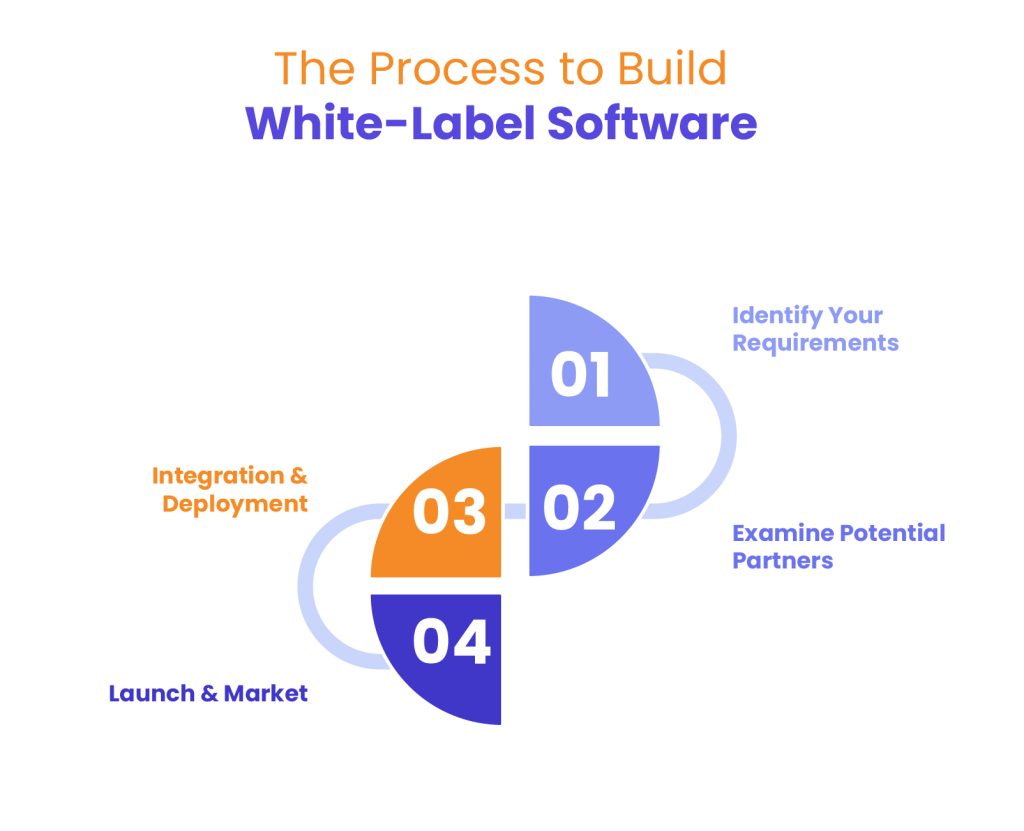
Successfully integrating a pre-built software solution into a business requires a structured approach. From understanding market demand to launching the final product, each step plays a critical role in ensuring a smooth rollout and long-term success.
Market Research
Before selecting a solution, businesses must identify customer needs and market gaps. Understanding what potential users require and what competitors are offering helps in choosing the right product. Surveys, competitor analysis, and industry reports can provide valuable insights into what features and functionalities will be most beneficial.
Vendor Selection
Choosing the right provider is essential to ensuring a reliable and high-quality experience. Businesses should assess potential partners based on their reputation, support services, customization flexibility, and integration capabilities. Evaluating pricing models and contract terms will also help in making an informed decision that aligns with long-term goals.
Customization Process
Once a provider is selected, the next step is to tailor the software to fit the company’s brand and customer expectations. This may involve adjusting visual elements, modifying functionalities, or integrating additional features to enhance usability. Close collaboration with the provider ensures that the final product aligns with the business’s objectives and maintains consistency with other offerings.
Launch Strategy
A well-planned rollout ensures that the new product reaches the right audience and delivers value from day one. Marketing efforts should focus on highlighting key benefits, while internal teams must be trained to provide customer support. Establishing a feedback loop early on helps in identifying any necessary improvements and ensures a smooth adoption process.
By following these steps, businesses can effectively integrate a pre-built software solution, maximize its impact, and create a seamless experience for their customers.
3 Future Trends in Pre-Built Software Solutions
As technology continues to evolve, pre-built software solutions are becoming more advanced, flexible, and widely adopted across various industries. Emerging trends indicate a shift towards intelligent automation, deeper customization, and expansion into new sectors. Here’s a look at some of the key developments shaping the future of these solutions.
AI and Automation
The integration of artificial intelligence and automation is transforming how businesses utilize pre-built platforms. AI-powered features, such as predictive analytics, chatbots, and automated workflows, are enhancing user experiences and improving operational efficiency. These advancements help companies deliver smarter, data-driven services with minimal manual intervention. According to a report by McKinsey, AI adoption is expected to accelerate across industries, driving new levels of automation in software solutions.
Increased Customization
Personalization has become a top priority for businesses looking to differentiate their offerings. Advances in software development are enabling companies to modify not just branding elements but also core functionalities, integrations, and user interfaces. This shift allows businesses to tailor solutions more precisely to their customers’ needs, creating a more seamless and branded experience. A recent study from Gartner predicts that as demand for customized digital solutions increases, software providers will focus on expanding customization options for their clients.
Expansion into New Industries
While traditionally popular in areas such as marketing, eCommerce, and finance, pre-built software is now making its way into healthcare, education, and other specialized sectors. Hospitals and clinics are adopting digital platforms for patient management, while schools and universities are leveraging pre-built learning management systems. As technology becomes more accessible, businesses in a broader range of industries will find new ways to integrate these solutions into their operations.
With ongoing advancements in automation, customization, and industry adoption, the future of pre-built software solutions looks promising. Companies that stay ahead of these trends will be better positioned to offer innovative and scalable solutions in an increasingly digital world.
Website as a service
Website As a Service [WAAS] provides complete website solutions including design, hosting, and maintenance through a convenient subscription model for Agencies.
Conclusion: Why Pre-Built White Label Software Solutions Are a Smart Choice
Adopting pre-built software solutions allows businesses to expand their offerings, reduce development costs, and focus on their core strengths. These solutions provide a scalable and efficient way to introduce new services without the complexities of in-house software development. However, choosing the right provider requires careful consideration of customization options, vendor reliability, integration capabilities, and long-term costs.
While there are challenges, such as limited flexibility and dependence on third-party updates, these can be mitigated through strong vendor partnerships, quality assurance processes, and clear communication. By staying informed about industry trends – such as AI integration, deeper customization, and expansion into new sectors – businesses can leverage these solutions to maintain a competitive edge.
For companies looking to grow without the burden of extensive software development, exploring this approach can be a game-changer. By selecting the right tools and partners, businesses can deliver high-quality services, improve efficiency, and adapt to the ever-evolving digital landscape.
Need a White Label WordPress Partner? Team up with WLA!
If your agency is leveraging white label software solutions to expand your service offerings, you might also be interested in streamlining your WordPress development process. At White Label Agency, we specialize in WordPress development, design, and maintenance exclusively for digital agencies.
Whether you need fully custom-coded WordPress websites, dedicated WordPress developers, or reliable website maintenance plans, our team acts as your white label back-office, ensuring your clients receive high-quality websites—without you ever having to handle the development in-house. Let us help your agency scale efficiently. Contact us today to explore our WordPress solutions.
FAQs
How to white label a software?
To white label a software, first identify a reliable white label provider whose product meets your quality standards. Then customize the software with your branding elements including logos, color schemes, and terminology. Finally, integrate the solution into your existing product portfolio and train your team to support and sell it effectively.
How to price white-label software?
When pricing white-label software, consider your costs (licensing fees paid to the provider), desired profit margin, and market positioning. Analyze competitor pricing to ensure you remain competitive while reflecting your unique value proposition. Many successful resellers employ tiered pricing models that accommodate different client sizes and needs.
How to sell white label software?
Selling white label software effectively requires highlighting the business benefits rather than technical features. Focus your marketing on how the solution solves specific client problems, demonstrate clear ROI, and leverage case studies from successful implementations. Building relationships through consultative selling approaches tends to yield better results than transactional sales methods.