Spam protection is one of those problems that never fully goes away. Nearly every WordPress site occasionally gets spam comments, bot registrations, or junk form submissions. For a long time, Google reCAPTCHA was the standard answer. It works, most developers know how to set it up, and it is easy to justify to clients.
Then we started noticing the cost it was adding to page speed. At White Label Agency, we manage WordPress maintenance and updates for a large number of client sites, so performance is something we track closely. After running into the same reCAPTCHA-related slowdowns repeatedly, we decided to test the CleanTalk WordPress plugin as an alternative. In this blog, we would like to share what we found.
Why we chose CleanTalk

The switch was not purely about spam filtering. reCAPTCHA does a reasonable job on that front. The problem was what it was doing to load times.
reCAPTCHA v3 loads its JavaScript globally across all pages, not just the ones that actually contain a form. That means a site visitor landing on a blog post or a service page still triggers the reCAPTCHA script, adding external requests and JavaScript execution time to every page load. Workarounds exist, but they require custom code and, in some cases, can cause valid submissions to be flagged as spam.
CleanTalk takes a different approach entirely. The plugin’s script payload is significantly smaller than reCAPTCHA’s, and its spam checks run in the cloud rather than on the server. The visitor’s data is sent to CleanTalk’s cloud, which returns a SPAM or NOT_SPAM verdict in real time. The server does not have to run the checks locally, which keeps the load on your web server low.
CleanTalk does more than block bots
One feature that stood out to us was the built-in email validation. When a visitor submits a form, CleanTalk checks the email address in real time against its cloud database to verify that it actually exists. It also runs the address against known spam blacklists.
This means CleanTalk is also filtering out submissions from mistyped or fake email addresses before they reach the inbox. For client sites that rely on their contact forms for leads, that is a meaningful difference. A form submission from a non-existent email address is worthless, and catching it at the point of entry saves time on the back end.
The plugin also includes a SpamFireWall layer, which checks incoming HTTP requests against a database of approximately 5.8 million known spam bot IPs before they even load a page. Active spam bots get a blank page and never interact with the site. That two-step approach, firewall first and form-level check second, reduces server load and keeps junk traffic from consuming resources unnecessarily.
CleanTalk vs reCAPTCHA: what changed for us
The comparison below reflects our experience specifically. Different site setups will produce different results.
| Factor | reCAPTCHA | CleanTalk |
| Script loading | Global on all pages by default | Lightweight, targeted |
| User interaction | Visible challenge or invisible scoring | Fully invisible to visitors |
| PageSpeed impact | Noticeable, especially on mobile | Minimal |
| Email validation | Not included | Built in |
| Blacklist checks | Not included | Built in |
| Server-side processing | Partially local | Cloud-based |
| Setup complexity | Moderate | Low |
| False positives | Can occur with lazy-load workarounds | Low false positive rate |
The most concrete result we saw after the switch was the desktop PageSpeed score. Roger, our Digital Operations Manager, put it simply: “After switching from reCAPTCHA to CleanTalk, our desktop PageSpeed score reached 100. That result depends on the full setup, but the lower script payload made a clear difference.”
That kind of improvement does not come from one change alone. Site speed is always a combination of factors: hosting, caching, image optimisation, plugin stack. But removing the reCAPTCHA script weight and replacing it with CleanTalk’s smaller footprint was a real contributing factor.
Anna, our Head of Maintenance at WLA, noted the other side of the switch: “What I appreciated was that nothing broke. With reCAPTCHA, you sometimes had to manage conflicts with caching plugins or tweak load order. CleanTalk was straightforward to integrate with the plugins our clients were already using.”
WordPress maintenance plans
WordPress Maintenance Plans ensure site security, performance, and uptime. Choose custom plans with backups, monitoring, and unlimited content edits.
Our experience with CleanTalk so far
Setup was quick. The plugin installs from the WordPress repository like any other, and after activation, you connect it to a CleanTalk account using an access key. From there, most of the protection is on by default.
5 benefits we have seen in practice
- Reduced script payload: The most immediate change was in PageSpeed scores. Pages that previously flagged reCAPTCHA’s third-party script under “Reduce unused JavaScript” stopped showing that warning.
- Invisible spam filtering: CleanTalk plugin blocks spam without ever presenting a CAPTCHA challenge to the visitor. The check happens in the background, and legitimate users never see it.
- Email validation on form submissions: The real-time email checker has been useful: submissions from addresses that do not exist or appear on blacklists get filtered before they reach the inbox.
- Spam log visibility: The plugin keeps a log of blocked submissions for up to 45 days, which gives us something to reference if we suspect a legitimate submission might have been caught.
- Sitewide coverage by default: Protection applies across every form on the site automatically. There is no need to configure forms individually.
We should be clear that we have not been running the CleanTalk plugin across our client base for years. Our experience is recent, and we are still gathering data across different site configurations. But what we have seen so far has been consistent: less script weight, cleaner form submissions, and no meaningful drop in spam protection.
What other agencies should consider before switching
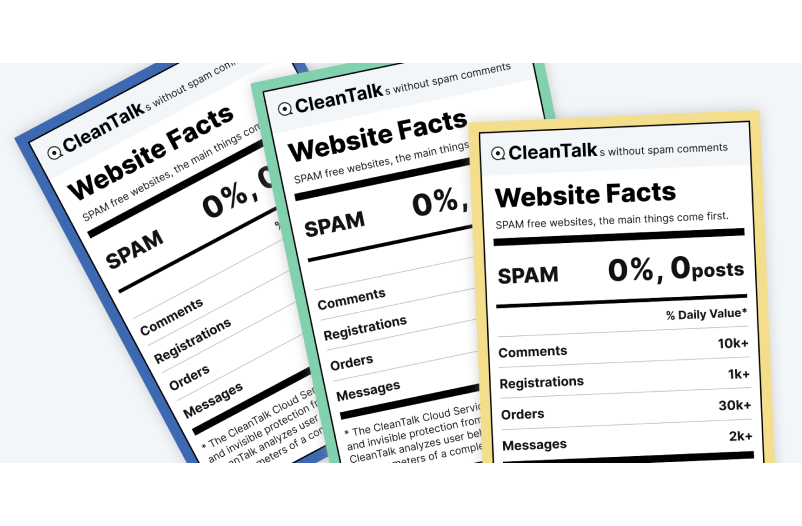
Source: CleanTalk
CleanTalk is not the right answer in every situation, and we would not suggest rolling it out across an entire client portfolio without testing it first. CleanTalk tends to be a strong fit for agencies dealing with some combination of the following:
- Performance-sensitive sites: If a client’s site is already well-optimised and reCAPTCHA is one of the remaining bottlenecks in PageSpeed reports, CleanTalk is worth testing.
- High form submission volume: Sites that receive a lot of contact form traffic are more exposed to spam. CleanTalk’s cloud-based checks handle volume well without adding proportional server load.
- Lead quality concerns: If a client is regularly receiving junk submissions that waste their sales team’s time, the email validation and blacklist features address that at the source.
What to check before you commit
CleanTalk has known compatibility considerations with some caching plugins, particularly around its SpamFireWall feature, which can occasionally conflict with cached pages. The fix is well-documented by CleanTalk and usually involves a few settings adjustments, but it is something to confirm during testing rather than discover after a broader rollout.
Anna made a broader point: “Any plugin change on a site should be tested first. CleanTalk is no different. The setup is simple, and the results have been good for us, but you still want to verify it in context before treating it as a default.”
That is the approach we follow. Measure performance before and after, monitor the spam log for a reasonable period, and confirm compatibility with the site’s existing plugin stack. If those checks come back clean, CleanTalk is a switch worth making.
Final Words
The broader point from our experience is that assumptions about how a plugin affects performance are worth checking periodically. reCAPTCHA was a reasonable default for years before we looked at it closely. There are likely other spots in a typical WordPress setup where the current choice made sense at the time but has not been revisited. We help agencies stay on top of exactly that, through our WordPress maintenance plans. Get in touch if you would like to talk through how your agency can benefit from our services.