- Core WordPress On Page SEO Elements
- URL and Permalink Structure: SEO-Optimized URLs
- Heading and Content Structure: Organizing Content for SEO
- Internal Linking Strategy: Enhancing Navigation and SEO Value
- Optimizing Media Elements: Ensuring Images and Videos Boost SEO
- Content Quality and User Intent
- WordPress SEO Tips for Mobile Optimization & Page Speed
- How to Use Schema Markup
- External Links and Social Sharing
- WordPress On Page SEO Checklist
- Conclusion
On-page SEO is a pivotal element in driving organic traffic and boosting your WordPress site’s visibility in search engines. Unlike off-page SEO, which focuses on backlinks and external signals, WordPress on page SEO is entirely within your control.
This guide will walk you through the specific strategies and tools you can use in WordPress to refine on-page SEO elements, ensuring each page is search-engine-optimized from top to bottom. From beginners to advanced users, everyone can benefit from these tactics to improve search rankings, attract more readers, and provide a better UX.
Core WordPress On Page SEO Elements

WordPress on page SEO starts with a solid foundation, beginning with keyword optimization, meta tags, and strategically structured content. Each element contributes to how search engines understand and rank your site. Let’s delve into these essential aspects.
3 Common Strategies for Keyword Optimization
Keyword optimization is the cornerstone of WordPress on page SEO. Understanding the keywords your audience uses is essential to align your content with their needs. Tools like Google Keyword Planner and Ahrefs can help identify high-traffic keywords and long-tail variations relevant to your niche.
For effective keyword placement:
- Titles and Headings: Your main keyword should be featured in the title and at least one H2 heading, signaling relevance to both users and search engines. A page titled “WordPress On Page SEO Guide” will naturally attract searchers looking for SEO tips tailored to WordPress.
- Body Content: Use your primary keyword within the first 100 words, integrating it organically throughout the content. Incorporate variations like “optimize WordPress SEO” or “WordPress SEO tips” to add depth without keyword stuffing.
- Meta Descriptions: These brief summaries appear in search results and should include your primary keyword. Effective meta descriptions not only improve SEO but also attract clicks by compellingly summarizing the content.
By incorporating primary and secondary keywords in strategic areas, you improve your site’s relevance for multiple related searches, expanding its visibility.
Tip
Try to keep your meta descriptions within the range of 150-155 characters. Encourage readers to read your content, but avoid being too “salesy”.
Why Use Semantic Keywords and Synonyms
Incorporating synonyms and related terms—known as semantic keywords—broadens your content’s appeal. This practice helps Google understand nuances and connect your content to various search intents.
For instance, if your primary keyword is “WordPress SEO,” semantic keywords like “SEO plugins for WordPress” or “optimize site SEO in WordPress” create richer, more contextually relevant content. Using these synonyms naturally within your text helps avoid keyword stuffing and adds value by addressing related questions or subtopics.
URL and Permalink Structure: SEO-Optimized URLs
URLs serve as the digital address for your content and are an essential part of WordPress on page SEO. A well-structured URL communicates your page’s focus to both users and search engines, making it easier to understand and share.
Crafting Short, Descriptive URLs
A clean URL, such as “/wordpress-seo-tips,” is easier for users to read, remember, and share than a cluttered URL with random numbers or symbols. Short URLs that reflect the page’s topic improve SEO and increase click-through rates. Avoid adding unnecessary words or numbers to keep URLs concise.
Example
A blog titled “The Ultimate Guide to WordPress On-Page SEO” could use a URL like “/wordpress-on-page-seo-guide.” This makes the URL descriptive without being overly lengthy.
Removing Unnecessary Stop Words for Cleaner URLs

Stop words (e.g., “a,” “the,” “of”) add little value and can clutter your URLs. In WordPress, you can control your URL structure in Settings > Permalinks by selecting a custom permalink structure that excludes stop words. Removing these creates cleaner URLs that appear more professional and trustworthy.
Optimizing URLs for readability and keyword relevance benefits both users and search engines, leading to better engagement and ranking potential.
Heading and Content Structure: Organizing Content for SEO
Organizing your content with a logical heading structure not only aids WordPress on page SEO but also enhances readability. Search engines rely on headers (H1, H2, H3) to understand content hierarchy, while users appreciate the clear organization that helps them navigate information efficiently.
WordPress SEO Best Practices for H1, H2, and H3 Usage
The H1 tag serves as the main title and should contain the primary keyword, defining the page’s overall topic. H2 and H3 tags create subtopics, making it easy for search engines and users to understand each section’s focus.
Snippet: Example
Example
Imagine you’re writing an article titled “Boosting WordPress Site Speed: Essential Tips and Tools.”. This is how you could structure your blog:
- H1: Boosting WordPress Site Speed: Essential Tips and Tools
This title introduces the main focus of the article, targeting “WordPress Site Speed” as the primary keyword. - H2: Why Site Speed is Critical for SEO
This section briefly explains the importance of site speed, covering its effects on rankings and user experience.- H3: Impact of Site Speed on Google Rankings
Explains how Google uses page speed as a ranking factor, emphasizing the importance of a fast website.
- H3: Impact of Site Speed on Google Rankings
- H2: Top Tools for Optimizing WordPress Speed
Introduces some of the best tools to enhance site speed in WordPress, focusing on user-friendly plugins.- H3: Caching Plugins (e.g., WP Rocket)
Describes how caching plugins work to reduce load times by creating static versions of pages.
- H3: Caching Plugins (e.g., WP Rocket)
- H2: Practical Tips to Reduce Load Time
This section covers actionable steps readers can take to improve speed without needing complex tools.- H3: Compress Images and Enable Lazy Loading
Provides quick tips on optimizing images, like using lazy loading to delay loading visuals until they’re in view.
- H3: Compress Images and Enable Lazy Loading
In this example:
- The H1 tag sets the overall topic.
- Each H2 tag introduces main sections, like “Why Site Speed is Critical” and “Top Tools for Optimizing WordPress Speed.”
- H3 tags provide specific tips within each section, adding depth without overwhelming the reader.
This structure keeps the content organized and easy to follow, enhancing both SEO and user experience.
3 Formatting Methods for Enhanced Readability & Engagement
Good formatting makes long content easier to consume:
- Short Paragraphs: Aim for 2-3 sentence paragraphs to break up text.
- Bullet Points and Lists: Summarize key information, making it easy for users to scan.
- Bold and Italic Text: Highlight crucial points to guide readers’ focus.
Thoughtful formatting improves user experience, encouraging visitors to spend more time on your page, which can boost rankings.
Internal Linking Strategy: Enhancing Navigation and SEO Value
Internal links are essential for guiding visitors through your website and distributing page authority. A well-implemented internal linking strategy strengthens site structure, boosts WordPress on page SEO, and improves user engagement.
Importance of Internal Links for SEO and Navigation
Internal links allow users to navigate your site easily, while helping search engines understand content relationships. For example, in a post about site speed, linking to a related post on “website speed optimization tools” provides additional context and encourages readers to explore relevant content.
WordPress SEO Best Practices for Internal Linking

To maximize the value of internal links:
- Use Descriptive Anchor Text: Instead of generic phrases like “click here,” use keywords that describe the linked page.
- Limit Link Volume: Avoid overlinking by using 3-5 internal links per 1000 words. Excessive links can confuse readers and dilute link value.
- Balance Link Distribution Across Pages: Avoid linking only to your main pages or recent posts. Distribute links to ensure all pages get some link equity, improving the SEO performance of older and less-trafficked pages.
Tools like Link Whisper or AIOSEO’s Link Assistant can automatically suggest relevant internal links, helping you maintain a consistent linking strategy across your site.
Optimizing Media Elements: Ensuring Images and Videos Boost SEO
Images and videos enrich content but require optimization to avoid slowing down your site. Properly optimized media enhances user experience, contributes to SEO, and increases accessibility.
Image SEO: Steps for Effective Optimization
Image SEO begins with choosing high-quality, relevant images and optimizing their file sizes. Use tools like TinyPNG or WP Smush to compress images without losing quality, reducing load times and improving user experience.
Descriptive ALT text is also crucial for accessibility and SEO. ALT text should include keywords and describe the image’s content; for example, “illustration of WordPress SEO checklist” rather than “IMG_1234.”
Video Optimization with Schema Markup
Video content should be embedded thoughtfully, with schema markup to improve visibility (we will discuss schema markup in detail a bit later). Embedding from YouTube is often preferable to self-hosting due to faster load times. Adding schema markup for videos (via plugins like Schema Pro) enhances your video’s chances of appearing in Google’s video carousel, attracting more traffic.
Properly optimized media supports accessibility, improves speed performance, and provides search engines with more content to index, boosting SEO.
Content Quality and User Intent
High-quality content that aligns with user intent is crucial for WordPress on page SEO. Content that answers user questions and fulfills their search intent has a better chance of ranking well and engaging readers.
Writing High-Quality Content that Addresses User Intent
Identify whether users’ search intent is informational, navigational, or transactional, and create content that meets these needs. For instance, users searching for WordPress on page SEO tips” are likely looking for practical advice, so your content should provide actionable tips rather than promote services.
Snippet: Recommendation
Check out our guide on how to write SEO content and help your clients rank higher.
Emphasizing E-E-A-T
Google prioritizes content from reliable sources. Establish E-E-A-T by citing reputable sources, linking to authoritative sites, and including author bios that highlight relevant expertise. Regularly updating your content to reflect new developments in SEO also signals trustworthiness.
Following E-E-A-T guidelines improves both your rankings and your credibility with readers, making them more likely to return.
WordPress SEO Tips for Mobile Optimization & Page Speed
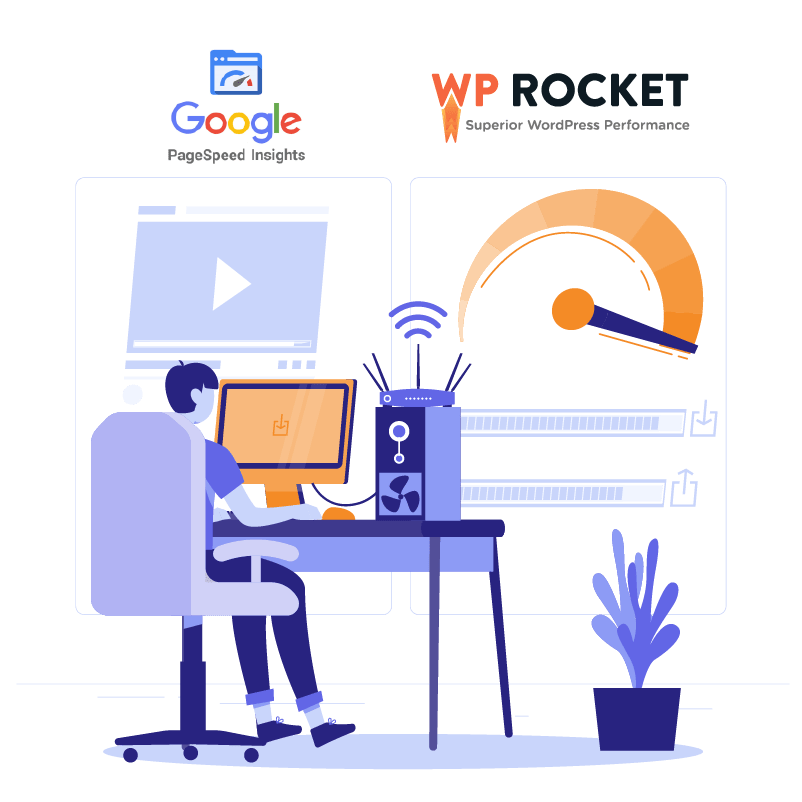
With the majority of searches coming from mobile devices, optimizing for mobile and speed is essential. Google’s mobile-first indexing prioritizes mobile-friendly sites, making this a critical part of SEO.
- WP Rocket for Speed Improvements: Caching WordPress SEO plugins like WP Rocket improve page load times by compressing files and caching pages. This enhances performance, especially on mobile. Lazy loading images and reducing file sizes are additional techniques that reduce load times and improve user experience.
- Google’s PageSpeed Insights for Optimized Performance: Use Google’s PageSpeed Insights to assess your site’s performance. This tool provides actionable suggestions for improving load times, such as compressing JavaScript files or eliminating render-blocking resources, both of which contribute to faster, more efficient pages.
Improving speed and mobile responsiveness boosts both WordPress on page SEO and user satisfaction, resulting in better rankings and more engaged visitors.
Recommendation
Discover 5 more WordPress plugins for speed optimization.
How to Use Schema Markup
Schema markup enables content to appear as rich snippets, which improve visibility and click-through rates. Rich snippets display more information, making your site stand out in search results.
Common Schema Types to Boost SEO
Schema types like FAQ, How-to, and Review schema help your content stand out. FAQ schema, for example, allows questions and answers to appear directly in search results, while How-to schema works well for step-by-step guides. Each schema type gives users additional information and can boost CTR.
Tools to Simplify Schema Implementation
WordPress SEO plugins like Yoast and AIOSEO make it easy to add schema markup without coding. Simply select the type of schema and apply it to relevant pages, allowing for quick and efficient implementation.
Properly implemented schema can significantly improve your visibility and attract more clicks, driving higher engagement.
Recommendation
Have a look at our guide on the best SEO plugin for WordPress.
External Links and Social Sharing

External links and social sharing are essential for boosting your site’s credibility and reach. Outbound links to authoritative sites add trustworthiness to your content, while social sharing extends your audience, driving traffic and amplifying SEO signals.
5 Best Practices for Adding Outbound Links
- Link to Reputable Sources: Choose reliable, relevant sources (e.g., industry blogs or official guidelines) to support your points. For example, linking to Google’s SEO resources when discussing search optimization adds authority.
- Use Descriptive Anchor Text: Anchor text should clearly describe the link’s content (e.g., “Google’s SEO Guide” instead of “click here”), helping users and search engines understand its relevance.
- Limit Outbound Links: Avoid overwhelming readers with too many links; 2-3 well-chosen links per article are usually sufficient to enhance authority without distracting readers.
- Set Links to Open in New Tabs: This keeps users on your page longer, allowing them to access additional resources without leaving your site.
- Check Links Regularly: Ensure links remain live and relevant by using tools like Broken Link Checker to maintain quality.
Encouraging Social Sharing
Social shares help drive traffic and enhance SEO. To Optimize WordPress SEO for greater reach:
- Add Social Sharing Buttons: Plugins like Social Warfare or Shareaholic make it easy for readers to share content. Place buttons in visible areas, like at the top or bottom of posts.
- Encourage Sharing with CTAs: Simple calls to action like “Share this post if you found it useful” can increase sharing rates.
- Optimize for Social Media Platforms: Use Open Graph tags to ensure images and descriptions display well on platforms like Facebook and Twitter, making your content more attractive to share.
- Track and Refine: Use analytics tools to track which platforms generate the most shares, helping you tailor future content for maximum engagement.
By combining effective outbound links and social sharing, you boost your site’s authority, drive more traffic, and strengthen your SEO performance.
WordPress On Page SEO Checklist

The checklist below consolidates the WordPress SEO best practices discussed throughout this guide, providing a quick reference to ensure your WordPress site is optimized for both search engines and users. Each step covers crucial aspects to optimize WordPress SEO, from keyword integration to mobile optimization, helping you enhance your site’s visibility, UX, and authority in search results.
- Keyword Optimization: Integrate keywords naturally in titles, headers, and content.
- URL Structure: Use short, descriptive URLs without unnecessary words.
- Headings and Formatting: Structure content with H1, H2, H3 tags and readable formatting.
- Internal Linking: Use descriptive anchor text and limit links to avoid redundancy.
- Media Optimization: Compress images, use ALT text, and add schema for videos.
- Quality Content: Align with user intent and emphasize E-E-A-T principles.
- Mobile and Speed Optimization: Use plugins like WP Rocket and PageSpeed Insights.
- Schema Markup: Implement FAQ, How-to, or Review schema for rich snippets.
- External Links and Social Sharing: Link to reputable sites and encourage sharing.
Conclusion
By following these steps, WordPress users can effectively improve their on-page SEO, enhancing search visibility and user engagement. From keyword optimization to schema markup, every element contributes to a comprehensive SEO strategy that aligns with search engines’ expectations and provides value to users.
Consistent WordPress on page SEO optimization and regular updates will ensure your content remains relevant, ultimately positioning your site for sustained growth in search rankings.