
- What Is a Content Mill?
- How Do Content Mills Work?
- Best Content Mills for Writers (2024)
- The Role of AI and Automation in Content Mills
- Economy Trends and Content Mills
- Regulation and Fair Pay Initiatives
- Ethical Considerations
- The Future of Freelance Content Creation
- Alternatives to Content Mills
- When to Use Content Mills vs. Hiring Premium Writers
- Content Mills or Premium Writers – What’s Best for You?
As businesses strive to boost their online presence and maintain fresh, SEO-friendly content, many turn to content mills also known as “content farms” for quick, scalable solutions. But what exactly are content mills, and how do they fit into the content creation ecosystem?
In this blog, we will explore the purpose of content mills for businesses and writers, their pros and cons, and provide a list of the most popular and well-known “content farms”.

What Is a Content Mill?
A content mill is a platform or agency that connects freelance writers with businesses in need of large volumes of low-cost content. They offer writers the opportunity to take on multiple assignments, often at lower pay rates than traditional freelance jobs.
For businesses, content mills provide an easy, cost-effective way to generate content on a large scale without hiring premium writers. However, while mills serve a practical purpose, they also come with significant pros and cons for both the writers who rely on them and the businesses that use their services.
Content mills function as intermediaries, matching businesses with writers who often work under tight deadlines and strict guidelines. While they are a convenient solution for businesses looking to outsource content creation at minimal cost, the quality of content from mills is often criticized, as it tends to prioritize quantity over quality.
The History and Evolution of Content Mills in the Digital Age
Content mills emerged in the early 2000s as the demand for digital content grew. With the rise of search engine optimization (SEO) and the need for businesses to consistently update their websites and blogs, mills became a popular way to churn out large volumes of content quickly and cheaply. In the beginning, these platforms flourished, offering writers easy access to steady work and businesses an affordable solution to fill their content needs.
However, as search engines like Google updated their algorithms to prioritize quality over quantity, the influence of content mills began to wane. Poorly written, keyword-stuffed articles no longer helped websites rank higher in search results, leading many businesses to reconsider their reliance on mills. Despite this, mills have evolved and remain active today, adapting to new trends in SEO, AI-assisted writing, and the growing gig economy.
How Do Content Mills Work?
Here’s a breakdown of how content mills operate for both writers and businesses:
For Writers:
- Sign-Up Process: Most content mills for beginners have an easy sign-up process, where writers create a profile and provide writing samples or complete a test assignment.
- Access to Jobs: Once approved, writers can browse through available jobs posted by businesses, often categorized by topic or industry.
- Low Pay, High Volume: The majority of jobs offered by mills are low-paying, especially for beginners. Writers are paid per piece, with rates typically ranging from a few cents per word to a flat fee for specific content types.
- Strict Deadlines: Content mills often require fast turnaround times, with tight deadlines that push writers to produce content quickly.
- Revisions and Ratings: Writers may be required to revise their work based on client feedback. Their ratings often depend on client satisfaction, which impacts their access to future jobs.
For Businesses:
- Easy Access to Content: Businesses sign up to use mills as a fast and affordable way to generate content at scale.
- Cost-Effective Solutions: One of the biggest advantages for businesses is the ability to produce large volumes of content at a fraction of the cost compared to hiring in-house or premium freelancers.
- Bulk Content Creation: Content mills are particularly useful for companies looking to fill content calendars or websites with SEO-friendly blog posts, product descriptions, or social media posts.
- Flexible Assignments: Businesses can post one-off assignments or ongoing content needs, allowing them to adjust based on demand.
- Quality Control: Some content mills offer basic quality assurance, but businesses using these services should be aware that lower pay often results in lower-quality writing.
For both writers and businesses, mills provide an accessible but challenging environment. For beginners, they can serve as a stepping stone to gain experience, while for businesses, they offer a way to meet content demands quickly and affordably.
Best Content Mills for Writers (2024)
For freelance writers, particularly those just starting out, content mills can be an accessible way to gain experience and earn income. While not known for high-paying opportunities, some of the best content mills offer consistent work and a chance to build a portfolio. Below is a list of the best content mills for writers in 2024, with pros and cons for each, along with insights from writer reviews and experiences.

1. Textbroker
- Pros:
- Open to beginners with minimal experience.
- Wide variety of content types and topics.
- Clear pay scale based on writer quality (from 2 to 5 stars).
- Cons:
- Low earning potential, especially at the lower levels (typically $0.01–$0.05 per word).
- Strict deadlines and limited time for revisions.
- User Experience: Writers appreciate the steady work but note that higher pay is only available once they’ve built a strong rating.
- Earning Potential: For beginners, earnings are on the low side, but top-tier writers can command higher pay rates.

2. iWriter
- Pros:
- Quick approval process, ideal for content mills for beginners.
- Offers different levels of pay, allowing writers to increase earnings as they advance.
- Writers can choose from a large pool of available projects.
- Cons:
- Low initial pay rates, with higher-tier earnings only possible after several completed jobs.
- Rejection of articles is common, and writers are often penalized for missed deadlines.
- User Experience: Reviews highlight the platform’s ease of use but caution against relying solely on it for a sustainable income.
- Earning Potential: Writers start at $1.40 per 150 words but can earn more as they advance.
Insert Image 4
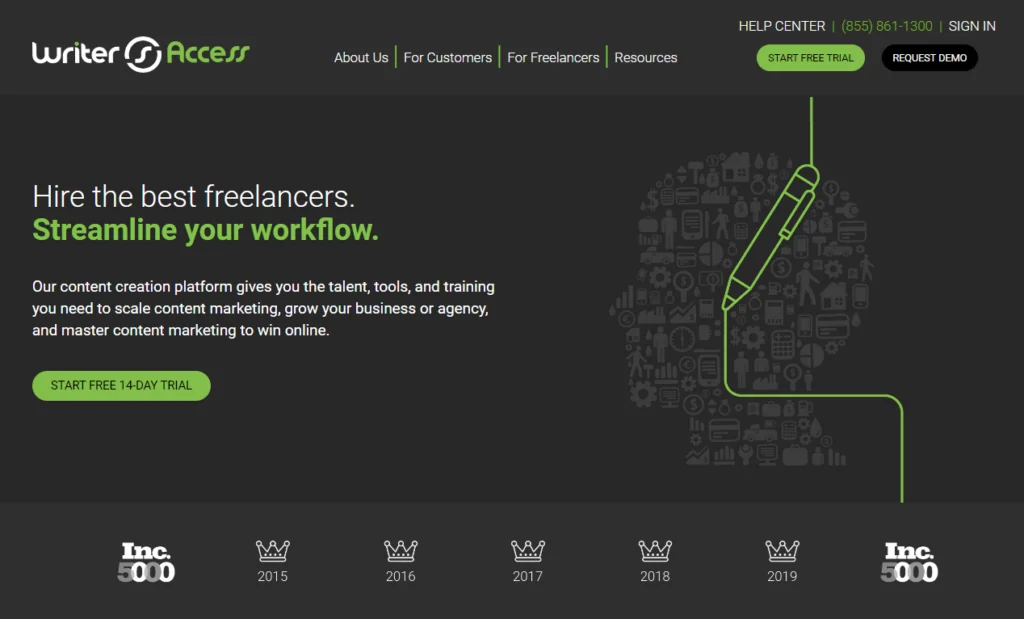
3. WriterAccess
- Pros:
- Offers better rates than most content mills, especially for experienced writers.
- Provides opportunities to work with high-profile clients.
- Offers training and resources to help writers improve their skills.
- Cons:
- The application process is more rigorous, making it less suitable for beginners.
- Strict deadlines and client expectations.
- User Experience: Writers praise the platform’s training resources and opportunities for long-term client relationships.
- Earning Potential: Rates range from $0.02 to $0.20 per word, depending on the writer’s experience level and rating.
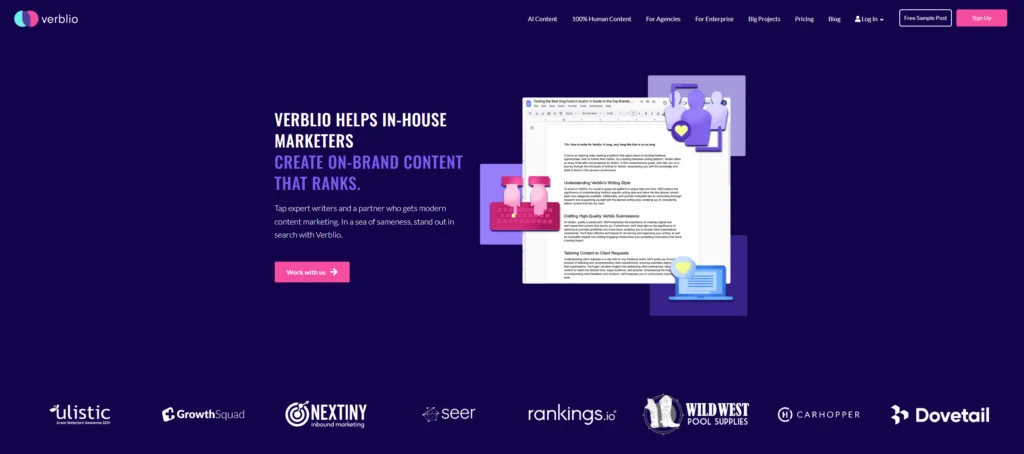
4. Verblio
- Pros:
- Focuses on high-quality content and rewards experienced writers with higher pay.
- Flexible deadlines and the ability to choose projects based on expertise.
- Positive community of writers with opportunities for growth.
- Cons:
- Not ideal for content mills for beginners due to the higher skill requirements.
- Payment is not guaranteed until a client selects your submission.
- User Experience: Many writers appreciate the platform’s focus on quality, but some find the competition for assignments challenging.
- Earning Potential: Pay rates start at $10 per 300 words, with higher rates for complex projects and ongoing client work.

5. The HOTH
- Pros:
- Clear guidelines and steady assignments, with a focus on SEO content.
- Payment is above average for content mills.
- Great for writers who specialize in SEO or digital marketing content.
- Cons:
- Strict requirements for keyword usage and structure.
- Can be demanding in terms of deadlines and revisions.
- User Experience: Writers enjoy the consistent flow of assignments, but some feel the guidelines are too rigid.
- Earning Potential: Writers can earn anywhere from $0.03 to $0.05 per word, with opportunities for long-term projects.
The Role of AI and Automation in Content Mills
As AI technologies advance, content mills are increasingly leveraging tools like GPT-based models to streamline content production. These AI-powered tools can generate large volumes of content quickly, automating low-level tasks such as keyword optimization, basic article writing, and product descriptions. This allows businesses to meet their content demands faster and at a lower cost.
However, the question remains: will AI replace human writers in content mills?
While AI is transforming content creation, it still lacks the nuance, creativity, and critical thinking that human writers provide. Rather than being replaced, writers can use AI to enhance their productivity. By using AI for research, content structuring, or initial drafts, writers can focus on refining and personalizing the content, adding value beyond what AI alone can deliver.

Economy Trends and Content Mills
As more professionals choose freelancing over traditional employment, content mills have become a starting point for many looking to gain experience or earn supplemental income. However, the growing popularity of platforms like Upwork and Fiverr is shifting the dynamics in favor of freelancers.
Unlike traditional content mills, platforms like Upwork and Fiverr allow writers to set their own rates, negotiate terms, and showcase their expertise. This flexibility enables freelancers to attract higher-paying clients and build long-term relationships. As a result, many writers are moving away from mills, seeking more competitive opportunities where they have greater control over their work and income.
For businesses, these platforms also offer a wider talent pool, providing access to writers with varying levels of expertise and niche knowledge. This shift in the gig economy is pushing mills to adapt, offering better rates and more appealing opportunities to retain skilled writers in a competitive marketplace.
Hybrid Content Models
As businesses seek a balance between cost and quality, hybrid content models are becoming increasingly popular. These models combine the high-volume, low-cost approach of content mills with the specialized services of premium content creation platforms. This approach allows companies to meet their content needs while maintaining a higher standard for important projects, such as website copy or long-form articles.
New platforms are emerging that offer this hybrid solution, blending the scalability of mills with access to skilled, higher-paid writers for more complex or strategic content. Platforms like WriterAccess and Scripted provide businesses with the flexibility to scale content production while still ensuring quality for key projects.
By integrating both models, businesses can maximize their content budgets while ensuring that their most crucial materials are handled by experienced professionals. This shift toward hybrid content models reflects a growing demand for more customized content solutions in a highly competitive digital marketplace.

Regulation and Fair Pay Initiatives
In recent years, concerns over low pay and poor working conditions in content mills have sparked discussions about industry regulations and fair pay initiatives. While there are no widespread regulations governing content mills yet, several efforts are emerging to improve conditions for freelance writers.
Fair Pay Campaigns
Some organizations and content platforms are pushing for fairer wages. For example, the non-profit organization Freelancers Union has been leading the charge for better pay and protection for gig workers, including writers working for mills. Their #FairPay campaign aims to ensure freelancers are paid a fair wage and advocates for better client-writer agreements.
Platform-Based Advocacy
New content platforms, such as WriterAccess and ClearVoice, are taking steps to ensure that freelancers are paid competitive rates, offering higher-paying jobs and more transparency in client relationships.
Freelancers on WriterAccess can earn significantly more than on typical mills, with some top-tier writers making up to $0.20 per word or more. While ClearVoice advocates for fair compensation, with many writers reporting rates of $0.10 to $0.25 per word.
Ethical Considerations
The rise of content mills has brought several ethical concerns to light, particularly regarding writer exploitation and the overall quality of the content produced. As mentioned, most of the platforms often pay writers very low rates, leaving them to work long hours for minimal compensation. Additionally, the rush to produce high volumes of content can lead to poor-quality writing, affecting the reputation of businesses that rely on these services.
The key ethical issues include writers’ exploitation and content quality. Many writers are paid far below industry standards, making it difficult to earn a livable wage. With tight deadlines and low pay, freelancers often face burnout and frustration.
Moreover, the emphasis on quantity over quality can result in poorly written or poorly researched content. This not only harms the reputation of businesses but also contributes to a saturated market of low-value content.
Solutions for a More Ethical Future:
- Fair Pay Structures: To become more sustainable, content mills can adopt fair pay practices that reflect the time, effort, and expertise required to create quality content.
- Quality Over Quantity: Shifting the focus from mass production to higher-quality content can improve both writer satisfaction and client outcomes.
- Transparent Client-Writer Relationships: Offering more transparency about pay rates, expectations, and client relationships can empower writers to make informed decisions about their work.
By addressing these issues, content mills could evolve into more ethical, sustainable platforms for freelance writers and businesses alike.
The Future of Freelance Content Creation
As the freelance content industry continues to evolve, the role of mills is likely to change. With advancements in technology, shifts in client expectations, and growing demands for quality, the future of mills is uncertain. With all that being said, we can explore several trends that could shape the landscape over the next few years.
Predictions for the Future:
- AI and Automation: With the rise of AI tools like GPT-based models, content mills may rely more on automated content creation, reducing the need for human writers for low-level tasks. Writers may need to focus on more specialized or creative content that AI cannot replicate.
- Higher Standards for Quality: Businesses are increasingly prioritizing well-researched, high-quality content. This may lead to a decline in demand for content mills as companies shift toward platforms that offer more skilled writers at fairer rates.
- Alternative Platforms: Freelancers are gravitating toward platforms like Upwork, Fiverr, and specialized writing services that provide better pay and more control over their work. These platforms could overshadow traditional mills by offering competitive opportunities.
- Sustainability Focus: In the future, content mills that adopt fair pay practices and prioritize writer satisfaction may thrive, while those that continue to exploit writers may see a decline in use.
In the coming years, we may see a reduced reliance on mills as better alternatives emerge, offering writers more opportunities for fair pay and creative freedom.
Alternatives to Content Mills
For writers looking for better opportunities and sustainable income, there are several alternatives to content mills that offer higher pay and more control over work. These options provide a path toward long-term career growth and higher-quality content creation.
Better Platforms and Freelance Marketplaces:
- Upwork and Fiverr: These platforms allow writers to set their own rates and work directly with clients, offering more flexibility and better pay compared to content mills.
- ClearVoice and Scripted: These platforms cater to higher-end clients and provide better compensation for quality content, making them a viable alternative for experienced writers.
SEO Content Writing as a Sustainable Alternative:
SEO content writing offers a more consistent and sustainable career path for writers. Businesses need quality, SEO-driven content to improve their search rankings, making it a high-demand field that pays better than typical content mills.
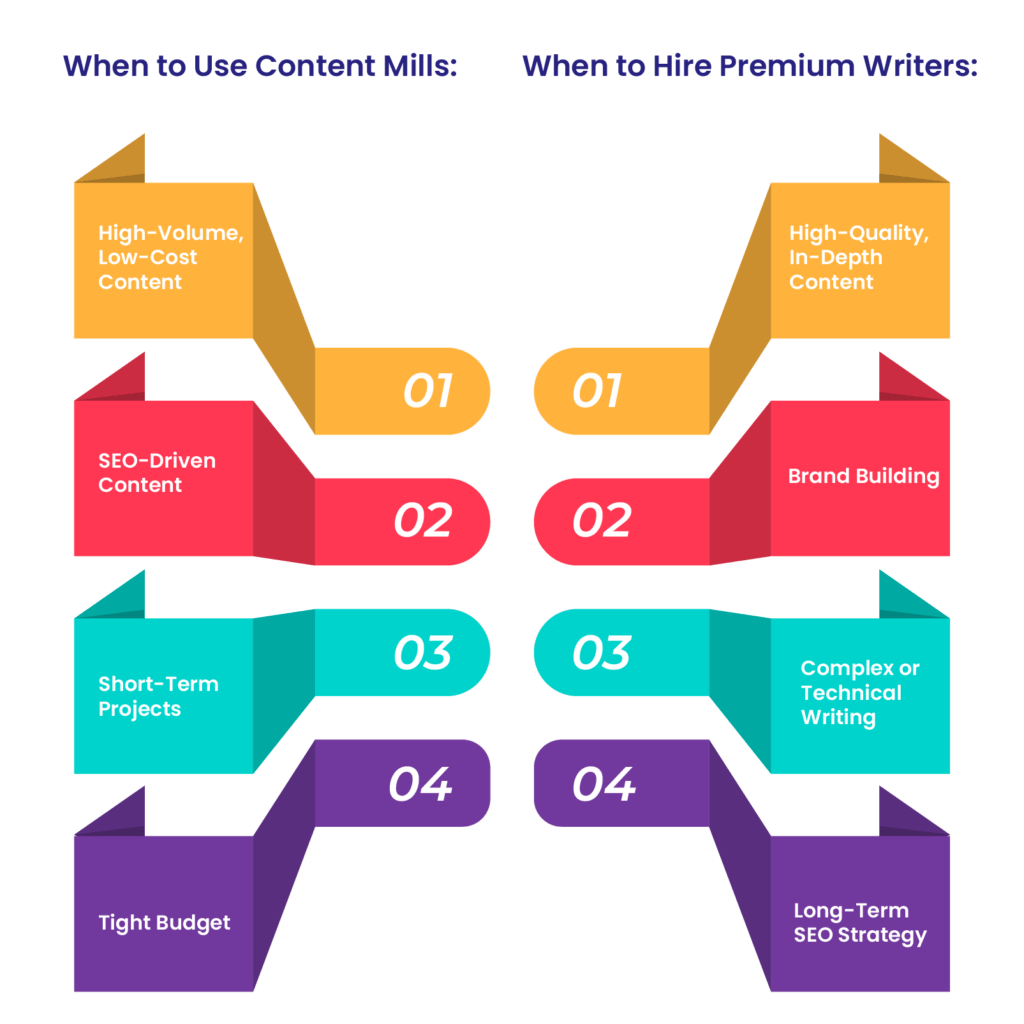
When to Use Content Mills vs. Hiring Premium Writers
Choosing between content mills and premium writers depends on your business goals, budget, and content needs. Here’s how to decide:
When to Use Content Mills:
- High-Volume, Low-Cost Content: Ideal for producing bulk content quickly, such as product descriptions, short blog posts, and social media updates.
- SEO-Driven Content: If the focus is on generating keyword-heavy content for SEO, content mills offer affordable options, but quality may be sacrificed.
- Short-Term Projects: Content mills are a good fit for one-off needs, such as temporary content to fill a website or a short-term marketing campaign.
- Tight Budget: Startups or small businesses with limited funds can use mills to maintain content flow without breaking the bank.
When to Hire Premium Writers:
- High-Quality, In-Depth Content: Premium writers excel at creating well-researched articles, white papers, and engaging content that builds brand authority.
- Brand Building: For businesses focused on reputation and credibility, high-quality writing is essential for establishing trust with an audience.
- Complex or Technical Writing: Specialized industries benefit from expert writers who can communicate complex topics accurately.
- Long-Term SEO Strategy: Premium writers create evergreen content that attracts organic traffic, shares, and backlinks over time.
Balancing both can offer cost-effective solutions while maintaining quality where it matters most.
Content Mills or Premium Writers – What’s Best for You?
Content mills can be a practical solution for businesses needing high-volume, low-cost content and for beginner writers looking to gain experience. However, they often come with trade-offs in terms of pay and quality. As the content landscape evolves, it’s important for both businesses and writers to consider alternatives that offer higher value, better pay, and more creative freedom.
For businesses, striking a balance between content mills for bulk content and hiring premium writers for critical, high-quality projects can lead to better results in the long run. Writers, on the other hand, should explore opportunities that offer fair compensation and long-term career growth.
Whether you’re a business seeking top-tier content or a writer aiming to expand your career, we encourage you to explore higher-value content-sourcing strategies and platforms that prioritize quality and sustainability over quick fixes.