- Content Selling vs. Content Marketing
- 2 Advanced Strategies for Content Selling
- Real-World Case Studies
- Integrating Content Selling with SEO and PPC
- The Role of a Content Strategy Agency in Content Selling
- 3 Best Practices for Creating Sales-Driven Content [+ Bonus Tips]
- Emerging Trends in Content Selling
- Conclusion
- FAQs
Is your content failing to deliver the sales results you need? Many struggle to convert their content into tangible sales. The truth is that creating great content is just the first step. To truly drive sales, you need a strategic approach to content selling that goes beyond traditional content marketing.
This guide will show you how to sell content, giving you actionable strategies that will integrate content directly into your sales process. Whether you’re a seasoned professional or just starting out, you’ll find the insights here to boost your sales and make your content work harder.
Content Selling vs. Content Marketing
Content selling and content marketing are closely related concepts but serve different purposes.
Content marketing focuses on creating and distributing valuable, relevant content to attract and engage an audience. Its primary goal is to build brand awareness, trust, and long-term customer relationships.
Content selling is about using content as a direct tool to drive sales. It involves creating targeted sales content that speaks directly to potential buyers at various stages of the buying process, with the specific intent of moving them toward a purchase.
The key differences between selling content and content marketing lie in their goals and strategies. While content marketing aims to build a broad audience and nurture leads over time, content-selling focuses on closing deals. Hence, it requires more personalized and persuasive content that addresses specific pain points and objections.
The outcomes also differ—content marketing is measured by metrics like engagement and lead generation, whereas selling content online is directly tied to revenue and conversion rates.
Impact on the Sales Funnel
Content selling directly influences multiple stages of the sales funnel by providing tailored content that addresses the needs and questions of potential buyers. At the top of the funnel, it attracts attention with content that highlights problems and offers solutions. As prospects move down the funnel, content-selling offers more detailed and targeted information, guiding them through their decision-making process.
For example, early-stage content might include blog posts or guides that introduce your agency’s services, while mid-funnel content could be case studies showing real-world success stories. Finally, late-stage content, such as product demos or detailed comparisons, helps close the deal by addressing final objections and solidifying the decision to buy.
By strategically placing sales content at each stage of the funnel, you can accelerate the customer journey, turning prospects into customers more efficiently. Collaborating with a content strategy agency can help in creating and executing a well-rounded selling approach, ensuring that every piece you produce contributes to your sales goals.

2 Advanced Strategies for Content Selling
To maximize the effectiveness of selling your content, you need more than just great content—you need a strategic approach that ensures your content reaches the right audience at the right time.
Audience Segmentation and Personalization
Understanding your audience is crucial to successful content performance. By segmenting your audience based on factors like demographics, behavior, and purchase history, you can create content that speaks directly to their needs and pain points. Personalization is key here; when product content is tailored to the specific interests of each segment, it resonates more deeply and is more likely to drive sales.
To segment your audience effectively, start by analyzing your customer data to identify distinct groups within your broader market. Then, craft personalized content that addresses the unique concerns and desires of each segment. For example, one group might respond better to in-depth product comparisons, while another might prefer testimonials or case studies.
Multi-Channel Content Distribution
Effective content selling requires that you reach your audience across multiple platforms. Distributing your sales content through various channels—such as social media, email, and your website—ensures that it will reach a broader audience increasing the chances of driving conversions.
To maximize your reach, tailor your content for each platform. For instance, use shorter, more visual content on social media while offering more detailed information through email newsletters or blog posts. Consistency across channels is also important; make sure your messaging aligns and reinforces your brand across all touchpoints. This multi-channel approach not only broadens your reach but also ensures that your content is accessible wherever your audience is active.
Real-World Case Studies
One of the most effective ways to demonstrate the power of selling content online is through real-world examples. Businesses that have successfully implemented content sales strategies often see measurable improvements in conversion rates and sales.
Salesforce
Salesforce uses content to provide targeted resources to prospects who are already engaged in the sales process.
Key Components:
- Webinars and Demos:
Salesforce offers live demonstrations and recorded webinars that show how their CRM solutions can address specific business challenges. - Case Studies:
They present detailed case studies that demonstrate how current customers have successfully used their solutions.
Results:
This strategy has resulted in higher conversion rates, with Salesforce reporting a notable increase in leads converting to customers after interacting with their product content.
HubSpot
HubSpot incorporates content into its sales process by offering educational content that helps leads make informed decisions.
Key Components:
- Email Campaigns:
HubSpot sends targeted emails with valuable resources that address common concerns and questions. - Interactive Tools:
They provide tools like ROI calculators to help potential customers understand the value of their services.
Results:
This approach supports leads in making informed decisions, ultimately contributing to higher conversion rates
Integrating Content Selling with SEO and PPC
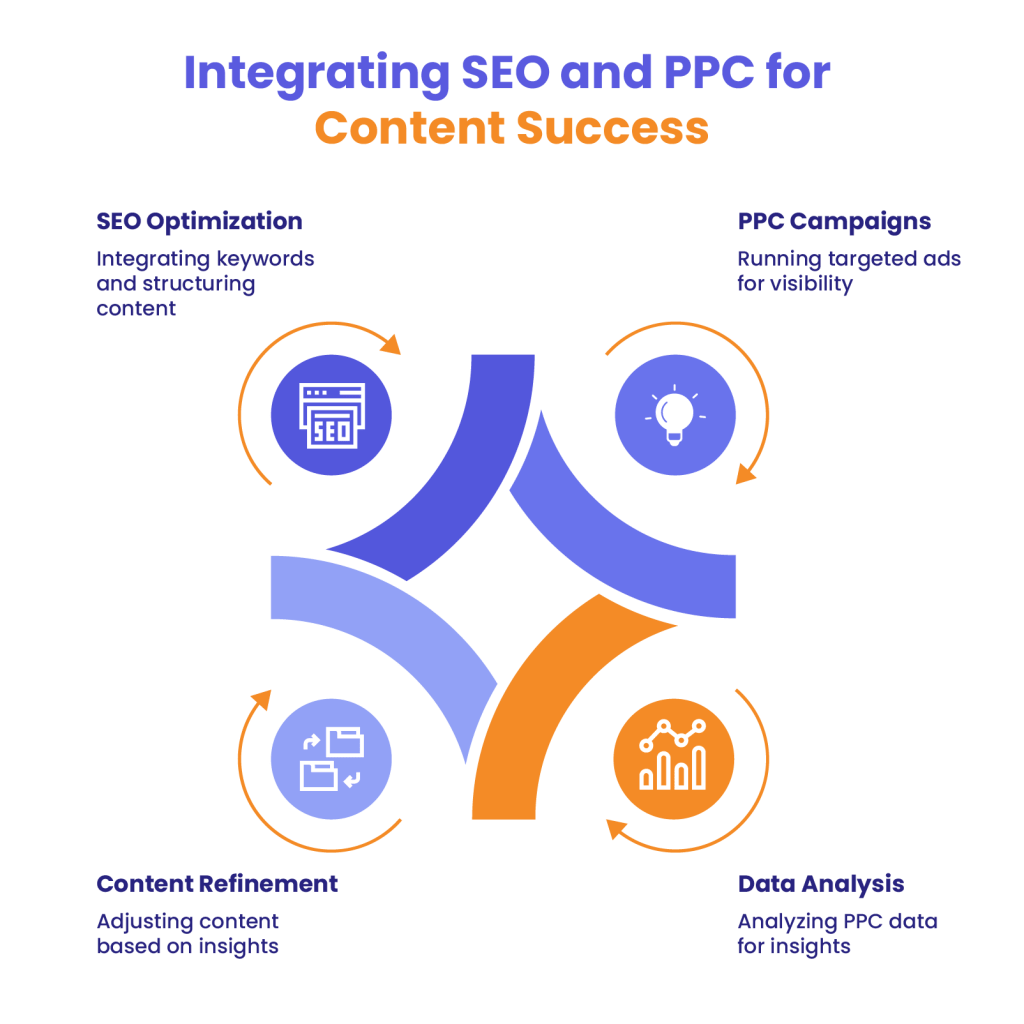
To maximize the impact of selling content, integrate it with SEO (Search Engine Optimization) and PPC (Pay-Per-Click) strategies. SEO ensures your content is discoverable by search engines, while PPC provides immediate visibility and targeted reach. Together, they can drive traffic and conversions more effectively than either strategy can alone.
Optimizing Sales Content for SEO
Creating content that ranks well in search engines while driving sales requires a strategic approach. Start by conducting keyword research to identify terms your target audience is searching for. Integrate these keywords naturally throughout your content, focusing on key areas like titles, headers, and meta descriptions. This not only helps your content rank higher but also makes it more relevant to potential buyers.
On-page optimization is equally important. Ensure your content is well-structured, with clear headings, bullet points, and concise paragraphs that are easy to read. Additionally, use internal and external links to boost your content’s authority and relevance. By optimizing your sales content for SEO, you increase its chances of being seen by the right audience, ultimately driving more traffic and conversions.
Leveraging PPC Data to Enhance Content Selling
PPC campaigns provide valuable data that can inform and improve your sales strategies. By analyzing the performance of your PPC ads—such as which keywords are driving the most clicks and conversions—you can gain insights into what resonates with your audience.
Use this data to refine your content creation and distribution efforts. For example, if a particular keyword or ad copy performs well in your PPC campaigns, incorporate those elements into your sales content. Additionally, consider using PPC data to identify high-performing content topics or formats, and then amplify their reach through targeted content distribution. This approach ensures that your content strategy is data-driven and aligned with your audience’s preferences.
The Role of a Content Strategy Agency in Content Selling
When it comes to selling content, partnering with a content strategy agency can significantly enhance your results. Agencies bring a wealth of expertise, along with the resources, and fresh perspective necessary to elevate your content efforts to a level beyond that of an in-house team.
Benefits of Partnering with an Agency
A content strategy agency provides the specialized knowledge and experience needed to effectively sell content. They stay updated on the latest trends, tools, and techniques, ensuring that your sales content is optimized for both engagement and conversion. With access to a team of skilled professionals, an agency can consistently deliver high-quality content that is tailored to your audience’s specific needs.
Agency vs. In-House Content Strategy
When deciding between using an agency and relying on an in-house team for content writing, it’s important to weigh the pros and cons.
In-House Content Strategy
Pros:
- Deep understanding of your brand and voice.
- Immediate control and quick adjustments to content.
- Generally more cost-effective for regular content creation.
Cons:
- Limited access to specialized skills and tools.
- May struggle with scalability during high-demand periods.
- Can lack fresh perspectives and innovative strategies.
Content Strategy Agency
Pros:
- Access to a wide range of expertise and advanced tools.
- Scalability to match your changing needs.
- Brings a fresh perspective and innovative strategies to your content.
- Can drive more effective results through optimized sales content.
Cons:
- Higher upfront costs compared to an in-house team.
- Less direct control over day-to-day content creation.
- Potential for longer communication cycles compared to an in-house team.
Ultimately, the choice between an agency and an in-house team depends on your business’s specific needs, budget, and goals. For many companies, the ideal solution is a hybrid approach, where an in-house team handles basic content tasks while a content strategy agency is brought in for specialized projects or to provide strategic direction.
3 Best Practices for Creating Sales-Driven Content [+ Bonus Tips]
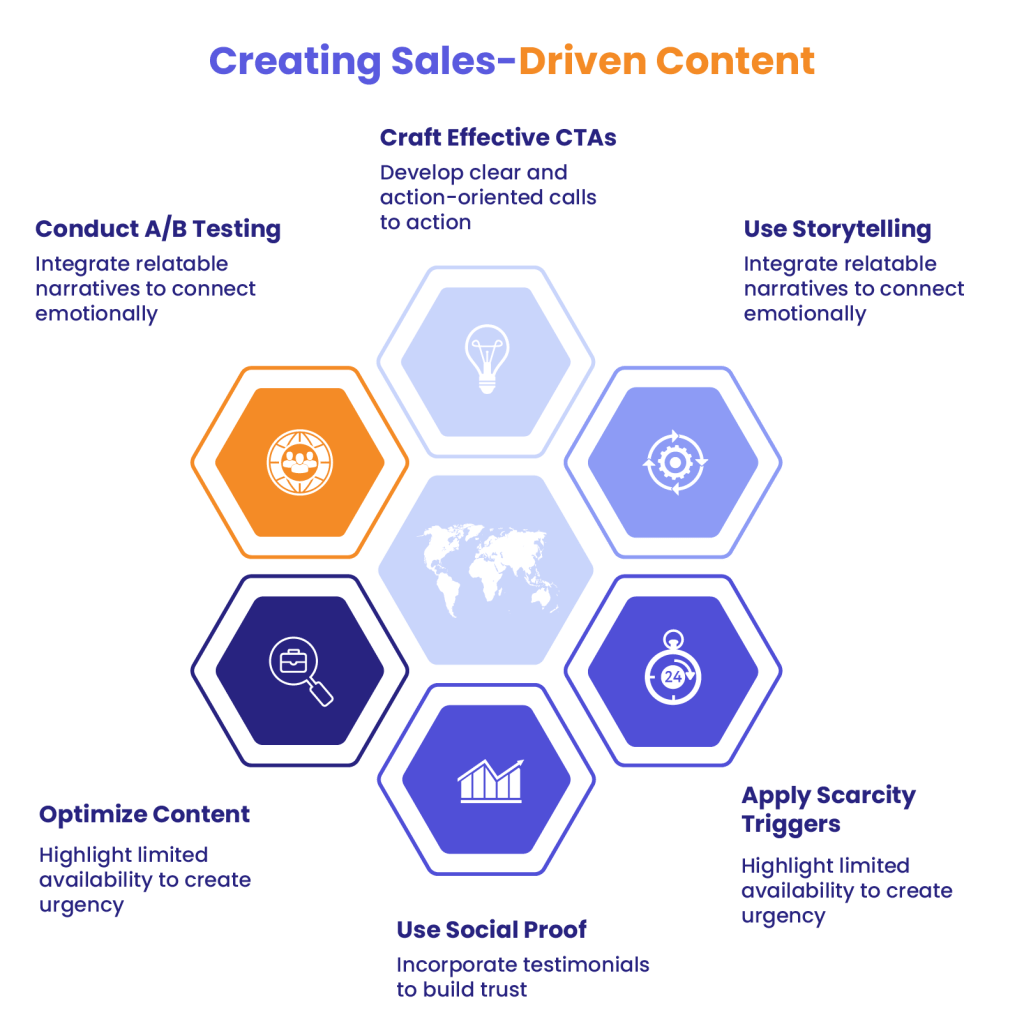
Creating sales content that effectively drives conversions requires a strategic approach. By focusing on the following best practices, you can craft product content that resonates with your audience and compels them to take action.
Crafting Effective CTAs and Storytelling
A well-crafted call to action (CTA) is crucial for converting prospects into customers. To create compelling CTAs, use clear, action-oriented language that tells the reader exactly what to do next. Phrases like “Get Started Today” or “Claim Your Free Trial” create urgency and direct the reader toward the desired outcome. Ensure that your CTAs are prominently placed and easy to find within your content.
Storytelling is another powerful tool in selling content online. By weaving a relatable and persuasive narrative into your content, you can connect with your audience on an emotional level. Effective storytelling helps to humanize your brand, making it easier for potential customers to see the value in what you offer. Use stories to illustrate how your product or service has made a difference for others, reinforcing the benefits in a way that resonates with your audience.
Using Psychological Triggers
Psychological triggers, such as scarcity and social proof, can significantly enhance the effectiveness of your sales content. Scarcity—highlighting limited availability or time-sensitive offers—creates a sense of urgency that encourages immediate action. For example, phrases like “Only a few spots left” or “Offer ends soon” can push hesitant prospects to make a decision.
Social proof, such as customer testimonials, reviews, or case studies, builds trust and credibility. When potential customers see that others have successfully used your product or service, they are more likely to make a purchase themselves. Incorporate these psychological techniques into your content to make it more persuasive and compelling.
Continuous Optimization and A/B Testing
To ensure your content is as effective as possible, continuous optimization is essential. A/B testing is a practical method for refining your content by comparing two versions to see which performs better. For instance, you might test different headlines, CTAs, or content layouts to determine which elements drive the most conversions.
Start by setting up a simple A/B test: choose one variable to test, such as a headline or CTA, and create two versions of your content that differ only in that aspect. Monitor the performance of each version, focusing on metrics like click-through rates and conversions. Once you identify the better-performing version, implement those changes across your content. Regularly repeating this process allows you to continually improve your content selling strategy, ensuring that your content remains effective and aligned with your sales goals.
5 Simple Tricks to Supercharge Your Sales-Driven Content
Here are a few bonus tips to give your sales-focused content an extra edge:
1. Use Power Words
Incorporate persuasive, action-oriented words to evoke emotion and inspire action. Words like proven, exclusive, guaranteed, and free can make your content more compelling.
2. Include a Visual Call-to-Action (CTA)
Text-based CTAs work, but visual elements like buttons, banners, or images can grab attention more effectively. For instance, a bold “Get Your Free Trial Now” button stands out more than plain text.
3. Keep it Scannable
Busy prospects won’t read long blocks of text. Use bullet points, headings, and short paragraphs to make your content easy to skim.
4. Highlight Customer Success Stories
Showcase real-world results from your customers. Use quotes, testimonials, or mini-case studies to demonstrate the tangible benefits of your product or service.
5. Repurpose for Different Channels
Adapt your content to fit various platforms. A blog post can become a carousel on Instagram or a short video for TikTok, extending its reach while maintaining consistent messaging.
By applying these quick yet impactful strategies, you can amplify the effectiveness of your sales-driven content.

Emerging Trends in Content Selling
Staying ahead of rapidly advancing content selling is crucial for maintaining a competitive edge and ensuring your sales content remains effective.
One of the most significant trends in selling content is the rise of AI-driven personalization. With advancements in artificial intelligence, businesses can now deliver highly personalized content to their audience at scale. AI tools can analyze user behavior, preferences, and engagement patterns to create content that resonates with individual users, increasing the likelihood of conversion. This level of personalization makes your sales content more relevant and compelling, directly impacting your ability to effectively sell content.
Interactive content is another emerging trend. As consumers seek more engaging and immersive experiences, interactive content—such as quizzes, calculators, and personalized videos—offers a dynamic way to capture attention and drive engagement. This type of content not only enhances user experience but also provides valuable data that can be used to further refine your selling strategy.
How to Stay Ahead
Keep up with industry trends and continuously adapt your strategies. Here are some tips to ensure you remain at the forefront:
- Regularly Update Your Knowledge: Follow industry blogs, attend webinars, and participate in online communities to stay informed about the latest developments in the content-selling industry. Being aware of new tools, techniques, and trends allows you to incorporate them into your strategy before your competitors do.
- Experiment with New Technologies: Don’t be afraid to test emerging technologies, such as AI and interactive content, in your sales content strategy. Experimentation can reveal new opportunities to connect with your audience and improve conversion rates.
- Collaborate with Experts: Partnering with a content strategy agency can provide access to the latest industry insights and advanced tools. Agencies often have the resources and expertise to implement cutting-edge strategies that keep your sales efforts ahead of the curve.
- Continuously Optimize Your Content: Regularly review and refine your content based on performance data and user feedback. Continuous optimization ensures that your content remains relevant, effective, and aligned with the latest trends in the industry.
Conclusion
In this guide, we’ve explored the key components of an effective content selling strategy, from understanding the differences between selling content and content marketing to leveraging advanced techniques like audience segmentation, multi-channel distribution, and the integration of SEO and PPC. We’ve also looked at the benefits of partnering with a content strategy agency in order to stay ahead of emerging trends.
A well-crafted content sales strategy is essential for converting content into tangible sales. By focusing on personalization, optimizing for search engines, and continuously refining your approach, you can ensure that your sales content drives the results your business needs.
FAQs
What is content selling?
Content selling is the strategic use of content to directly drive sales by addressing the specific needs and pain points of potential customers at various stages of the buying process. Unlike content marketing, which focuses on brand awareness and engagement, content sales aims to convert prospects into customers through personalized and persuasive content.
How do I start selling content?
To start selling content, identify your target audience and their specific needs, then create tailored, high-value content that addresses those needs. Distribute this content strategically through multiple channels, such as social media, email, and your website, while integrating it into your overall sales process to guide prospects toward making a purchase.
What type of content sells the most?
Content that directly addresses buyer pain points and provides clear solutions tends to sell the most. Examples include case studies, product demos, testimonials, and comparison guides, as they build trust and confidence in your offerings.
How to write content that sells?
To write content that sells, focus on understanding your audience’s pain points and crafting clear, persuasive messaging that highlights the benefits of your product or service. Use compelling CTAs, storytelling, and psychological triggers like social proof or scarcity to encourage action.
What are the 5 pillars of content strategy?
The five pillars of content strategy are understanding your audience, defining clear goals, creating valuable content, distributing it effectively across channels, and measuring performance to optimize results. Each pillar ensures your content aligns with audience needs and drives meaningful outcomes.