Pricing is more than just assigning a dollar value to a product or service; it’s a pivotal business decision that can determine success or failure. To truly understand what is a pricing strategy, it’s essential to see it as the framework businesses use to establish how much customers should pay for their offerings. A well-crafted pricing strategy influences profitability and also shapes customer perception and market position.
This guide explores the definition, importance, and types of pricing strategies while providing actionable steps to develop and refine your approach. Whether you’re an entrepreneur, a seasoned business owner, or a digital agency, mastering your pricing strategy is key to staying competitive in today’s market.

Why Pricing Strategy Matters
A carefully considered pricing strategy serves as the backbone of a business’s financial health and brand image. By leveraging strategic pricing, companies can achieve their goals, from maximizing profits to building a loyal customer base.
The Impact on Revenue and Market Positioning
The right pricing strategy can significantly influence revenue. Premium pricing, for instance, signals exclusivity and high quality, attracting customers who prioritize value over cost. Conversely, penetration pricing focuses on affordability to gain a foothold in competitive markets.
Consider a WordPress agency:
- A high-tier pricing strategy might emphasize advanced customization, unique plugins, and dedicated support to position itself as a premium provider.
- On the other hand, a lower-cost approach might target small businesses seeking affordable website solutions, prioritizing volume over individual profit margins.
How Pricing Affects Consumer Perception
Price is often the first metric customers notice. It dictates affordability and also shapes perceptions of quality. A low price may attract price-sensitive buyers but risk undermining perceived value, whereas a higher price can instill trust and prestige if backed by superior offerings.
For example, development agencies that charge premium rates for unique, SEO-driven designs often see their prices as reflective of their specialized skills and the tangible ROI they deliver.
Case Studies of Businesses With Effective Pricing Strategies
- Apple: Known for its price skimming strategy, Apple introduces products at a premium to capitalize on early adopters, gradually reducing prices to attract price-sensitive buyers.
- Netflix: Its tiered subscription pricing caters to different audience segments while maximizing reach and profitability.
- SaaS Providers: Many offer freemium models (free basic plans with paid premium features), a mix of penetration and value-based pricing.
Importance in the Customer Journey
The pricing strategy directly impacts every stage of the customer journey. Transparent, well-communicated pricing builds trust, encouraging conversions and fostering loyalty. For instance, offering clear, tiered plans for development services allows customers to align their needs with their budget, ensuring satisfaction.
Website as a service
Website As a Service [WAAS] provides complete website solutions including design, hosting, and maintenance through a convenient subscription model for Agencies.
Understanding different pricing strategies can help businesses tailor their approach to fit specific goals and market dynamics. Below, we explore the most commonly used methods:
Cost-Based Pricing
What Is Cost-Based Pricing?
This approach calculates the total cost of producing a product or service and adds a fixed markup to ensure profitability.
Pros and Cons
- Advantages: Simple to implement; guarantees cost coverage.
- Disadvantages: Ignores market demand and customer perceptions.
Example
A manufacturing company might use cost-based pricing to cover raw materials, labor, and overhead expenses, adding a fixed margin to set a competitive yet profitable price.
Value-Based Pricing
What Is Value-Based Pricing?
Value-based pricing focuses on what customers are willing to pay, aligning prices with perceived value rather than production costs.
Why It Works
It emphasizes the benefits and unique selling points that resonate with customers.
Example
A development agency offering custom-built e-commerce solutions may charge higher rates due to the perceived long-term value of increased online sales.
Competitive Pricing
What Is Competitive Pricing?
This strategy involves setting prices based on competitor rates, ensuring relevance in a competitive market.
Advantages
- Positions businesses effectively against rivals.
- Helps avoid overpricing or underpricing in dynamic markets.
Risks
Price wars can erode profit margins, making it crucial to focus on value alongside competitive pricing.
Penetration Pricing
What Is Penetration Pricing?
Penetration pricing involves offering lower prices initially to attract customers and gain market share quickly.
Benefits
This strategy is particularly effective for new businesses breaking into competitive industries.
Example
A startup web hosting provider might offer deeply discounted plans for the first year to establish a customer base before raising prices.
Price Skimming
What Is Price Skimming?
Price skimming sets high initial prices for new or innovative products, gradually lowering them as market demand evolves.
Benefits
- Maximizes profit from early adopters.
- Reinforces exclusivity and innovation.
Example
Tech products, such as premium website themes or plugins, often use this strategy.
Dynamic Pricing
What Is Dynamic Pricing?
Dynamic pricing adjusts prices in real-time based on demand, competition, and other factors.
Examples
- Airlines and ride-sharing apps like Uber.
- E-commerce platforms using AI algorithms to optimize sales.
Ethical Considerations
Overuse of dynamic pricing can alienate customers if perceived as exploitative.
Bundle Pricing
What Is Bundle Pricing?
This strategy combines multiple products or services into a single package at a discounted rate.
Example
A digital agency might bundle website design, hosting, and SEO services at a discounted rate to increase customer retention.
Psychological Pricing
What Is Psychological Pricing?
This strategy leverages pricing tactics to influence customer behavior, such as $9.99 instead of $10 to make prices appear lower.
Real-World Example
Retail stores and online platforms frequently use this method to drive impulse purchases.

How to Choose the Right Pricing Strategy
Choosing the right pricing strategy can make or break a business’s success. A strategy tailored to your industry, audience, and goals ensures that your pricing aligns with both profitability and market relevance. Here are the key factors and steps to guide your decision.
Factors to Consider
Industry and Market Trends
Different industries have varying pricing dynamics. For instance, dynamic pricing is prevalent in industries like travel and e-commerce, where demand and competition fluctuate rapidly. Conversely, stable industries, such as traditional manufacturing, may lean toward cost-based or value-based pricing to maintain predictable revenue streams.
Example
An airline might employ dynamic pricing to adjust ticket costs based on seat availability, fuel costs, and competitor prices. Meanwhile, a luxury watchmaker may use value-based pricing to highlight its craftsmanship and exclusivity.
Customer Personas
Understanding your target audience’s preferences and buying behavior is critical. B2B customers often seek transparent pricing that demonstrates clear ROI, whereas B2C customers may prioritize affordability or emotional appeal.
Example
A software-as-a-service (SaaS) provider targeting enterprises could use tiered pricing with ROI-driven features, while a direct-to-consumer (DTC) brand might rely on psychological pricing tactics to attract budget-conscious shoppers.
Cost Structures and Margins
A sustainable pricing strategy must cover all costs—fixed and variable—while leaving room for a healthy profit margin. This ensures long-term business viability and competitive positioning.
Pro Tip
Regularly audit your cost structures and adjust your pricing to reflect changes in production, labor, or material expenses without alienating your customer base.
Steps to Develop a Pricing Strategy
Crafting a pricing strategy requires deliberate planning and consistent evaluation. Follow these steps to develop a robust pricing framework:
1. Define Business Goals
Clarify your primary objectives:
- Are you aiming to maximize short-term profits?
- Do you prioritize long-term customer retention or market share?
- Is your goal to position your brand as a premium or affordable option?
2. Conduct Market Research
Analyze competitors’ pricing, customer expectations, and industry benchmarks to identify where your offerings stand.
Pro Tip:
Use tools like Google Trends or competitive analysis platforms to monitor shifts in pricing trends and customer behavior.
3. Understand Customer Value Perception
Pricing should reflect the value customers place on your product or service. Conduct surveys, focus groups, or interviews to determine what features and benefits resonate most with your target audience.
4. Test Pricing Models
Experiment with pricing structures through methods like A/B testing or pilot programs to see what works best for your audience.
Example:
A development agency could test flat-rate packages versus hourly pricing to see which drives more client sign-ups.
5. Implement and Monitor
Once your pricing strategy is in place, track its impact on sales, profitability, and customer satisfaction. Stay flexible—market conditions and customer expectations can change, and your strategy should evolve accordingly.

Common Mistakes in Pricing Strategies
Avoid these common pitfalls to ensure your pricing strategy works for your business:
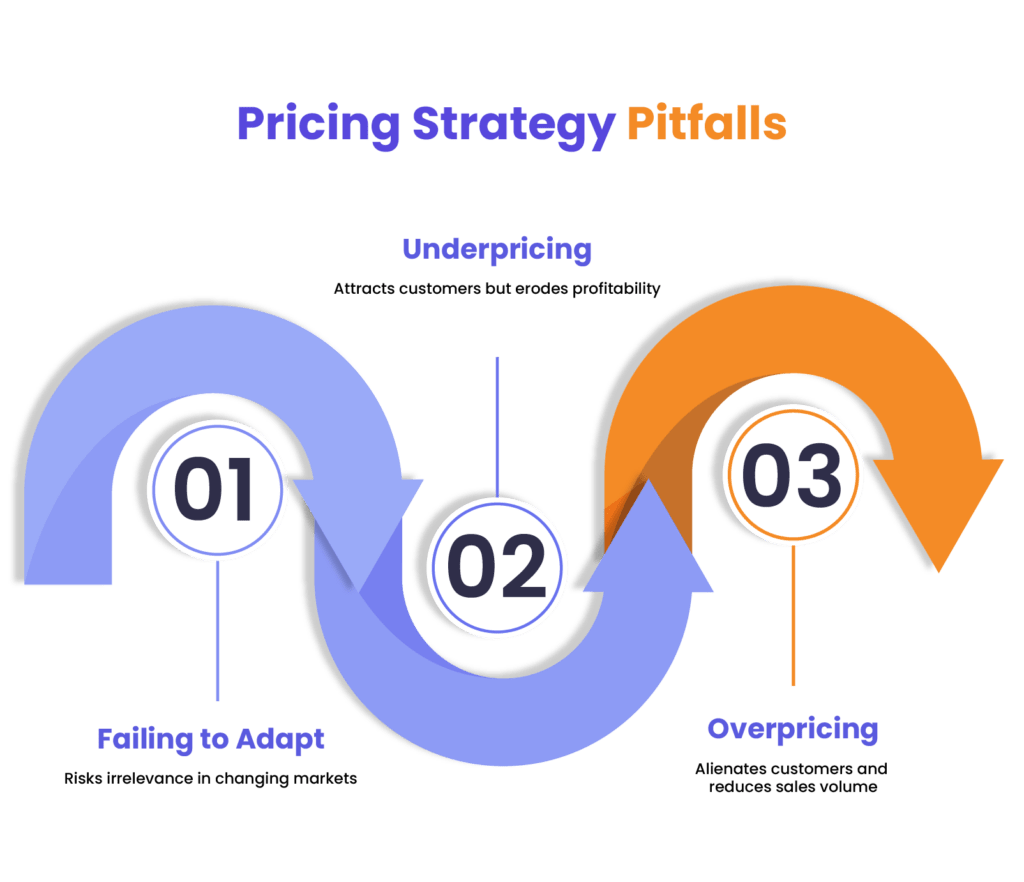
Underpricing
Setting prices too low can erode profitability and undervalue your offerings. While this may attract cost-conscious customers, it risks creating an unsustainable business model.
Overpricing
Conversely, overpricing may alienate price-sensitive customers, leading to lower sales volume and difficulty justifying the premium.
Failing to Adapt
Market conditions, competitor actions, and customer preferences are constantly evolving. Regularly reviewing and adjusting your pricing strategy ensures you stay relevant and competitive.
Real-World Examples of Successful Pricing Strategies
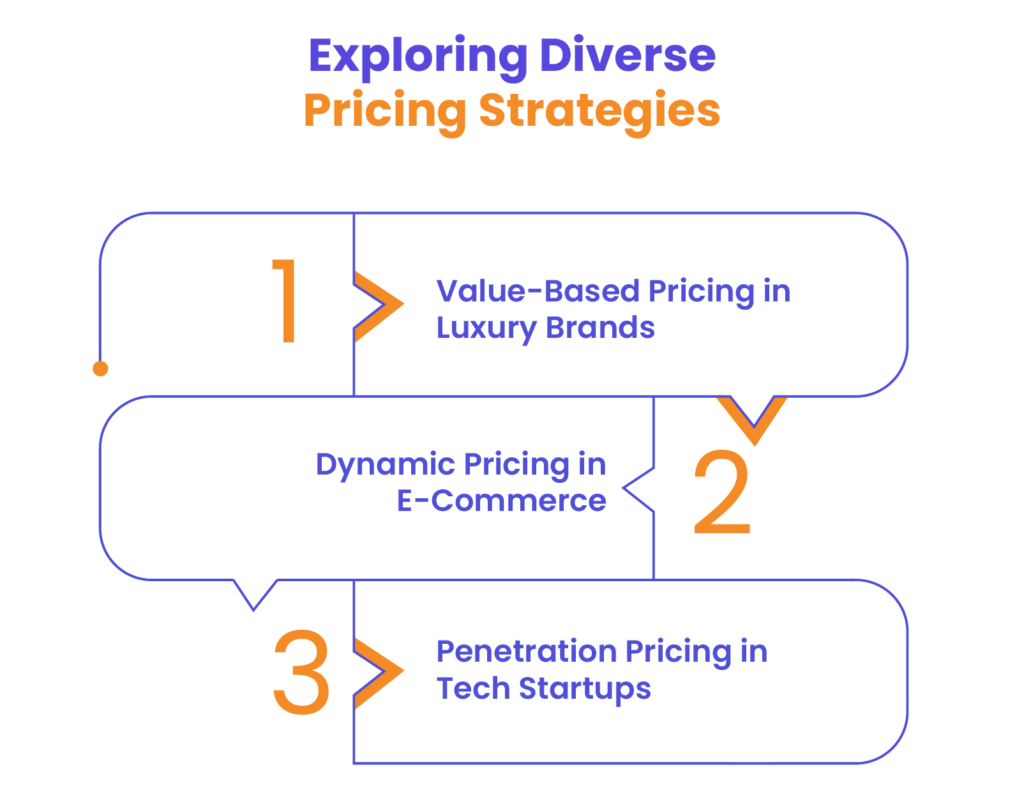
Case Study 1: Value-Based Pricing in Luxury Brands
Luxury brands like Rolex focus on value-based pricing, positioning their products as timeless investments. By emphasizing exclusivity and craftsmanship, they appeal to affluent audiences willing to pay a premium for perceived value.
Case Study 2: Dynamic Pricing in E-Commerce
Amazon utilizes AI to dynamically adjust prices based on demand, competition, and inventory. For example, during Black Friday, the platform optimizes prices across categories to maximize sales while maintaining margins.
Case Study 3: Penetration Pricing in Tech Startups
Spotify’s penetration pricing strategy allowed it to build a massive user base with free and low-cost plans. Over time, the company transitioned many users to premium subscriptions, driving sustainable revenue growth.
The Role of Technology in Pricing Strategies
AI and Machine Learning
Artificial intelligence (AI) and machine learning are revolutionizing pricing by analyzing vast datasets in real-time. These technologies help businesses optimize prices dynamically based on demand, competition, and customer behavior.
Example
Ride-hailing apps like Uber adjust fares based on current demand, traffic conditions, and ride availability.
Pricing Tools
Dedicated pricing tools such as HubSpot, Pricefx, and ProfitWell enable businesses to analyze data, forecast trends, and automate pricing decisions, making the process more efficient and data-driven.
Pro Tip
Investing in the right pricing software can save time and minimize human error while maximizing profitability.
The Future of Pricing Strategies
As the business landscape evolves, so do pricing strategies. Today, it’s no longer enough to rely on traditional methods, businesses must adapt to new trends and technologies to stay competitive. Emerging approaches are transforming how companies think about pricing, driving customer loyalty, and ensuring profitability. Here’s a closer look at what’s shaping the future of pricing strategies.
Emerging Trends
- Subscription Models: Businesses are increasingly adopting subscription-based pricing to ensure consistent revenue. This trend is especially prominent in industries like software (SaaS) and digital services, such as WordPress maintenance packages.
- Ethical Pricing: Sustainability and ethical considerations are becoming integral to pricing decisions. Customers are willing to pay more for eco-friendly and socially responsible products.
Predictions for the Digital-First Economy
In a digital-first world, personalization will drive pricing strategies. Businesses will leverage big data and AI to offer tailored pricing for individual customers, creating a seamless and customer-centric experience.
WordPress migration
Migrate to WordPress with White Label Agency. Safe, fast, and expertly managed migration from all major platforms. Contact us to get your free quote today.
Understanding what is a pricing strategy and how to implement it effectively is vital for any business. From analyzing industry trends to leveraging AI and customer insights, creating a tailored pricing strategy can ensure you meet your goals and exceed customer expectations.
Ready to refine your approach? Our team of experts specializes in crafting data-driven pricing strategies that align with your business objectives and market dynamics.
Contact us today to schedule a consultation and unlock your business’s full potential through strategic pricing!