- Search Functionality Needs More Thought Than You’d Think
- Different Visitors Want Different Things From Your Site
- WordPress Handles Real Estate Projects Better Than People Expect
- Design Should Highlight Properties, Not Itself
- Content Beyond Listings Matters More Than Agencies Realize
- Are You a Marketing Agency Servicing Real Estate Clients? WLA Can Help!
Property hunting happens online now. A couple thinking about moving won’t drive around neighborhoods looking for “For Sale” signs anymore. They’ll search on their phones during lunch breaks, scroll through listings after dinner, and save favorites to compare later.
At While Label Agency, we’ve partnered with marketing agencies on real estate website development projects and have picked up some patterns worth sharing. In this blog, we will walk you through the must-have features that every real estate website will benefit from.
Search Functionality Needs More Thought Than You’d Think

Walk into any real estate office and you’ll see agents working with buyer wish lists. “Three bedrooms, two baths, under $400k, good schools, close to downtown.” The website search needs to handle these same conversations, except without a human translator.
Most real estate web design projects start with the search bar, and that makes sense. But the filtering is where things get tricky. You can’t just throw every possible filter onto the page and hope buyers figure it out. Too many options overwhelm people. Too few and they can’t narrow things down enough to bother looking.
The filters that matter most depend on the market. In suburban areas, school district boundaries drive decisions. In cities, walkability scores and transit access matter more. Rural properties need acreage and well water information. Generic filters miss these local details that actually move the needle for buyers.
Marjorie, a Project Manager from one of our vertical agency partners working on real estate clients, puts it this way: “Our clients sometimes want to add every filter they can think of, but we’ve found it’s better to start with the core five or six that buyers in that specific market actually care about. You can always add more later, but a cluttered search interface on day one just confuses people.”
Different Visitors Want Different Things From Your Site
Real estate websites serve at least three audiences with competing goals. Buyers want to search properties. Sellers want to evaluate the agent or brokerage. Renters (if applicable) need a different set of information entirely. Trying to serve all three from the same homepage creates a muddy experience for everyone.
The homepage should acknowledge these different paths immediately. Buyers get a prominent search bar. Sellers see information about the agent’s track record and a home valuation tool. Each path leads somewhere specific rather than dumping everyone into the same generic funnel.
| User Type | Primary Goal | Key Pages Needed |
| Homebuyers | Find available properties | Search page, property listings, mortgage calculator, buyer’s guide |
| Sellers | Choose an agent | Agent profiles, market analysis, testimonials, selling process guide |
| Renters | Find rental properties | Rental search, application process, tenant FAQs |
| Investors | Identify opportunities | Investment properties, market data, ROI calculators |
WordPress Handles Real Estate Projects Better Than People Expect
WordPress doesn’t immediately come to mind for real estate website development, but it works well once you understand what plugins and configurations to use. The platform provides numerous pre-built real estate themes. It also gives you control over design and structure while adding the database-like functionality that property listings need.
Real estate plugins do the technical work here: custom fields for property details, search functionality, and automated email alerts when new listings match saved searches. IDX integration pulls MLS data automatically so listings stay current without manual updates. For agencies managing multiple real estate clients, this automation matters. Manual listing updates across several sites eats time fast.
Dedicated team
Scale your agency with a dedicated WordPress developer. With great communication, we make sure to keep your builds on track and on time.
The content management side helps too. Real estate businesses that blog about local market trends, home buying tips, and neighborhood profiles tend to rank better in search and position themselves as local experts. WordPress makes publishing and organizing this content straightforward enough that even non-technical clients can handle updates if they want to.
| Feature | Why It Matters | Implementation Notes |
| MLS/IDX Integration | Auto-updates listings without manual work | Choose plugins compatible with local MLS |
| Advanced Search Filters | Lets buyers narrow options quickly | Customize based on market specifics |
| Saved Searches | Keeps buyers engaged long-term | Requires email automation setup |
| Lead Capture Forms | Converts visitors into contacts | Place contextually on property pages |
| Mortgage Calculators | Helps buyers understand affordability | Simple plugins available |
Some real estate website development projects need custom functionality that plugins don’t cover. In those cases, the flexibility of WordPress means developers can build exactly what’s needed without fighting the platform.
Want to See How We Developed a Real Estate Website with WordPress?
Recently, we were approached by a marketing agency to provide a project-based WordPress development service for the Balsam Lake Realty website. The company guides clients in the home-buying or selling process in Balsam Lake and the greater Western Wisconsin region. Check out how we executed this real estate project.
Design Should Highlight Properties, Not Itself

Real estate web design walks a fine line. The site needs to look professional and polished, but it can’t compete with the properties for visual attention. The imagery and property details should dominate, with the design creating a clean framework that gets out of the way.
Grids
Property listing grids need breathing room. When you pack too many listings onto a page or make the individual cards too dense with information, scanning becomes exhausting. Buyers looking at 20 or 30 properties want to eliminate non-fits quickly, which means each listing card needs just enough information to make that initial judgment. These are price, bedrooms, bathrooms, square footage, and one strong image. Details come later once they click through.
Photography
High-quality property photography is non-negotiable, but agencies often don’t have control over what images clients provide. The design needs to handle both professional photos and mediocre smartphone shots without breaking. Consistent image aspect ratios, appropriate compression, and thoughtful placeholder images for listings without photos all help maintain visual quality even when source material varies.
Typography
Typography choices affect readability more than most people realize. Body text needs to be large enough for comfortable reading on phones (16px minimum). Line spacing should be generous. Paragraph lengths should be short. These are usability decisions that affect whether someone actually reads the property description or just looks at photos.
Mobile UX
Mobile experience requires special attention too, because more than half of property searches happen on phones now. Touch targets need to be large enough for thumbs. Forms need to be simple enough to fill out on a small screen. Property images need to load quickly even on slower connections. A beautiful desktop design doesn’t mean much if the mobile experience frustrates users.
WordPress Outsourcing Services
Enhance your agency’s capabilities with our WordPress outsourcing services. Get expert development, design, and maintenance support tailored to your needs.
Content Beyond Listings Matters More Than Agencies Realize
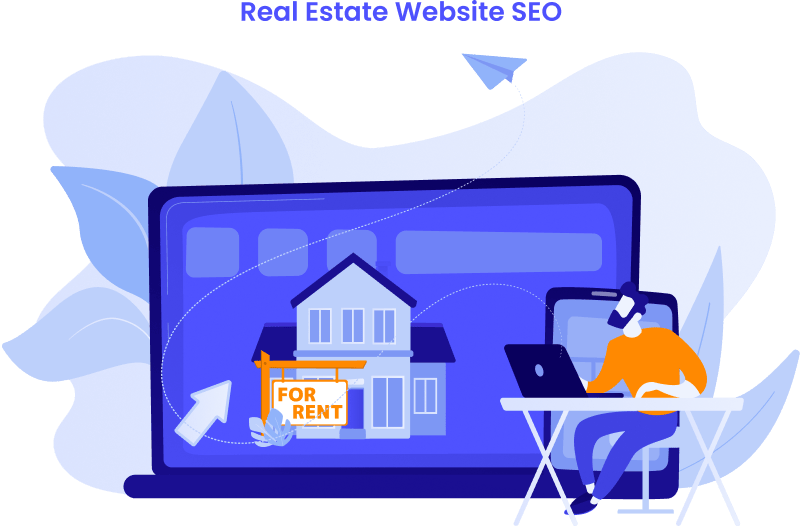
Property listings are necessary but not sufficient. The sites that perform well long-term include educational content that brings visitors in before they’re ready to contact an agent. Someone searching “best family neighborhoods in Austin” isn’t ready to tour homes yet, but they’re starting the research process. Having that content on your site gets them into your ecosystem early.
Neighborhood guides work particularly well for local SEO. These pages can cover schools, commute times, local businesses, parks, housing trends, and community character. They attract searches from people researching areas before they’re even looking at specific properties. This early-stage traffic converts eventually, just not immediately.
Property descriptions themselves need more attention than they typically get. Most listings read like spec sheets: “3BR/2BA, granite counters, stainless appliances, hardwood floors.” That’s accurate but boring. Descriptions that help buyers imagine living in the space work better: “The kitchen opens to the family room, so you can cook while kids do homework at the island.” This isn’t flowery real estate marketing language, you’re just describing how the space actually functions.
Market updates and buying/selling guides position the agent or brokerage as a local expert rather than just a listing aggregator. First-time buyer guides, explanation of the closing process, tips for preparing a home for sale, and local market analysis all provide genuine value. These pieces attract organic traffic and build trust before someone’s ready to make contact.
Are You a Marketing Agency Servicing Real Estate Clients? WLA Can Help!
Real estate website development requires specialized knowledge that most agencies don’t have in-house. IDX integration, MLS feeds, property database structure, and real estate-specific plugins take time to learn. Hiring someone with this expertise for occasional real estate projects doesn’t make financial sense.
This is where white-label partnerships help. We handle the WordPress development and technical implementation while agencies maintain the client relationship and manage strategy. The agency stays involved in all client communication, we just execute the technical work in the background. And we offer scalability, too. We do not lock you into long-term contracts. If you have a dip in your client count, you can always scale back without penalties.
The real estate vertical represents good business for agencies. Projects are substantial enough to be profitable, common enough that you can develop expertise, and ongoing enough (with maintenance and updates) to create long-term client relationships. Having a reliable, scalable development partner removes the main barrier to serving this market well. Get in touch with our sales team to learn more about our services.