


- 4 Key Benefits of Using White Label SEO Tools
- WordPress maintenance plans
- Choosing the Right White Label SEO Tool
- Comparing Top White Label SEO Tools
- Best Practices for Using White Label SEO Tools Effectively
- Choosing the Right White Label SEO Tool Provider
- Website as a service
- Conclusion: Why White Label SEO Tools Are Essential for Agency Growth
White label SEO tools allow agencies to provide SEO services under their own brand while leveraging third-party technology. These tools enable agencies to deliver high-quality SEO solutions—including keyword tracking, site audits, backlink analysis, and reporting—without the need for in-house software development.
For SEO agencies, maintaining consistent branding while achieving measurable results for clients is essential. Clients expect professional SEO services, but many agencies lack the resources to build their own platforms. White label SEO management platforms solve this challenge by offering customizable, scalable solutions that agencies can brand as their own.
This guide explores different categories of white label SEO tools, including all-in-one platforms, rank tracking solutions, reporting dashboards, site auditing software, and backlink analysis tools. Each category plays a critical role in streamlining SEO operations, automating workflows, and enhancing client deliverables.
4 Key Benefits of Using White Label SEO Tools
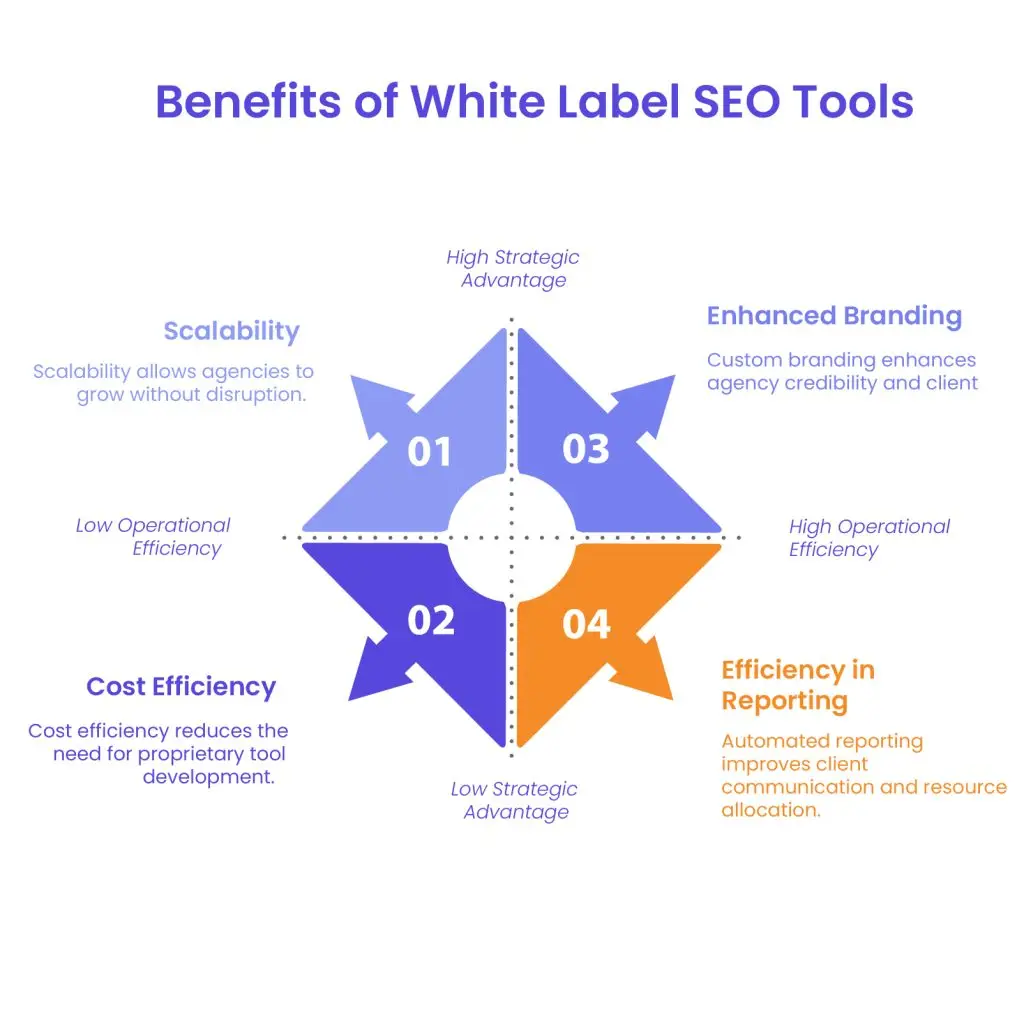
SEO agencies operate in a competitive market where branding, cost efficiency, scalability, and streamlined reporting are critical to long-term success. White label SEO tools provide a way for agencies to deliver high-quality SEO services without the need for in-house software development. These tools allow agencies to customize their offerings, optimize workflows, and improve client satisfaction while maintaining full control over their branding.
Enhanced Branding
A major advantage of white label SEO tools is the ability to custom-brand dashboards, reports, and portals. Agencies can replace third-party branding with their own logos, color schemes, and domain names, ensuring a seamless experience for clients.
By using custom-branded SEO dashboards, agencies present themselves as full-service providers rather than resellers of external tools. This increases credibility and helps build long-term client trust. Some platforms even allow agencies to host reports and client portals on their own subdomains, reinforcing brand consistency across all client interactions.
Cost Efficiency
Developing proprietary SEO tools requires significant investment in technology, development, and maintenance. White label SEO management platforms eliminate this cost by offering ready-made solutions that agencies can use immediately. Instead of spending months developing a custom tool, agencies can start offering SEO services right away with pre-built, fully functional platforms.
Additionally, automation features in white label SEO tools help reduce manual work, saving time and labor costs. By automating tasks like rank tracking, site audits, backlink monitoring, and report generation, agencies can focus more on strategy and client relationships rather than data collection and analysis.
Scalability
As agencies grow, so do their client demands. White label SEO tools provide scalable solutions that allow agencies to handle multiple clients with ease. Whether managing a handful of local businesses or hundreds of enterprise clients, these tools offer flexible pricing and feature expansion options to accommodate growth.
Some platforms allow agencies to add new features, integrations, and user roles as their client base expands, ensuring that they can scale without disruption. Many tools also support multi-user access, enabling teams to collaborate efficiently within a centralized SEO dashboard.
Efficiency in Reporting
Client reporting is one of the most time-consuming aspects of SEO management. White label tools streamline this process by automating report generation and distribution. Agencies can schedule weekly, bi-weekly, or monthly reports that include keyword rankings, traffic insights, backlink data, and technical SEO findings—all delivered under their branding.
Customizable dashboards allow clients to log in and view real-time SEO performance metrics without waiting for a manual update. This level of automation not only improves client communication but also frees up agency resources, allowing teams to focus on optimization and strategy rather than reporting.
WordPress maintenance plans
WordPress Maintenance Plans ensure site security, performance, and uptime. Choose custom plans with backups, monitoring, and unlimited content edits.
Choosing the Right White Label SEO Tool

Selecting the right white label SEO tool is critical for agencies seeking to streamline operations, scale services, and maintain brand consistency. With numerous options available, agencies must evaluate their specific needs, budget constraints, customization requirements, and integration capabilities before committing to a solution.
Identify Core Needs
Before selecting a white label SEO tool, agencies must define their specific service offerings. Some tools provide comprehensive all-in-one solutions, while others specialize in specific SEO tasks. Identifying the agency’s primary requirements will help narrow down the most suitable platform.
- Rank Tracking: If monitoring keyword positions and SERP performance is a priority, specialized rank tracking tools like AccuRanker or Nightwatch may be the best fit.
- SEO Reporting: Agencies that focus on client deliverables and automated reporting should look for platforms like DashThis or ReportGarden that offer customizable SEO dashboards.
- Technical Auditing: If the agency provides website health assessments and technical SEO services, tools like Screaming Frog and Sitebulb offer in-depth crawling and auditing functionalities.
- Comprehensive SEO Solutions: For agencies that require a full suite of SEO tools, platforms like SE Ranking, Semrush, and WebCEO provide all-in-one solutions that include keyword tracking, backlink monitoring, reporting, and competitor analysis.
Consider Budget and Scalability
The right white label SEO management platform should align with the agency’s current budget while also offering room for growth and expansion. Pricing structures vary based on features, the number of users, and the scale of the agency’s client base.
Key considerations include:
- Pricing Models: Some tools charge per user, while others use project-based pricing. Agencies should choose a model that aligns with their client volume.
- Scalability: As the client base grows, the chosen tool should allow for easy upgrades, additional features, and multi-client management.
- Hidden Costs: Some platforms offer affordable base plans but charge extra for essential features like API access, white-label branding, or additional users.
For example, SE Ranking starts at $65 per month, while WebCEO’s Agency Unlimited Plan offers full white-label customization for $99 per month. And Semrush at 139.95$ starting price.
Evaluate Customization Options
A true white label SEO tool should allow agencies to seamlessly integrate their branding into reports, dashboards, and client portals. Customization levels vary across platforms, and agencies should look for the following key features:
- Custom Domains: Instead of using the tool provider’s default URL, agencies should have the option to use their own branded domain for client access.
- Branded Reports: Reports should include custom colors, logos, and fonts to match the agency’s branding.
- User Access Control: Some tools allow multi-user roles with different permission levels, ensuring that team members and clients see only the data relevant to them.
For example, WebCEO offers custom domain masking, allowing agencies to host dashboards on their own subdomain, making the tool appear fully in-house rather than third-party software.
Recommendation
Want to leverage more white label business opportunities? Check out our guide on white label copywriting.
Integration Capabilities
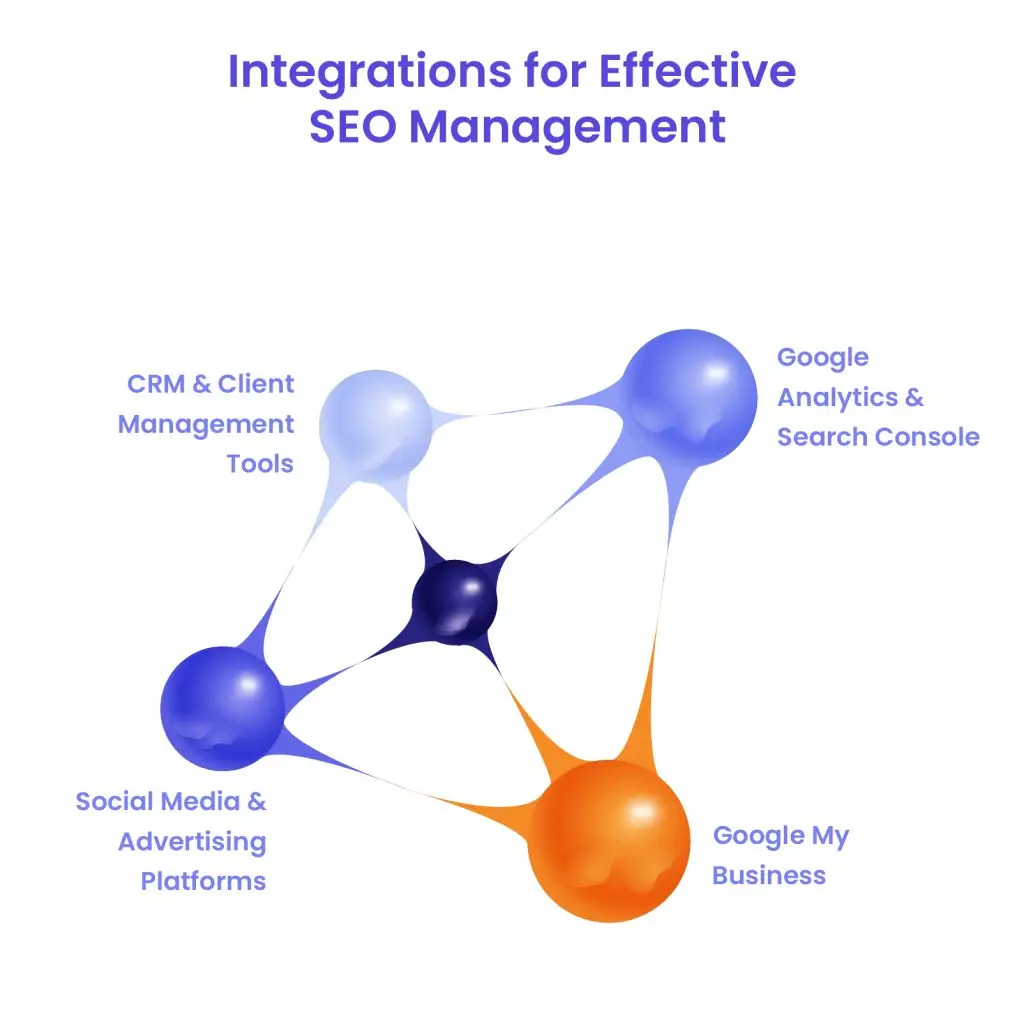
A powerful white label SEO management platform should integrate seamlessly with third-party tools to enhance workflow efficiency and ensure data consistency. Essential integrations include:
- Google Analytics & Search Console: These integrations provide accurate performance tracking and organic search insights.
- Google My Business (GMB): Agencies managing local SEO should ensure their tool connects with GMB for local ranking and visibility tracking.
- Social Media & Advertising Platforms: Some SEO tools offer integrations with Facebook Ads, Google Ads, and LinkedIn to combine organic and paid search insights.
- CRM & Client Management Tools: For agencies managing large-scale client operations, integrations with HubSpot, Zoho, or Salesforce can improve workflow efficiency.
For instance, SE Ranking integrates seamlessly with Google services, social media platforms, and other SEO software, making it a strong choice for data-driven agencies.
Comparing Top White Label SEO Tools
Choosing the right white label SEO tool requires a careful comparison of features, customization options, pricing, and usability. Some platforms provide comprehensive solutions, while others specialize in rank tracking, reporting, or competitor analysis. Below is a comparison of leading white label SEO management platforms, helping agencies determine the best fit for their needs.
1. SE Ranking vs. Semrush vs. WebCEO
These all-in-one SEO platforms offer a broad range of tools, including rank tracking, backlink analysis, SEO audits, and reporting. However, they differ in branding capabilities, pricing structures, and usability.
Customization Options
| Feature | SE Ranking | Semrush | WebCEO |
| White-Label Branding | Fully customizable, including logo placement, branded dashboards, and custom domains. | Branded PDF reports; requires Agency Growth Kit add-on for white-label branding. | Offers domain masking, custom reporting, and multi-user access control. |
| Client Dashboard | Supports custom client logins for real-time performance tracking. | No dedicated client dashboard customization. | Agencies can use branded subdomains to host client reports. |
Pricing Tiers and Packages
| Plan | SE Ranking | Semrush | WebCEO |
| Starting Price | $65/month | $139.95/month | $99/month |
| Best For | Small to mid-size agencies looking for an affordable all-in-one SEO tool. | Agencies focused on SEO research and competitor analysis. | Large agencies that prioritize branding and workflow automation. |
Usability and Support
| Aspect | SE Ranking | Semrush | WebCEO |
| Ease of Use | User-friendly with an intuitive interface. | Feature-rich but has a steep learning curve for new users. | Designed for agencies with workflow automation. |
| Support | Strong customer service, available in multiple languages. | Extensive support resources but no dedicated account managers for small plans. | Dedicated agency account managers and customer support. |
Verdict:
- SE Ranking is the most affordable and scalable solution for agencies that need a full SEO suite with branding options.
- Semrush is best for agencies that require advanced SEO research and competitor analysis, but white-label branding requires an additional cost.
- WebCEO is the best choice for agencies prioritizing branding and workflow management, as it offers domain masking and team collaboration tools at a competitive price.
2. AccuRanker vs. Nightwatch
For agencies focused on keyword rank tracking and competitor analysis, AccuRanker and Nightwatch are two of the top choices. These tools provide highly accurate, real-time rank tracking with white-label reporting capabilities.
Accuracy in Rank Tracking
| Feature | AccuRanker | Nightwatch |
| Keyword Tracking | Real-time updates, with one of the fastest rank tracking speeds. | Specializes in local SEO tracking with desktop and mobile insights. |
| SERP Data | Highly accurate, tracks Google, Bing, and Yandex rankings. | Focuses on geo-specific and mobile rankings, making it ideal for local SEO agencies. |
Report Customization
| Feature | AccuRanker | Nightwatch |
| White-Label Reports | Fully branded SEO reports with scheduled automation. | Allows custom report frequency, layout, and delivery options. |
| Custom Dashboards | Integrates with Google Data Studio for branded client reports. | Provides advanced reporting customization for agencies with specific needs. |
Integration and Export Options
| Integration | AccuRanker | Nightwatch |
| Google Analytics & Search Console | Full integration with Google Analytics, Search Console, and Google Data Studio. | Supports Google Search Console, with custom API integrations for automation. |
| Third-Party API Access | Available for agencies needing custom SEO workflow automation. | API integration supports deeper data manipulation for advanced users. |
Verdict:
- AccuRanker is best for agencies that require fast, frequent keyword updates and high tracking accuracy.
- Nightwatch is better suited for agencies that focus on local SEO, mobile SERP tracking, and flexible reporting formats.
Best Practices for Using White Label SEO Tools Effectively

To maximize the benefits of white label SEO tools, agencies must implement best practices that enhance efficiency, maintain strong branding, and improve client communication. These tools offer a high level of automation and scalability, but without the right strategy, agencies may not fully leverage their capabilities. Below are essential practices to streamline SEO workflows and optimize client deliverables.
Automate Reporting and Updates
Automating reports is one of the key advantages of white label tools. Rather than manually compiling data for clients, agencies can schedule reports to be sent at regular intervals, ensuring consistent updates with minimal effort.
- Setting up weekly, bi-weekly, or monthly reports allows agencies to keep clients informed without additional manual work.
- Many white label SEO management platforms enable agencies to create dynamic, real-time dashboards that clients can access at any time.
- Automated reports should include key SEO metrics such as keyword rankings, backlink profiles, organic traffic growth, and technical site health.
Using automation features ensures that clients receive timely and accurate performance insights, freeing up agency resources to focus on SEO strategy and execution rather than administrative tasks.
Consistent Branding Across Tools
Maintaining consistent branding across all client touchpoints is essential for building credibility and reinforcing an agency’s identity. A strong brand presence ensures that clients recognize the agency as a trusted SEO provider, rather than a reseller of third-party software.
- Agencies should customize dashboards, reports, and emails with their own logos, brand colors, and fonts.
- Custom domains should be used instead of third-party URLs to ensure a seamless experience for clients.
- Standardized report templates and dashboard layouts create a professional and cohesive look across all client communications.
Many white label SEO tools, such as WebCEO and SE Ranking, offer full branding control, allowing agencies to completely remove the tool provider’s identity from client-facing reports and dashboards.
Recommendation
Have a look at our complete guide on white label content creation.
Use Analytics to Inform Client Strategy
SEO data is only valuable if it leads to actionable insights. Agencies should go beyond providing raw reports and use SEO analytics to develop data-driven strategies for clients.
- Google Analytics and Search Console integrations should be leveraged to analyze organic traffic trends and user behavior.
- Keyword ranking fluctuations should be correlated with site content updates, algorithm changes, and competitor movements.
- Backlink profile changes should be monitored to identify new link-building opportunities and mitigate the impact of lost links.
Agencies should not just present SEO reports, but also provide recommendations on how clients can improve performance based on data insights. Actionable suggestions, such as updating underperforming content, fixing technical SEO issues, or optimizing for new keywords, add significant value to client relationships.
Stay Updated with Tool Features
SEO is constantly evolving, and white label SEO management platforms frequently introduce new features, updates, and integrations. Staying informed about these changes allows agencies to maximize their tools’ potential and offer clients cutting-edge solutions.
- Agencies should regularly review software updates to ensure they are utilizing the latest features.
- Many platforms provide training resources, webinars, and documentation that agencies can use to stay ahead of industry trends.
- Keeping up with new API integrations and automation tools helps agencies refine workflows and improve efficiency.
By continuously improving SEO strategies with the latest tool advancements, agencies can provide clients with a more effective and data-driven service, maintaining a competitive edge in the market.
Implementing these best practices ensures that agencies fully leverage the power of white label SEO tools while maintaining a strong brand identity and delivering data-driven insights to clients. By automating reporting, reinforcing branding, translating analytics into action, and staying informed on new features, agencies can scale their SEO services efficiently and build long-term client relationships.
Choosing the Right White Label SEO Tool Provider
Selecting the right white label SEO tool provider goes beyond just comparing features. Agencies must ensure the platform offers flexibility, scalability, reliable customer support, and cost-effective pricing models. A well-chosen provider will seamlessly integrate into an agency’s workflow while maintaining branding and operational efficiency. Below are the key factors agencies should evaluate before committing to a white label SEO management platform.
Trial Periods and Demos
Most white label SEO tool providers offer free trials or demo versions that allow agencies to test the platform’s capabilities before making a financial commitment. Taking advantage of these trial periods ensures that agencies select a tool that meets their branding, reporting, and SEO automation needs.
- Agencies should opt for providers offering at least a 7- to 14-day free trial to explore the platform’s functionalities fully.
- A live demo with a product specialist can help agencies understand customization options, API integrations, and workflow automation.
- Trial testing should include checking report automation, data accuracy, dashboard usability, and client portal branding to ensure the tool fits seamlessly into agency operations.
Many platforms, such as SE Ranking and WebCEO, provide extended free trials with access to white-label features, allowing agencies to fully evaluate customization options before subscribing.
Client Support and Documentation
Reliable customer support and comprehensive documentation are critical when choosing a white label SEO tool provider. As agencies integrate these platforms into their workflow, they may encounter technical issues, setup challenges, or reporting questions. A provider with strong support ensures minimal disruptions and a smoother onboarding process.
- Agencies should prioritize platforms that offer 24/7 customer support via live chat, email, or phone to ensure timely assistance.
- Providers that assign dedicated account managers for agency clients offer a more personalized support experience.
- Access to a detailed knowledge base, video tutorials, and community forums can significantly reduce onboarding time and improve usability.
For example, Semrush provides extensive knowledge base articles, while WebCEO assigns dedicated account managers to agencies subscribed to their higher-tier plans. Having a knowledgeable support team can make or break the long-term success of integrating a white label SEO tool.
Pricing Plans and Flexibility
Different white label SEO management platforms offer varying pricing models based on agency size, service offerings, and feature sets. Agencies must select a plan that aligns with their business model and client base while ensuring scalability.
When evaluating pricing, agencies should consider:
- Per-user vs. per-project pricing – Some platforms charge per user, while others offer flat-rate pricing based on the number of clients or projects managed.
- Scalability options – The tool should allow seamless upgrades and downgrades to accommodate business growth without financial penalties.
- Additional costs – Some providers offer affordable base plans but charge extra for API access, white-label branding, additional users, or premium reporting features.

Example Pricing Comparisons:
- SE Ranking starts at $65 per month, offering affordable scalability.
- WebCEO’s Agency Unlimited Plan is priced at $99 per month, providing full white-label customization.
- Semrush starts at $139.95 per month, offering more details and insights about your competitors.
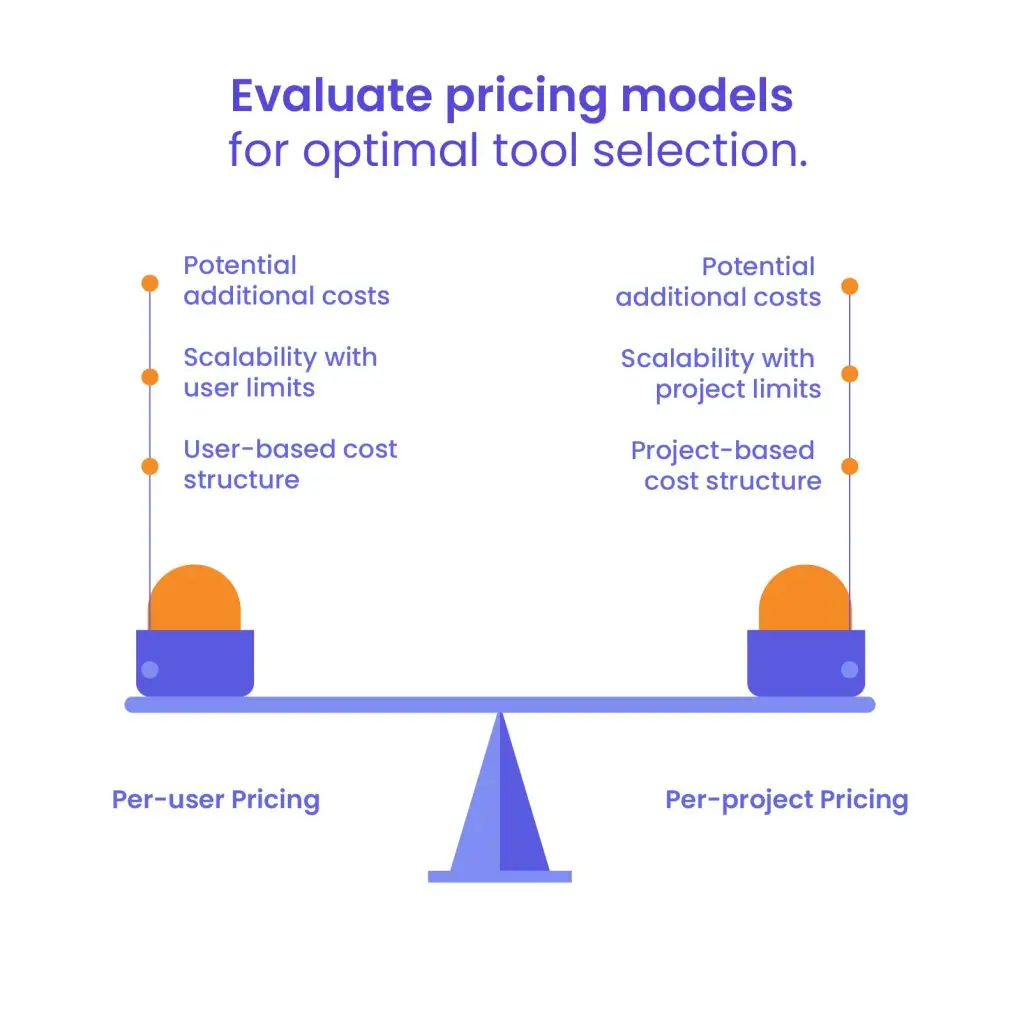
Choosing a provider with a flexible, transparent pricing model ensures that agencies can scale their services efficiently without overpaying for unnecessary features.
Final Considerations for Choosing a White Label SEO Tool Provider
A well-selected white label SEO management platform should offer:
- A sufficient free trial or demo period to evaluate customization and automation features.
- Reliable customer support with detailed documentation and access to a knowledgeable support team.
- Flexible pricing plans that align with the agency’s growth and service model.
By carefully assessing these factors, agencies can select a long-term SEO tool provider that enhances efficiency, improves branding, and drives client satisfaction.
CTA: Website as a Service
Website as a service
Website As a Service [WAAS] provides complete website solutions including design, hosting, and maintenance through a convenient subscription model for Agencies.
Conclusion: Why White Label SEO Tools Are Essential for Agency Growth
White label SEO tools have become an integral part of scaling digital marketing agencies, providing branded, automated, and efficient solutions that streamline operations while maintaining client trust. These platforms eliminate the need for in-house development, allowing agencies to focus on strategy, client management, and delivering measurable results.
By leveraging white label SEO management platforms, agencies can:
- Maintain consistent branding with custom dashboards, reports, and domains.
- Automate time-consuming SEO processes, such as rank tracking, backlink analysis, and reporting.
- Scale services effortlessly, managing multiple clients within a centralized platform.
- Improve efficiency and decision-making by integrating SEO insights into data-driven strategies.
Selecting the right white label SEO tools depends on an agency’s specific service offerings, client demands, and scalability requirements. Some agencies may benefit from all-in-one solutions, while others may require specialized tools for rank tracking, reporting, or site auditing.
As the SEO industry evolves, agencies that invest in the right tools and best practices will remain competitive, agile, and well-positioned for long-term growth. Taking the time to evaluate platforms, test free trials, and compare features ensures agencies choose a tool that aligns with their business model and client expectations.
If you’re looking to further enhance your agency’s offerings with white label services, consider teaming up with WLA for your website maintenance needs. With our white label WordPress services, we provide reliable, customized solutions that integrate seamlessly into your agency’s operations. Let us handle the technical work while you concentrate on growing your client relationships and delivering top-notch SEO results. Reach out today to get started.


