


Primary colors are the foundation to create all other colors. They are also essential components of color theory, and useful in various industries, including web design and digital media. Whether you’re designing a website, creating digital art, or working in any visual medium, a solid grasp of the nature of basic colors is crucial.
Colors are an integral part of our everyday lives. They affect our moods, decisions, and perceptions. This makes them a powerful tool in design and communication. But what are primary colors, and why do they matter so much, especially in fields like web design and digital media?
We will explore the questions: “what are primary colors?” and “what is their role in different color models.” We’ll also discuss how understanding what is color theory can improve your website design, ensuring your color choices are both effective and intentional.
WordPress Web Design Agency
Partner with our white label WordPress web design agency for custom, scalable solutions. We design, develop, and maintain websites tailored to your clients.
What Are Primary Colors?
Primary colors are the basic, pure colors that can be mixed to create all other colors, they are called “primary” because they cannot be created by mixing other colors together.
In traditional color theory, the basic colors are red, blue, and yellow. However, the concept of these colors changes depending on the color model being used:
- In the RGB model used for digital displays, the core colors are: red, green, and blue.
- In the CMYK model used in printing, the base colors are cyan, magenta, and yellow.
The 3 Primary Colors
Traditional Color Model (RYB)
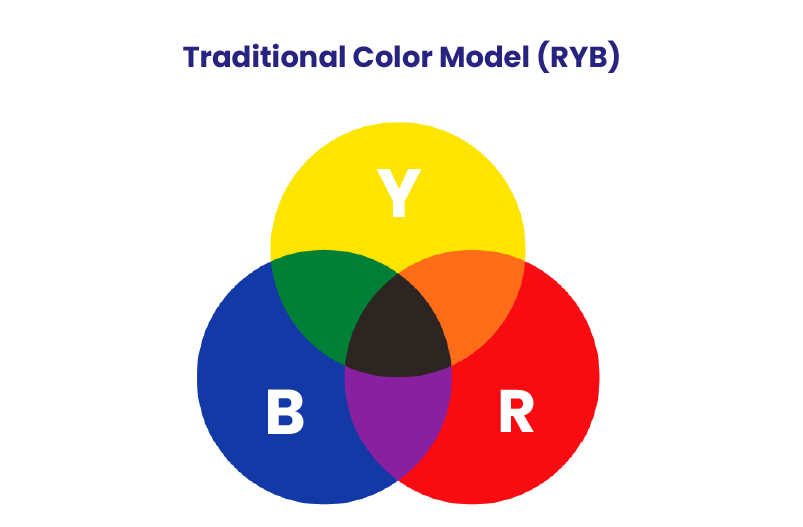
The RYB model stands for Red, Yellow, and Blue, which are the 3 primary colors commonly used in art and traditional design. This model is foundational in color theory and has been used for centuries to teach color mixing and relationships.
In the RYB model, red, yellow, and blue are considered base colors because they cannot be created by mixing any other colors. Instead, these colors serve as the starting point for generating secondary and tertiary colors through various combinations.
Examples
- Red + Yellow = Orange
- Red + Blue = Purple
- Blue + Yellow = Green
The RYB model is primarily used in painting and other physical mediums where color mixing is a hands-on process.
RGB Model (Red, Green, Blue)

In the RGB model, the 3 primary colors are red, green, and blue. While the RYB model is dominant in traditional art, the RGB model is the standard in digital screens and electronic displays. This model is based on the principle of additive color mixing, where different combinations of red, green, and blue light are used to create a full spectrum of colors.
The RGB model works differently from the RYB model because it deals with light rather than pigment. When the primary colors in the RGB model are combined at full intensity, they create white light. This model is integral to all digital devices, including computer monitors, televisions, and smartphones, where pixels combine these colors to produce the images we see.
Key Difference from RYB
- The RGB model deals with light, while the RYB model deals with pigment.
- When red, green, and blue are combined at full intensity, they produce white light.
CMY Model (Cyan, Magenta, Yellow)

The CMY model stands for Cyan, Magenta, and Yellow. These colors combine to produce many colors by subtracting wavelengths of light. In printing, it’s the go-to color model. Unlike the RGB model, which is additive, the CMY model is based on subtractive color mixing.
The CMY model is often extended to CMYK (Cyan, Magenta, Yellow, and Black), where black (K) is added to increase depth and detail in printing.
Examples
- Cyan + Magenta = Blue
- Cyan + Yellow = Green
- Magenta + Yellow = Red
Additive vs. Subtractive Color Mixing

Additive Color Mixing (RGB)
Additive color mixing is the process used in the RGB model, where the 3 primary colors—red, green, and blue—are combined to create a spectrum of colors. In this model, colors are produced by adding light. When red, green, and blue light are combined at full intensity, they create white light.
Example
Projects that have a clearly defined brief, budget and timeline. You send us the designs (Adobe XD, Photoshop, Sketch, …) and we take care of the coding.
By adjusting the intensity of these subpixels, a wide range of colors can be displayed. The additive nature of the RGB model makes it perfect for environments where light is emitted, such as in digital media and stage lighting.
Subtractive Color Mixing (RYB and CMY)
Subtractive color mixing is the process used in the RYB and CMY models. Subtractive mixing involves the absorption and reflection of light. In color theory, subtractive mixing explains how pigments or dyes subtract (absorb) certain wavelengths of light and reflect others.
- In the RYB model, red, yellow, and blue are mixed to produce a wide range of hues. The more pigments you mix, the more light is absorbed, leading to darker colors. When all three are combined, the result is black. This method is commonly used in painting and other traditional art forms.
- The CMY model—used in printing—works in a similar way. Cyan, magenta, and yellow are combined to produce different colors. When these colors overlap, they absorb more light, leading to darker shades, and eventually, black. The CMYK model, which adds black ink, is often used for printing to create deeper blacks and sharper details.
The Dual Nature of Red and Blue in Color Theory
While red and blue are traditionally considered primary colors in the RYB model (used in painting and design), their status changes depending on the color model in use. In the RYB model, red and blue cannot be created by mixing other colors. However, in other models, these colors can actually be produced by combining different pigments or lights.
Red in the CMY Model
In the CMY model, red is created by mixing magenta and yellow. This is a subtractive color process, where pigments absorb certain wavelengths of light and reflect others. When magenta and yellow overlap, they reflect red wavelengths, resulting in the color red.
Blue in the CMY Model
Similarly, in the CMY model, blue is created by mixing cyan and magenta. When these two pigments combine, they absorb most wavelengths of light and reflect only the blue part of the spectrum, producing blue.
Why Are Primary Colors Important?
Foundational Role in Color Theory
Primary colors are fundamental in what is color theory because they are the starting point for creating all other colors. By mixing the 3 of these colors in various combinations, a full spectrum of colors can be generated. In both the traditional RYB model and the digital RGB model, these colors serve as the building blocks for secondary and tertiary colors. Without them, the diverse range of hues we use in art, design, and media would not be possible.
Applications Across Industries
Art and Design
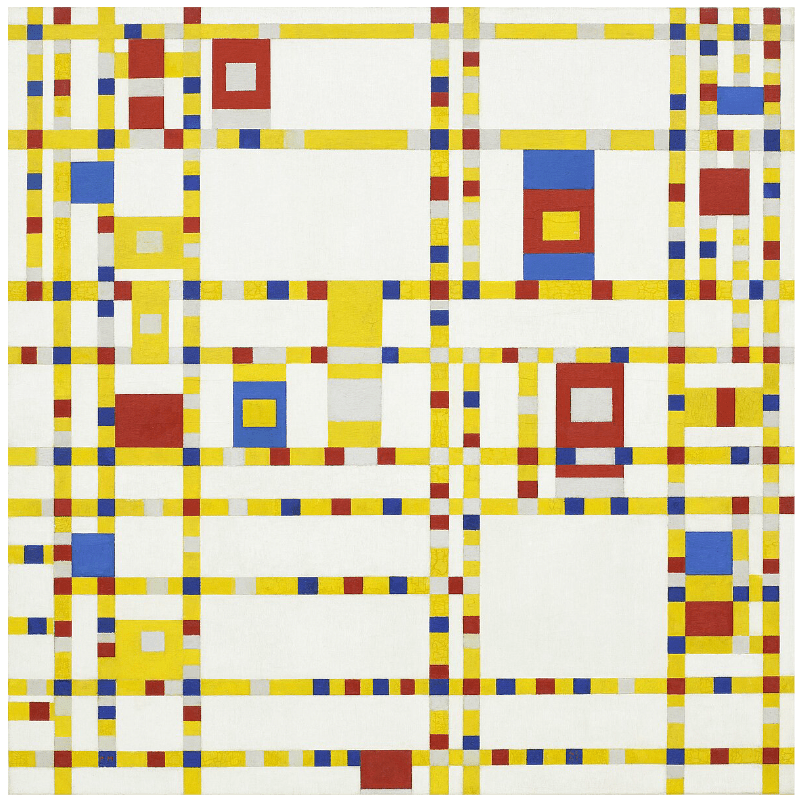
Artists often begin with the 3 primary colors—red, yellow, and blue—in the RYB model to mix and create a wide variety of shades and tones. This foundational knowledge is essential for painters, illustrators, and designers who rely on color mixing to bring their creative visions to life. Even in abstract and contemporary art, the manipulation of primary colors remains a central practice.
Example
Piet Mondrian’s Broadway Boogie Woogie (1942-43) – This abstract work showcases a grid-like composition using vibrant primary colors, emphasizing simplicity and structure.
Digital Media
The RGB model, which uses red, green, and blue as primary colors, is the basis for all digital displays. Designers must understand how these colors interact to create the desired effects on screens. This knowledge is essential for creating visually appealing websites, user interfaces, and digital content that effectively communicates with the audience.

Example
LEGO’s use of these bright primary colors creates a playful and engaging atmosphere, appealing to both children and adults. This aligns with the brand identity as a fun and creative toy manufacturer.
Printing
In the printing industry, the CMY model (cyan, magenta, and yellow) is the standard. These colors are mixed in varying proportions to produce the full range of printed colors. The model is often expanded to CMYK, with black added to achieve deeper, more accurate colors.
Famous Brands Using Primary Colors in Their Design
McDonald’s

McDonald’s is one of the most recognizable brands globally, and its use of primary colors plays a key role in its branding success. The iconic red and yellow color scheme follows the principles of the RYB model. The bright red stimulates hunger and energy, making it appealing for fast food, while the yellow conveys happiness, warmth, and friendliness.
IKEA

IKEA, the global furniture giant, uses blue and yellow as its primary branding colors. The blue symbolizes trust and reliability, while the yellow represents warmth, positivity, and friendliness—traits that align well with IKEA’s brand identity of affordable, welcoming home goods. Both of these colors are primary in the RYB model, and they help create a cohesive brand image that is immediately recognizable worldwide.
Choosing a Color Scheme for Your WordPress Site
Primary colors are foundational in creating a cohesive and appealing color scheme for your WordPress site. These colors are the base for all other hues in your design, helping to set the tone and ensure visual harmony.
WordPress makes it easy to customize basic colors through various theme options, color pickers, and custom CSS. Whether you’re using a pre-built theme or designing from scratch, you can easily adjust the 3 colors to match your brand’s identity. This flexibility allows you to maintain consistency across your site while tailoring the design to your specific needs.
3 Primary Color Palettes for Web Design
- Red; Yellow; Blue
This classic primary color palette of red, yellow, and blue is vibrant, playful, and full of energy. It works well for websites aimed at children’s products, education, or creative industries that want to evoke excitement and creativity.
- Good For: Websites for kids’ toys, educational platforms, creative agencies, or art studios.
- Blue; Green; White
A combination of blue, green, and white is calming, professional, and trustworthy. This palette is ideal for websites in the healthcare, technology, or environmental sectors. The blue conveys stability and professionalism, while the green evokes growth, nature, and health. White provides a clean, minimalistic balance.
- Good For: Medical websites, eco-friendly companies, financial services, or technology firms.
- Red; Black; White
This palette, with red, black, and white, exudes boldness, power, and sophistication. It’s ideal for luxury brands, fashion websites, or high-end restaurants. Red draws attention and adds energy, black conveys elegance and strength, while white provides a clean, minimalist look.
- Good For: Fashion websites, luxury goods, high-end restaurants, or automotive brands.
WordPress Webdesign
Enhance your agency’s offerings with our WordPress website design services. Get custom, high-quality designs that fit your client’s needs.
Conclusion
In this blog, we’ve explored what basic colors are and their crucial role in color theory. Primary colors—whether in the RYB, RGB, or CMY models—serve as the foundation for creating all other colors. Understanding these colors and their unique properties is essential for anyone involved in art, design, digital media, or printing.
To deepen your understanding, further explore the question, “ what is color theory?” and its practical applications in web design. Mastering the use of base colors will empower you to create more dynamic and engaging digital experiences.
In the context of WordPress design, knowing how to use pure colors effectively can improve the visual appeal and functionality of your website. At the White Label Agency, we understand the importance of base colors in WordPress design. If your agency needs a reliable partner in WordPress projects, we’re here to help. Contact us today to craft compelling designs together.
FAQs
What are the 3 primary and 3 secondary colors?
The 3 primary colors are red, yellow, and blue. These colors are the foundation of color theory and cannot be created by mixing other colors. The 3 secondary colors—orange, green, and purple—are created by equally mixing the 3 base colors. For example, mixing red and yellow in equal proportions will result in the color orange; in the same way, blue and yellow make green, and red and blue make purple.
What are the 5 basic colors?
The 5 basic colors often refer to the 3 primary colors—red, yellow, and blue—plus black and white. Basic colors are foundational in color theory because they cannot be created by mixing other colors. Black and white are not considered base colors but are essential for creating shades and tints in color mixing.
What are the original primary colors?
The original primary colors are red, yellow, and blue. These 3 colors form the basis of the RYB model used in traditional art and design. In color theory, these colors cannot be created by mixing other colors and are essential for generating the full spectrum of visible colors.
How can I choose primary colors for my WordPress site?
When choosing primary colors for your WordPress site, start by aligning the 3 primary colors with your brand’s personality to ensure consistency and recognition. Use color theory to select complementary colors that enhance your site’s visual appeal. Make sure your primary colors are readable and accessible to all users, including those with color vision deficiencies. Additionally, choose primary colors that create strong contrast for readability, especially for text and background elements. Understanding what primary colors are and their role in color theory will help you make informed decisions that enhance your WordPress design.
In web design, which color is considered a primary color?
In web design, primary colors are the foundational colors that can’t be created by mixing other colors. In traditional color theory, these primary colors are red, blue, and yellow. However, in web and digital design, the primary colors often refer to the RGB (Red, Green, Blue) color model, as screens use light to create color.
In the RGB color model:
Red
Green
Blue
These colors are combined in various ways to produce the full spectrum of colors you see on screens. The RGB model is essential in web design, as every color on a digital display is a mix of these primary colors, helping designers create vibrant, cohesive color schemes.


