- Website as a service
- What is an E-Commerce Business?
- Benefits of Using WaaS for E-Commerce Website Development
- Traditional E-Commerce Website Development vs. Website as a Service
- Top 5 Best E-Commerce Platforms for 2024
- Choosing the Right E-commerce Website Services
- WordPress Development Agency
- Conclusion
The constant need for updating e-commerce websites, strengthening security, optimizing performance, and staying ahead of the competition can quickly become a burden, especially for small to medium-sized businesses with limited resources. However, the solution can be the Website as a Service (WaaS).
Website as a service provides a comprehensive, scalable solution that takes the hassle out of website management. By outsourcing the technical aspects, e-commerce businesses can focus on what they do best—selling products and growing their brand. WaaS offers ongoing support, regular updates, and a customizable platform that adapts to the evolving needs of an e-commerce business. This makes it the smart choice for those looking to simplify their online operations.
In this blog, we’ll explore how WaaS can benefit e-commerce businesses by simplifying website management and providing a scalable, cost-effective solution tailored to the unique needs of online retailers. Whether you’re just starting out or looking to enhance your existing online presence, this guide will help you understand why WaaS could be the key to unlocking your e-commerce potential in 2024.
Website as a service
Website As a Service [WAAS] provides complete website solutions including design, hosting, and maintenance through a convenient subscription model for Agencies.
What is an E-Commerce Business?
An e-commerce business is any company that conducts transactions online, selling goods or services through a digital platform. E-commerce businesses can range from small startups to large corporations, but they all share these common elements: a website, digital products or services, and the ability to process online payments. The primary advantage of an e-commerce business is the ability to reach a global audience without the limitations of a physical storefront.
Importance of a Robust E-Commerce Website
A well-developed website is crucial to the success of e-commerce businesses. It serves as the storefront, cashier, and customer service all in one. Strong e-commerce website development ensures that the site is user-friendly, secure, and capable of handling transactions smoothly. For example, companies like Shopify, Amazon, and Zalando have built their success on advanced website as a service models, which provide continuous updates, scalable solutions, and seamless integration with various digital tools. These features enable businesses to grow and adapt in a competitive market.

Benefits of Using WaaS for E-Commerce Website Development
Website as a Service (WaaS) offers significant advantages for e-commerce businesses, making it an attractive option for those looking to streamline their e-commerce website development. This model not only reduces initial costs but also ensures that the website can grow and adapt alongside the business while maintaining high standards of security and support.
Cost-Effectiveness
One of the primary benefits of the website as a service is its cost-effectiveness. Unlike traditional e-commerce website development, which requires significant upfront investment, WaaS operates on a subscription model. This approach lowers the initial costs and includes ongoing support and updates, making it easier for e-commerce businesses to manage their budgets while keeping their websites current and functional.
Scalability
E-commerce businesses need websites that can grow alongside them, and WaaS provides the flexibility to scale as needed. As your business expands, WaaS allows your website to adapt, whether by adding new features, accommodating increased traffic, or integrating with additional tools. This scalability ensures that your website can meet your evolving demands without requiring a complete overhaul.
Security and Compliance
Maintaining security and compliance is crucial for e-commerce businesses. WaaS includes continuous updates to keep your website secure, protecting against potential threats and vulnerabilities. Additionally, WaaS providers ensure that your website complies with industry standards, such as PCI DSS, which is essential for safely processing payments and protecting customer data.
Maintenance and Support
Regular maintenance is vital for the smooth operation of any e-commerce website. With WaaS, maintenance tasks are handled by the service provider, ensuring that your website remains up-to-date and functional. Furthermore, WaaS typically includes 24/7 support, so you have access to troubleshooting and assistance whenever needed, minimizing downtime and disruptions.
Customization
WaaS offers tailored solutions that meet the specific needs of e-commerce businesses. Whether you require customized payment gateways, inventory management systems, or other unique features, WaaS can provide the flexibility to create a website that aligns perfectly with your business operations. This customization ensures that your website not only meets your current needs but can also evolve as your business grows.
Traditional E-Commerce Website Development vs. Website as a Service
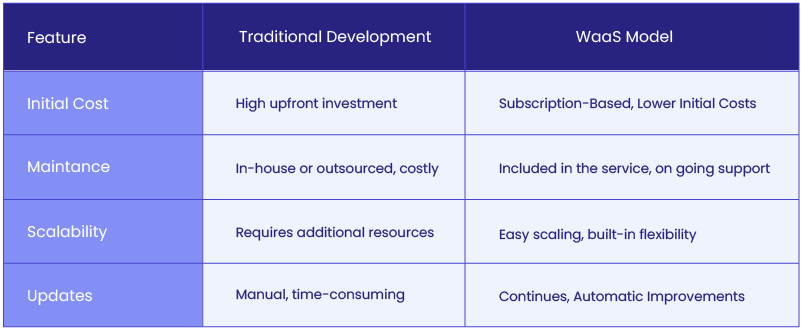
E-commerce website development typically involves building a site from the ground up, either through in-house teams or by outsourcing the work to a development agency. This approach requires significant time and financial investment, especially for small to medium-sized e-commerce businesses. In contrast, Website as a Service (WaaS) offers a more streamlined, subscription-based solution that provides ongoing support, updates, and scalability. This makes it a flexible and cost-effective alternative for businesses looking to maintain a competitive online presence.
Traditional Development
Traditional e-commerce website development comes with high initial costs, as businesses must pay for both design, development, as well as the launch of their website upfront. Additionally, the responsibility for ongoing maintenance often falls on in-house teams or outsourced service providers, leading to further expenses and time investment. As the business grows, scaling the website and implementing updates can become challenging, often requiring additional resources and expertise.
WaaS Model
The WaaS model operates on a subscription basis, offering continuous improvements and easy scaling without the need for large upfront investments. With a website as a service, businesses benefit from ongoing updates, security enhancements, and support. This ensures that the website remains functional and up-to-date. It is a model that allows e-commerce businesses to adapt quickly to changing market conditions and customer needs, providing a more flexible and manageable approach to website development.
Top 5 Best E-Commerce Platforms for 2024
Choosing the right platform is crucial for the success of e-commerce businesses. The best platforms offer a balance between ease of use, robust features, scalability and reliable support; making them suitable for businesses of varying sizes and needs. In this section, we’ll explore the top five e-commerce website development platforms for 2024, highlighting their key features, pros, cons, and the types of businesses they are best suited for.

1. Shopify
Shopify is one of the most popular e-commerce website development platforms, known for its user-friendly interface and powerful features. It offers a range of tools for building and managing an online store, making it accessible to both beginners and experienced users.
- Key Features: An easy to use drag-and-drop builder, a wide variety of themes, integrated payment gateways, and an extensive app marketplace.
- Pros: User-friendly, excellent customer support that is scalable for businesses of all sizes.
- Cons: Limited customization without advanced coding knowledge, and transaction fees if not using Shopify Payments.
- Best For: Small to medium-sized e-commerce businesses looking for an easy-to-manage platform with extensive support options.

2. WooCommerce
WooCommerce is a flexible, open-source e-commerce plugin for WordPress, making it a popular choice for businesses already using the WordPress platform. WooCommerce provides extensive customization options and a large community of developers.
- Key Features: Seamless integration with WordPress, numerous extensions and plugins, full control over site design and functionality.
- Pros: Highly customizable, no transaction fees, large community and resources.
- Cons: It requires some technical knowledge and can become complex with too many plugins.
- Best For: e-commerce businesses that need a highly customizable platform and are comfortable with WordPress.
3. BigCommerce
BigCommerce is a robust website as a service platform designed for businesses looking to scale. It offers a range of advanced features that cater to growing e-commerce businesses with complex needs.
- Key Features: Built-in SEO tools, multi-channel selling, advanced analytics, no transaction fees.
- Pros: Scalable, built-in features reduce the need for third-party apps which is excellent for SEO.
- Cons: Higher pricing tiers, and limited themes compared to competitors.
- Best For: Medium to large e-commerce businesses that require advanced features and scalability.

4. Magento
Magento, now part of Adobe, is a powerful e-commerce website development platform known for its flexibility and extensive feature set. It’s a preferred choice for large e-commerce businesses with complex needs and the resources to manage a highly customizable platform.
- Key Features: Advanced customization, multiple store management, extensive marketplace for extensions.
- Pros: Highly flexible, scalable, strong community support.
- Cons: Steep learning curve, requires significant technical expertise, higher costs for hosting and maintenance.
- Best For: Large e-commerce businesses with the technical resources to manage a highly customized platform.

5. Wix E-Commerce
Wix eCommerce is a user-friendly platform that allows businesses to create professional online stores with minimal technical knowledge. It’s ideal for small businesses and entrepreneurs looking for an easy-to-use solution.
- Key Features: Drag-and-drop builder, customizable templates, integrated marketing tools.
- Pros: Easy to use, no coding required, affordable pricing plans.
- Cons: Limited scalability for larger businesses, fewer advanced features compared to competitors.
- Best For: Small e-commerce businesses and startups looking for a simple, cost-effective way to get online quickly.
Choosing the Right E-commerce Website Services
Selecting the right e-commerce website development services is a critical decision that can significantly impact the success of your online business. Whether you’re considering a traditional platform or website as a service (WaaS), it’s important to evaluate several key factors to ensure that the service you choose aligns with your business needs and goals.
Factors to Consider
- Platform Features: The features offered by a platform are crucial. Look for platforms that provide robust integration options, allowing a seamless connection with any other tools that you use, such as CRM systems, payment gateways, and marketing tools. Customization is another important factor; ensure the platform allows you to tailor the site to your specific needs. Scalability is equally vital—your e-commerce business should be able to grow without being hindered by the limitations of your platform.
- Service Provider’s Experience: When considering a website as a service, it’s essential to assess the provider’s experience in the e-commerce sector. A provider with a strong track record in e-commerce website development will understand the unique challenges of online retail and offer solutions tailored to meet those needs.
- Cost vs. Benefits Analysis: Conduct a thorough cost-benefit analysis before making a decision. Compare the upfront and ongoing costs of traditional development with the subscription fees of WaaS. Consider the long-term benefits, such as ongoing support, regular updates, and scalability, which can outweigh the initial cost savings of other options.
Steps to Select the Right WaaS Provider
- Research and Shortlist Providers: Start by researching potential WaaS providers. Look for those that specialize in e-commerce businesses and have a proven track record. Create a shortlist of providers that align with your business needs.
- Evaluate Trial/Demo Versions: Many website as a service providers offer trial or demo versions of their platforms. Take advantage of these to explore the features and assess the platform’s usability. This hands-on experience will help you determine whether the platform meets your specific requirements.
- Assess Customer Support and Reviews: Reliable customer support is crucial for maintaining a successful e-commerce website. Evaluate the support options offered by each provider, such as 24/7 availability, live chat, and dedicated account managers. Additionally, read reviews from other e-commerce businesses to gain insight into the provider’s reputation and the quality of their services.
By carefully considering these factors and following these steps, you can select the right e-commerce website development service or website as a service provider that will support your business’s growth and success.
WordPress Development Agency
Experience WordPress development with our custom-coded websites. Perfect for agencies, our reliable service ensures timely delivery and client satisfaction.
Conclusion
Website as a Service (WaaS) offers numerous benefits for e-commerce businesses, making it an increasingly popular choice for those looking to streamline their e-commerce website development. The key advantages of adopting WaaS include lower upfront costs, ongoing support, and the ability to easily scale and customize your website as your business grows. Additionally, the continuous updates and built-in security features provided by WaaS ensure that your website remains secure and compliant with industry standards.
For e-commerce businesses that need a flexible, cost-effective, and reliable solution for managing their online presence, WaaS is a practical and efficient choice. It allows you to focus on what you do best—running and growing your business—while leaving the technical aspects of website management to experts.
If you’re interested in exploring a website as a service for your business, consider reaching out to The White Label Agency. We offer tailored solutions that can meet the unique needs of your business. Contact us today and learn more about how we can support your WordPress website with our specialized WaaS offerings.